Face Shapes
Reviewed by Face Shape ID Team
- face shape
- styling
Not sure what your face shape is? Use our free AI tool or follow 3 simple methods to identify whether you're oval, round, square, heart, diamond, oblong, or triangle.
In this article(20 sections)
- The seven face shapes at a glance
- How to determine your face shape: 3 methods
- Method 1: Measure (most accurate)
- Method 2: Mirror tracing (quick visual screen)
- Method 3: Visual comparison (simplest)
- Tips for a usable reference photo
- Why selfies give you the wrong face shape
- Shapes that get confused: how to tell them apart
- Can my face shape change? (Yes, and here's why)
- Age-related changes
- Weight changes
- How accurate are AI face shape detectors?
- Why face shape matters: styling that works
- Hairstyles by face shape
- Eyewear by face shape
- Facial hair by face shape
- Frequently asked questions
- Your face shape is a starting point, not a box
- Ready to find your face shape?
- More resources
"What is my face shape?" Your face shape comes down to four measurements (forehead width, cheekbone width, jawline width, and face length) and how they relate to each other. Most people fall into one of seven shapes: oval, round, square, oblong, heart, diamond, or triangle.
The fastest way to find out? Upload a photo and get your result in seconds:
Prefer to figure it out yourself? Keep reading for three at-home methods, plus the science behind why it matters for choosing men's hairstyles, glasses, and facial hair.
Based on the Milady Standard Cosmetology framework (14th edition), the U.S. industry standard used by licensed professionals, and validated by Farkas et al. (2005) anthropometric research published in the Journal of Craniofacial Surgery.
The seven face shapes at a glance
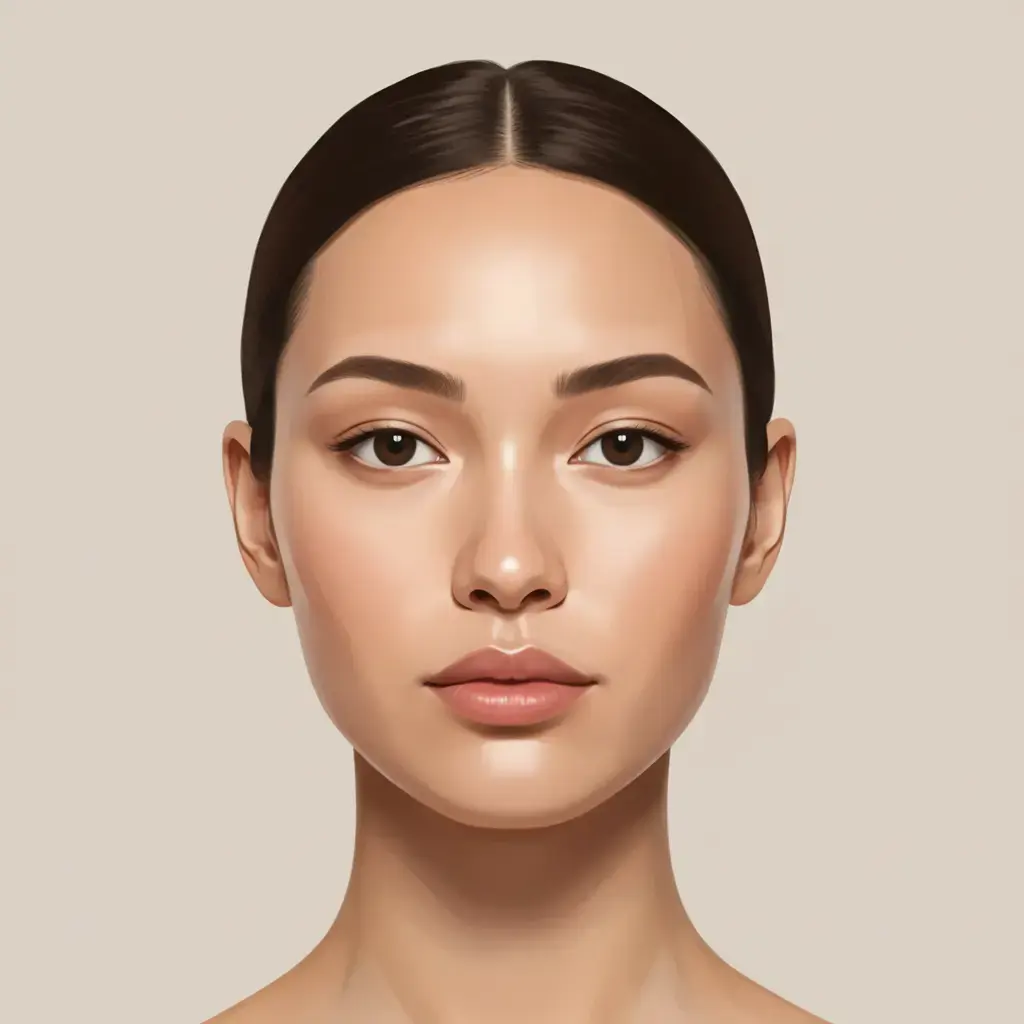
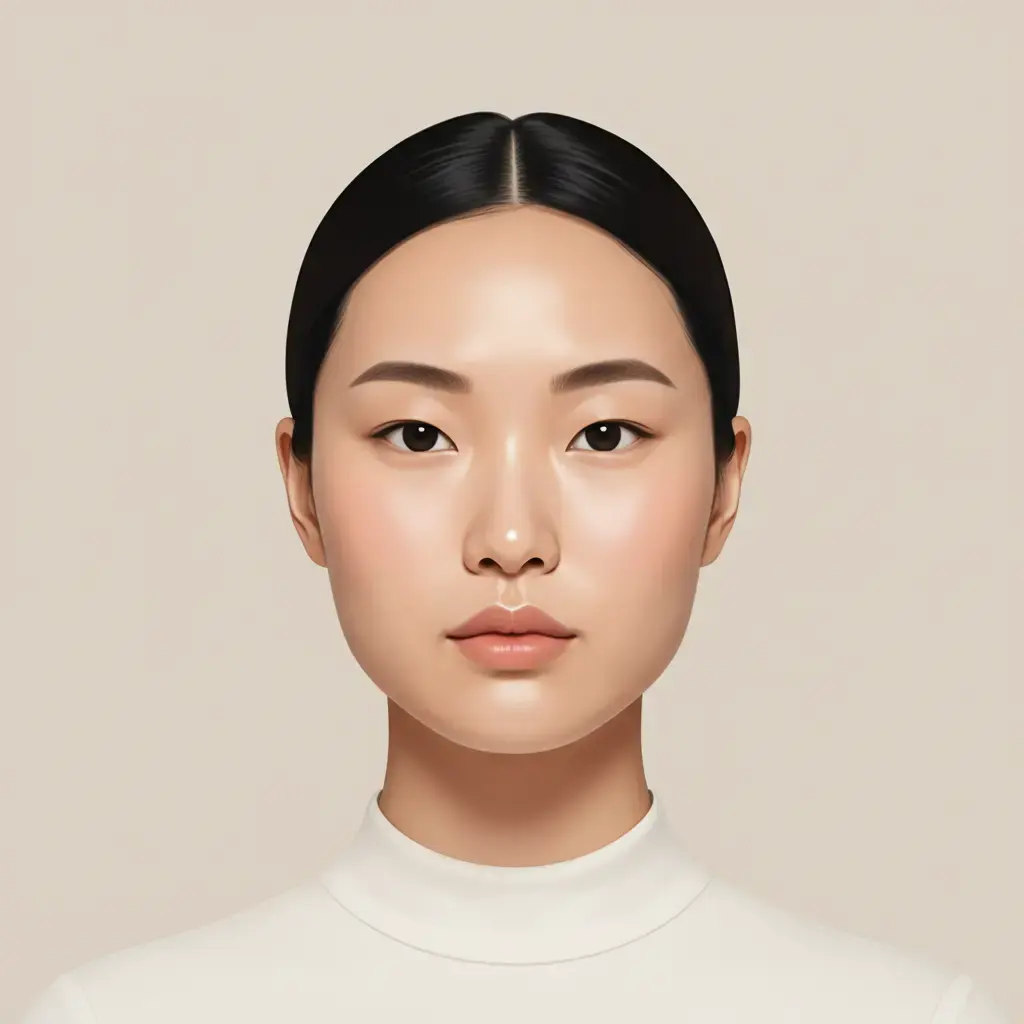
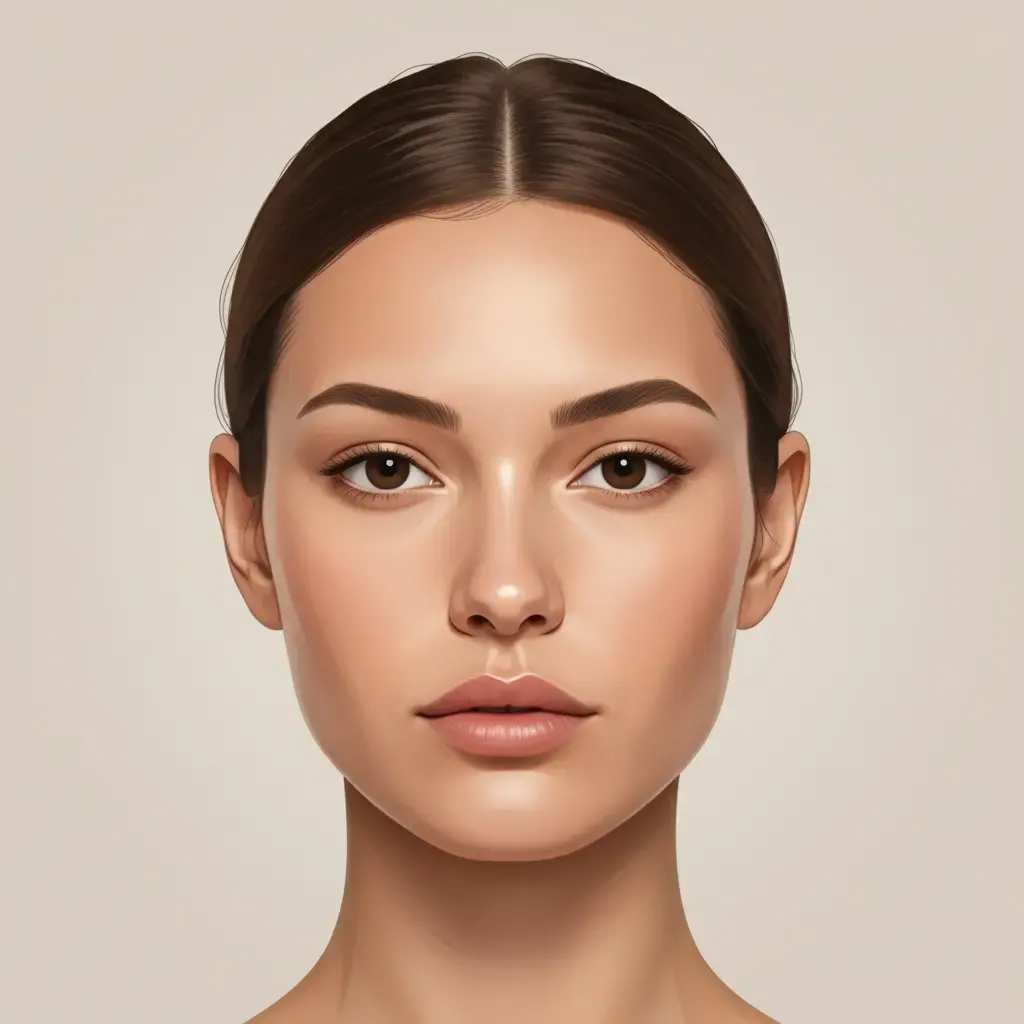
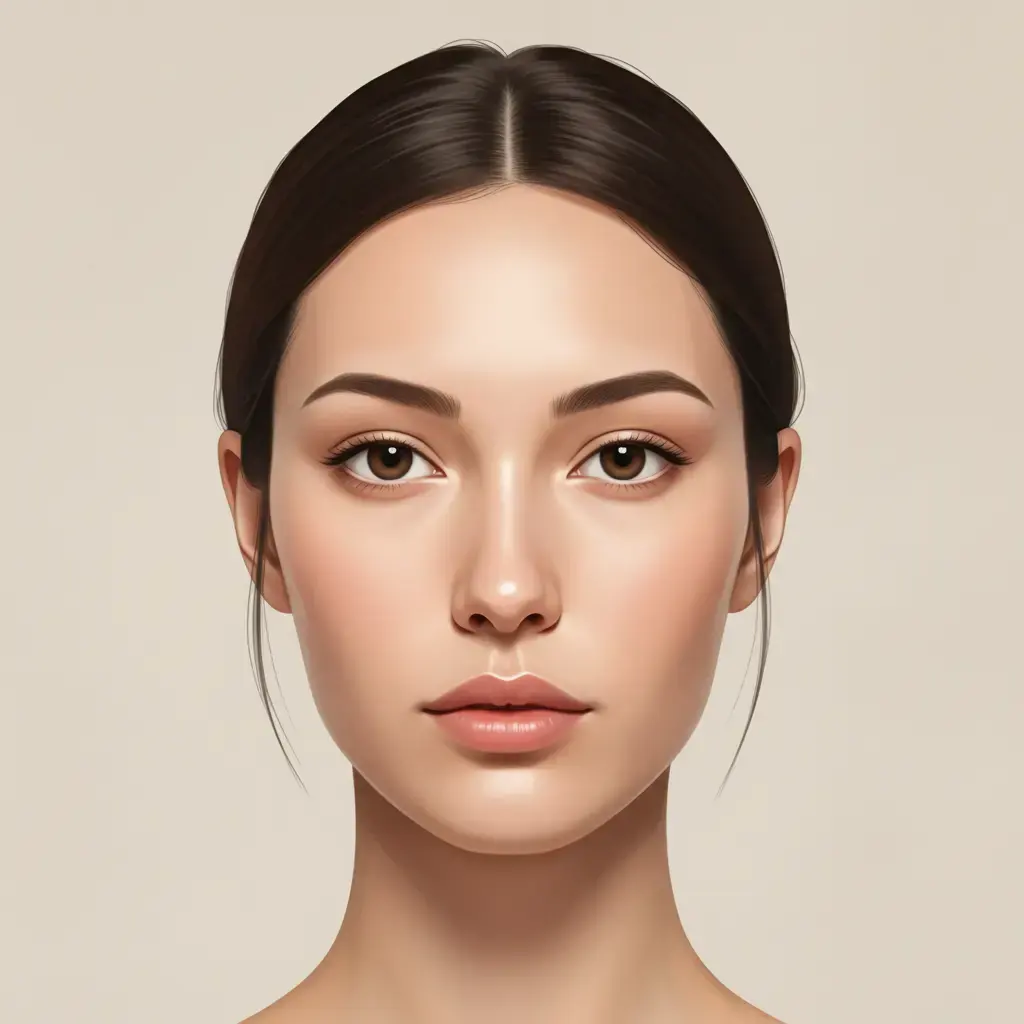
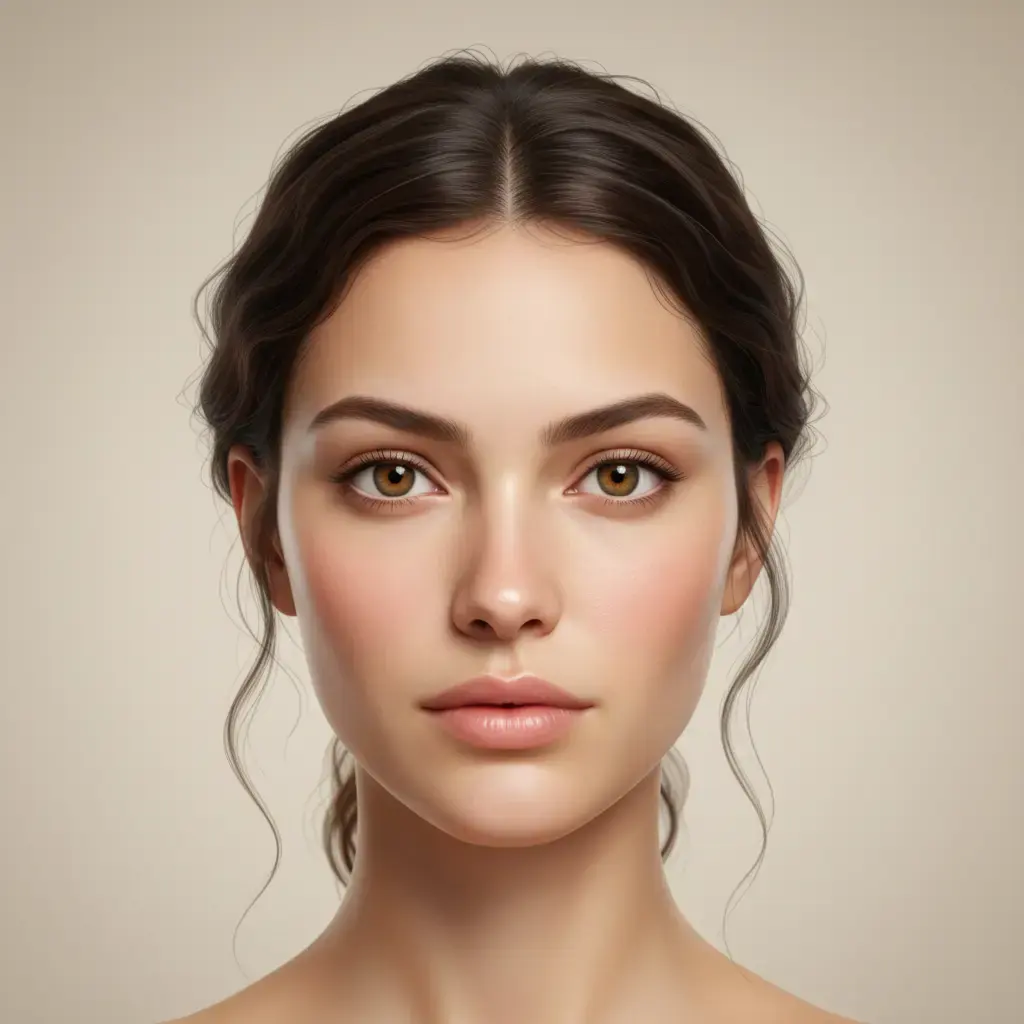
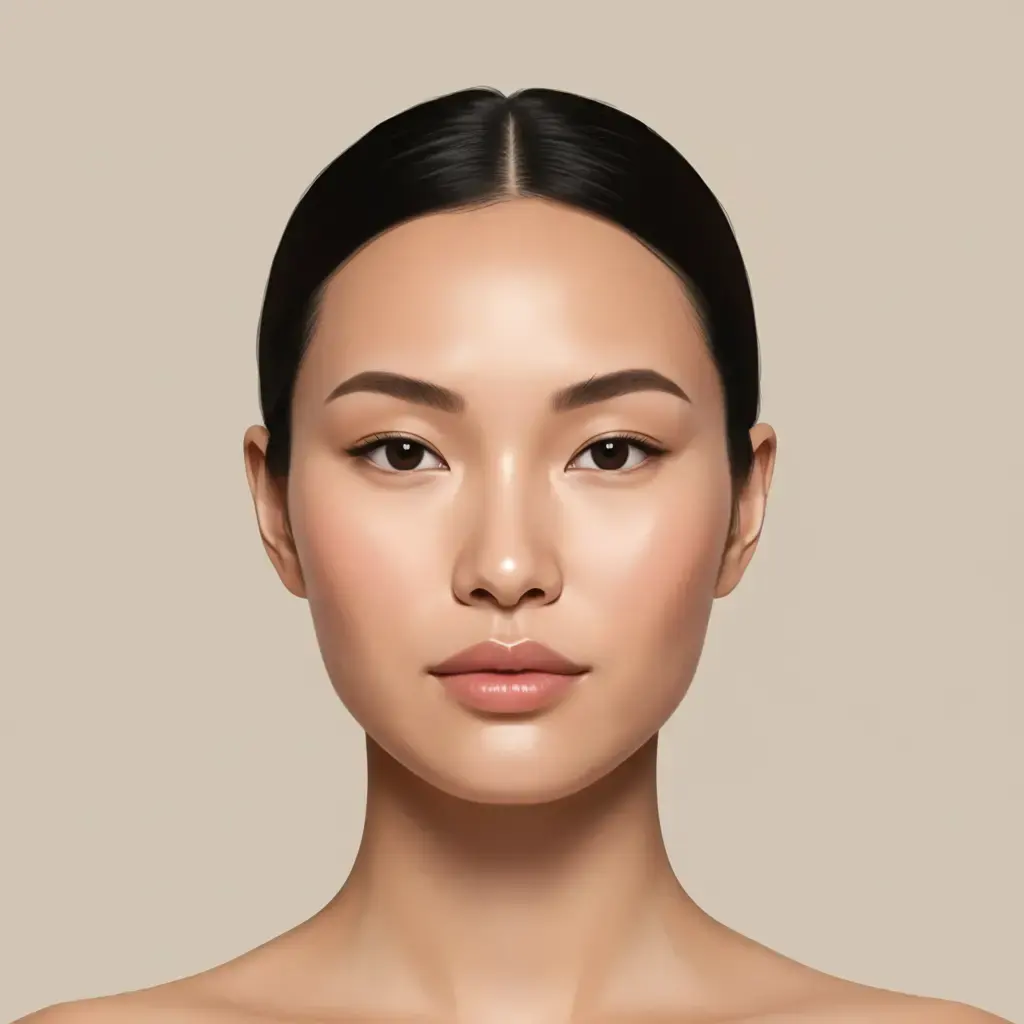
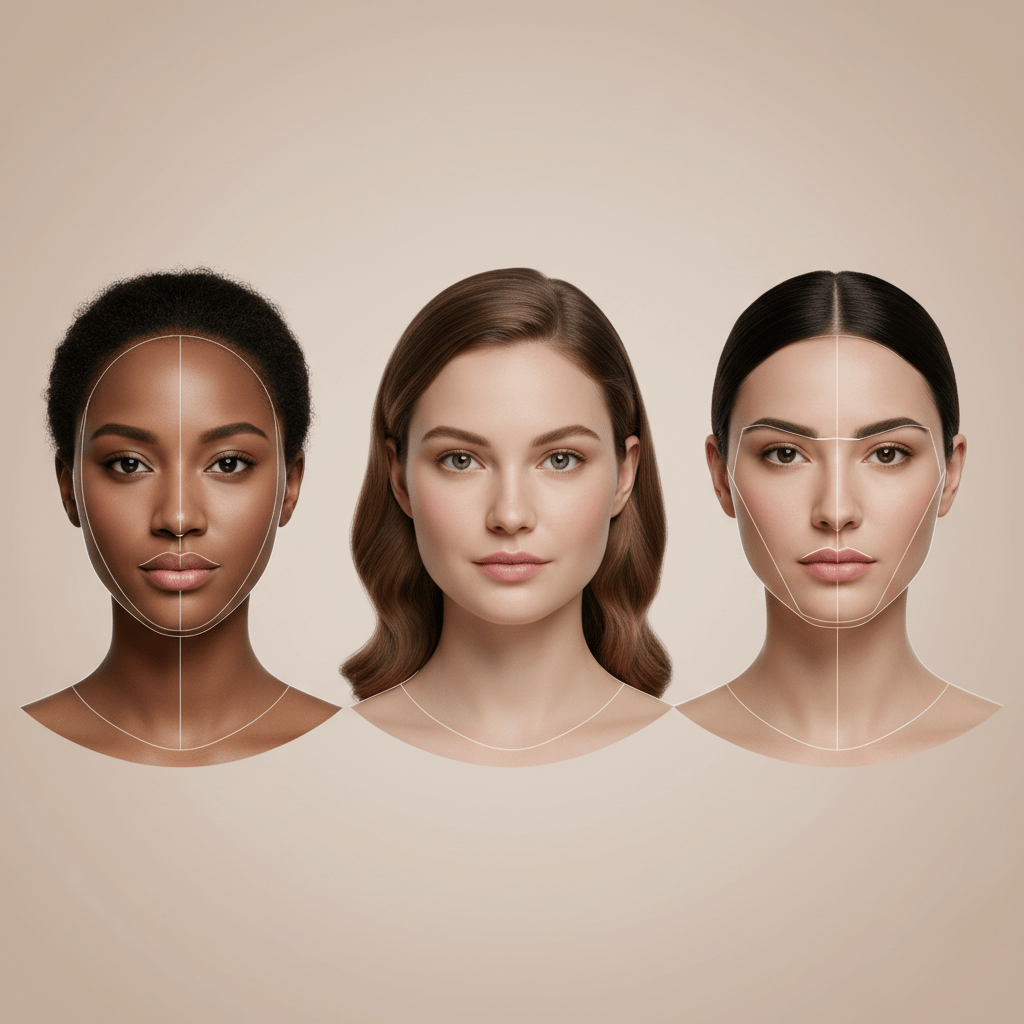
The classification rests on four measurements: forehead width, cheekbone width, jawline width, and face length (hairline to chin tip). The proportional relationships between these determine your shape.
The academic foundation traces to Leslie Farkas's landmark work Anthropometry of the Head and Face (1994, Raven Press) and the Farkas et al. (2005) international study, which established the normal facial index (height / width x 100) ranges from roughly 81.5 to 93.6 depending on sex and ethnicity.
Oval. Length-to-width ratio of about 1.5:1. Cheekbones are the widest point, forehead slightly wider than jaw, softly rounded jawline. The Milady textbook calls it the "ideal" reference shape. Celebrity examples: Beyonce, Jessica Alba.
Round. Near-1:1 length-to-width ratio with full cheeks and a short, curved chin. Shares soft contours with oval but is notably wider relative to length. Think Selena Gomez, Ginnifer Goodwin. See our round face hairstyle guide for short, medium, and long cuts.
Square. Also close to 1:1, but the distinguishing trait is a strong, angular jawline. Forehead, cheekbones, and jaw are all roughly the same width. Think Angelina Jolie, Brad Pitt.
Oblong/Rectangle. Notably elongated (greater than 1.5:1) with relatively uniform width from forehead through jaw and straight side contours. "Rectangle" implies an angular jaw, "oblong" a rounded one, though Milady treats them as one category.
Heart (inverted triangle). Widest at the forehead, tapering to a narrow, often pointed chin. A widow's peak hairline is associated but not required. Canonical example: Reese Witherspoon.
Diamond. Shares the narrow chin with heart, but the forehead is also narrow. Cheekbones are the dramatically widest point. Frequently cited: Rihanna, Halle Berry.
Triangle/Pear. The reverse of heart: the jawline is the widest measurement, tapering up to a narrow forehead. Included in the Milady seven but less commonly discussed in consumer guides.
| Shape | Length vs. width | Widest point | Jawline character | Forehead vs. jaw |
|---|---|---|---|---|
| Oval | ~1.5:1 | Cheekbones | Rounded, gentle taper | Forehead > jaw |
| Round | ~1:1 | Cheekbones | Soft, curved | Forehead = jaw |
| Square | ~1:1 | All roughly equal | Angular, strong | Forehead = jaw |
| Oblong/Rectangle | >1.5:1 | All roughly equal | Angular or rounded | Forehead = jaw |
| Heart | Longer than wide | Forehead | Narrow, pointed chin | Forehead >> jaw |
| Diamond | Longer than wide | Cheekbones | Narrow, pointed chin | Both narrow |
| Triangle/Pear | Varies | Jawline | Wide, strong | Forehead < jaw |
Use the face-shape grid and comparison table above as a quick visual reference.
How to determine your face shape: 3 methods
This visual walkthrough covers the full measurement process step by step:
How to determine your face shape
Method 1: Measure (most accurate)
Grab a flexible tape measure and take four measurements:
- Forehead width, across its widest part
- Cheekbone width, at the highest points below the outer eye corners
- Jawline, from chin tip to below the ear, then doubled
- Face length, from center hairline to chin tip
Compare the ratios: Which measurement is largest? Are length and width roughly equal? Is the jaw angular or curved?
Multiple sources (FashionBeans, Byrdie, Omni Calculator) agree this is the most reliable at-home technique because it produces ratios rather than subjective impressions.
Method 2: Mirror tracing (quick visual screen)
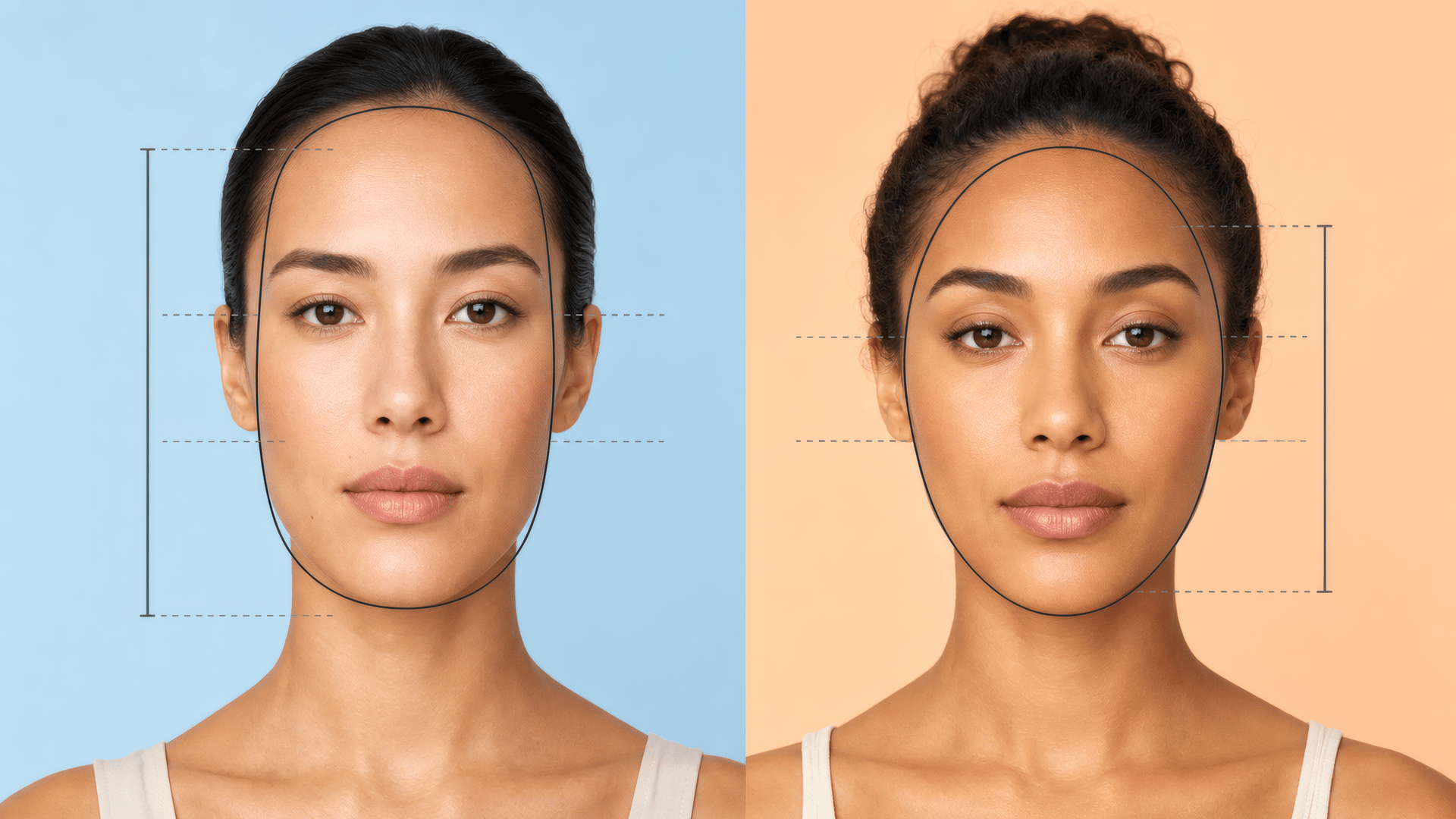
Stand at arm's length from a clean mirror. Pull all hair back, close one eye to flatten depth perception, and trace your facial outline on the glass with a dry-erase marker or bar of soap. Step back and compare to the standard outlines above.
Licensed cosmetologist Leiah Scheibel (20+ years' experience, quoted via IPSY) describes it as "more about fun than anything else." It's useful for ruling out shapes quickly but not precise for borderline cases.
Method 3: Visual comparison (simplest)
Pull hair back, look in a mirror, and ask three questions:
- What's the widest part of my face?
- Is my jaw angular or curved?
- Is my face noticeably longer than wide?
Color Allure's style guide offers pragmatic advice: "Unless you can see something visually dominating the overall look, like a pointy chin or wide forehead, it's okay to assume you have a general oval face and move forward."
Still not sure? Let our AI do the work: Find my face shape
Tips for a usable reference photo
For any method involving a photo, these conditions matter:
- Natural, even lighting. Shadows can mimic or hide bone structure.
- Straight-on at eye level. Even a slight angle changes apparent proportions.
- All hair off the face. Full perimeter from hairline to jawline must be visible.
- Neutral expression. Smiling widens cheekbones and shifts jaw position.
- Camera at least five feet away (or use the rear camera). Here's why:
Why selfies give you the wrong face shape
The single biggest source of misidentification is smartphone lens distortion.
Most front-facing cameras use wide-angle lenses (~23-26mm equivalent). At typical selfie distance (12 inches), barrel distortion enlarges central features and compresses the edges. A study in JAMA Facial Plastic Surgery (Ward et al.) found selfies make the nasal base appear roughly 30% wider compared to photos at five feet. Your face looks narrower and more elongated than reality, which can shift a round face into "oval" territory.
This video shows the distortion effect in action:
You are not as ugly as your selfies, focal lengths tutorial
The fix: use a rear camera at arm's length or farther, or zoom to 2x telephoto (~50mm equivalent). At 85mm, the classic portrait focal length, faces appear close to how they look in person. For more on how perspective distortion works, see the Wikipedia explainer.
Other common traps:
- Head tilt. Changes the apparent width-to-length ratio.
- Harsh or directional lighting. Creates shadows misread as bone structure.
- Contouring makeup. Designed specifically to reshape perceived proportions.
- Low-quality mirrors. Introduce barrel or wave distortion.
Shapes that get confused: how to tell them apart
Five pairs account for most misidentification:
Oval vs. oblong. Both are longer than wide. The key: oval faces have curved sides bowing outward at the cheekbones. Oblong faces have straight, parallel sides. If the outline flares at the cheeks like a mild boomerang, it's oval.
Round vs. oval. Both lack angular features. The difference is the length-to-width ratio: round is ~1:1, oval is ~1.5:1. Licensed cosmetologist Kendra Powell puts it simply: "Round, Oval, Oblong, moving from wide and short to long and slim."
Square vs. round. Both are ~1:1 proportions. The jawline separates them. Square: straight sides, sharp angles. Round: curved sides, soft jaw.
Heart vs. diamond. Both narrow at the jaw with pointed chins. The key is the forehead. Heart faces are widest at the forehead; diamond faces have a narrow forehead with cheekbones as the widest point. Celebrity hairstylist Nate Rosenkranz (Byrdie): "The main difference is the hairline. If you have a diamond-shaped face, your hairline will be narrower."
Square vs. rectangle. Same angular template, different elongation. Square has equal length and width; rectangle is the stretched version.
Can my face shape change? (Yes, and here's why)
Face shape is a spectrum, not a fixed label. Most people share characteristics of two adjacent shapes.
Lauren Lebowitz, Glamsquad NYC regional makeup expert, told TODAY: "Someone can easily teeter between two different face shapes." Warby Parker agrees: "Almost no one is a perfect heart, circle, square, or any other narrowly defined category."
Age-related changes
Starting around age 35, three mechanisms shift your face shape:
- Bone resorption. The mandible recedes, eye sockets widen, midface flattens (Shaw et al., 2007, Plastic and Reconstructive Surgery).
- Fat redistribution. Cheek and temple fat pads thin and migrate downward.
- Skin laxity. Collagen loss (~1% per year after 20) produces sagging that blurs the jawline.
The net effect: a youthful "inverted triangle" gradually drifts toward a wider, more rectangular lower-face appearance.
Weight changes
A 2024 PMC systematic review found massive weight loss most affects mid-cheek volume and neck laxity. Subjects appeared 5.1 years older than their chronological age versus 1.2 years for controls.
How accurate are AI face shape detectors?
Academic benchmarks show 84-86% accuracy on controlled datasets (Tio, 2019; Swin Transformer study, 2023). Real-world accuracy drops because of photo distortion.
Key factors affecting accuracy:
- Landmark density is the strongest predictor. Dense models (300-478 points) outperform shallow ones (20-30 points).
- Different apps frequently give different answers for the same person.
- Photo quality matters more than the algorithm.
Expert consensus: treat AI results as a starting point, then verify with measurements or professional consultation.
Why face shape matters: styling that works
The universal principle is creating visual balance, typically toward an oval silhouette. L'Oreal Professionnel artist Bertram K puts it simply: "Everything about the haircut should work towards achieving an oval face shape."
The method: add volume where your face is narrow, streamline where it's wide.
Hairstyles by face shape
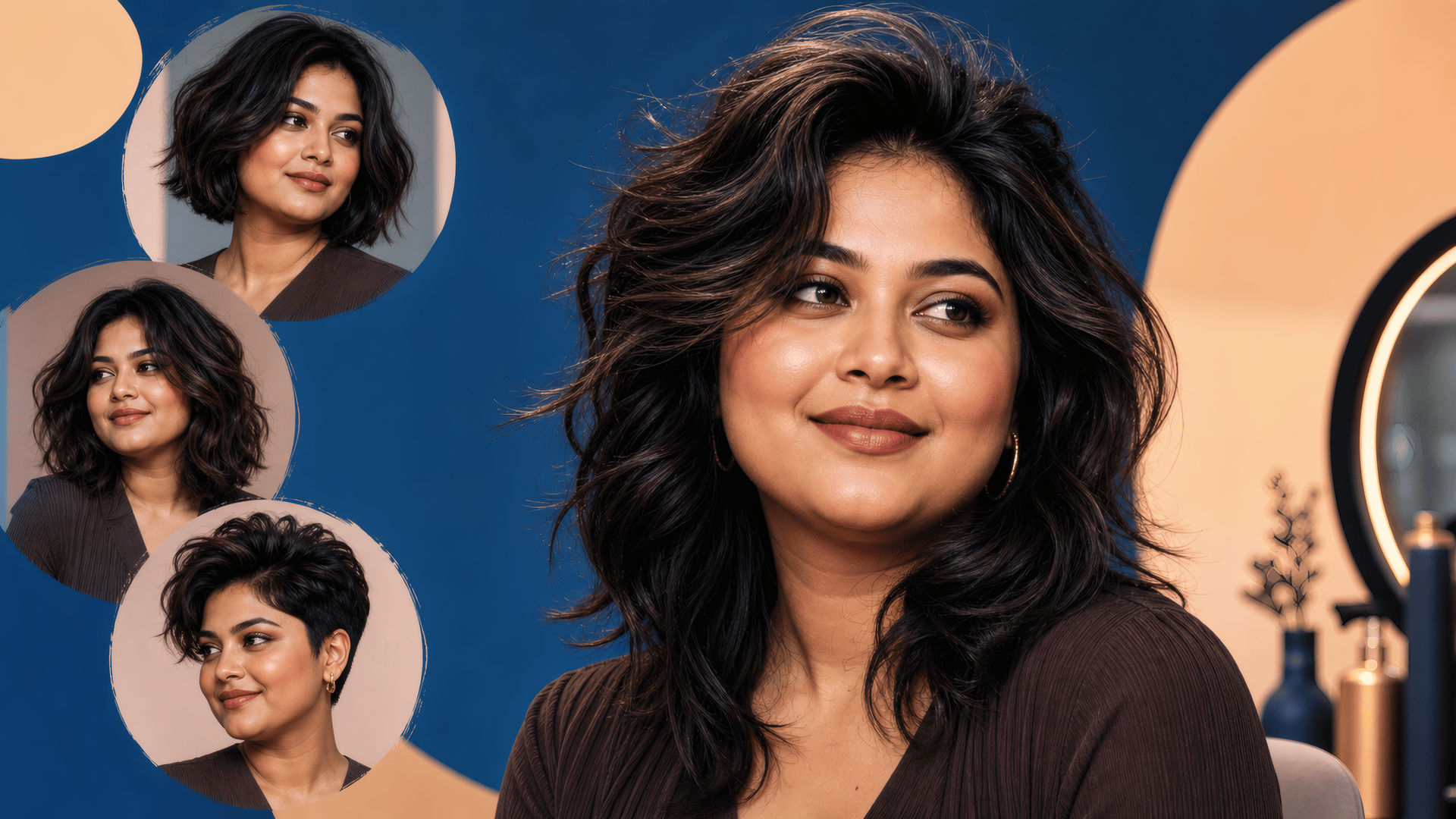
- Round. Height and angular structure on top (pompadours, side-swept parts, long layers) to elongate. See the round face hairstyle guide.
- Square. Textured layers and soft waves to soften the angular jaw.
- Oblong. Horizontal volume: bangs, waves, shoulder-length cuts.
- Heart. Styles adding width at the jaw (chin-length bobs, loose waves).
- Oval. Maximum versatility; balanced proportions accommodate nearly any cut. See the oval face hairstyle guide and men's face shape hairstyle guide.
For a men's guide covering all seven shapes, see face shape hairstyles for men.
How to choose the best haircut for your face shape
Eyewear by face shape
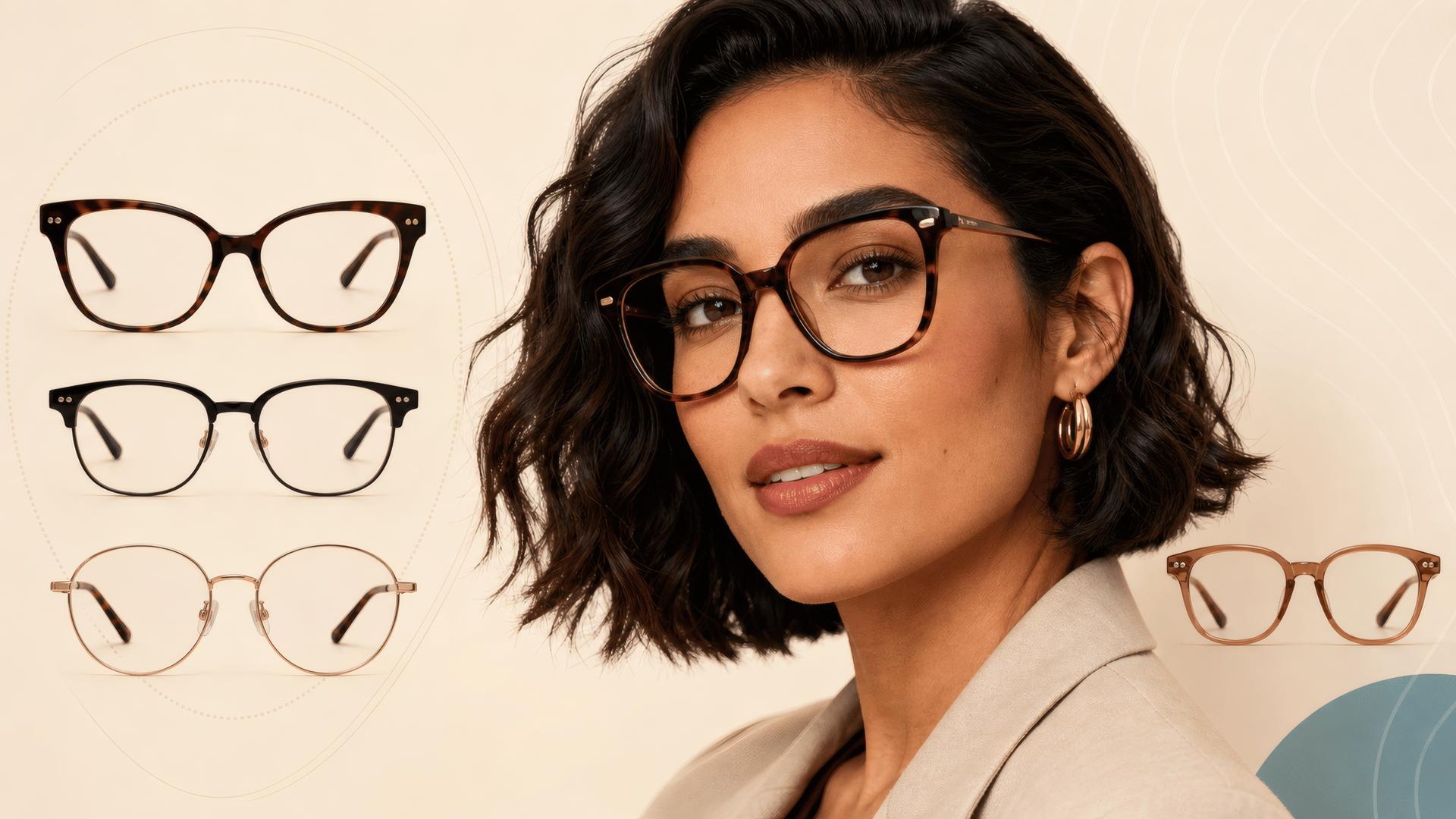
Frames should generally be as wide as the broadest part of your face (Warby Parker, Zenni Optical, All About Vision all agree):
- Round face. Angular, rectangular frames.
- Square face. Round or oval frames to soften angles.
- Heart face. Bottom-heavy or rimless frames to avoid bulk at the brow.
For our full breakdown, see glasses frames for face shape.
Facial hair by face shape
- Round. Length at the chin, shorter sides (goatees, Van Dyke) to create vertical lines.
- Square. Clean stubble (3-5mm) or short boxed beards following the natural jawline.
- Oblong. Fullness at the sides, shorter chin length to avoid further elongation.
You can also explore our facial hair types finder tool.
Frequently asked questions
Can I have two face shapes? Yes, and it's the norm. Most people share traits of two adjacent shapes. Dr. Konstantin Vasyukevich (double board-certified facial plastic surgeon) notes rectangular faces are a combination of oval/oblong and square features. Warby Parker confirms: this is "totally normal."
What is the most common face shape? Oval is cited most often, though data is limited. AI scan data from FaceAura (3,803 scans) found oval at 46%, diamond at 22%, and heart at 19%. But this is a self-selected sample, not a population study.
What is the "best" face shape? There isn't one. A 2020 PMC study found eyes alone account for nearly 24% of perceived attractiveness, far more than face outline. Face shape is one variable among many (symmetry, skin texture, feature placement).
Is face shape genetic? Substantially. A PMC heritability study (Baynam et al.) found facial width was 66% heritable and nasal width 62%, though environment plays a role too.
AI apps vs. manual methods: which is better? AI is fast but inconsistent on borderline cases. Manual measurement is more reliable. Best approach: use AI as a quick first guess, then verify with the four-measurement method.
Can I check other facial features too? Yes. Beyond face shape, you can use our tools to analyze your eye shape, nose shape, jawline shape, lip shape, eyebrow shape, ear shape, and hair type.
Your face shape is a starting point, not a box
Face shape is a spectrum. Most people fall between two categories. The method of observation (selfie distortion, lighting, expression) can shift your apparent shape by a full category, which is why apps disagree.
The value isn't the label. It's the balance principle: knowing where your face is widest and narrowest unlocks better hairstyle, eyewear, and grooming choices.
Ready to find your face shape?
Try our free face shape detector, upload a photo and get your result in seconds.
More resources
- Face shape hairstyles for men, cuts for all seven face shapes
- Oval face shape hairstyles, oval-specific advice
- Round face hairstyle guide, short, medium, and long options
- Glasses frames for face shape, frame selection and fit guide
Sources
- Milady Standard Cosmetology (14th edition)
- Farkas et al. (2005), Journal of Craniofacial Surgery
- Ward et al., Facial Plastic Surgery & Aesthetic Medicine (formerly JAMA Facial Plastic Surgery), selfie distortion study
- Shaw et al. (2007), Plastic and Reconstructive Surgery, age-related bone resorption
- Perspective distortion (photography)