Oblong and oval face shape: how to tell them apart
Reviewed by Face Shape ID Team
- face shape
- oblong face
- oval face
- styling
Learn the difference between an oblong and oval face shape with a simple measurement test, photo checklist, comparison chart, and styling advice for borderline faces.
In this article(8 sections)
Someone sent me a selfie last week, dead certain her face was "obviously oblong." It wasn't. Not exactly — more like an oval having a rough day under bad bathroom lighting. This mix-up happens constantly, and it's rarely the person's fault. Two shapes that look almost identical on paper, sharing most of their letters in styling guides, so of course people get stuck.
Both are longer than they are wide. That's basically where the agreement ends.
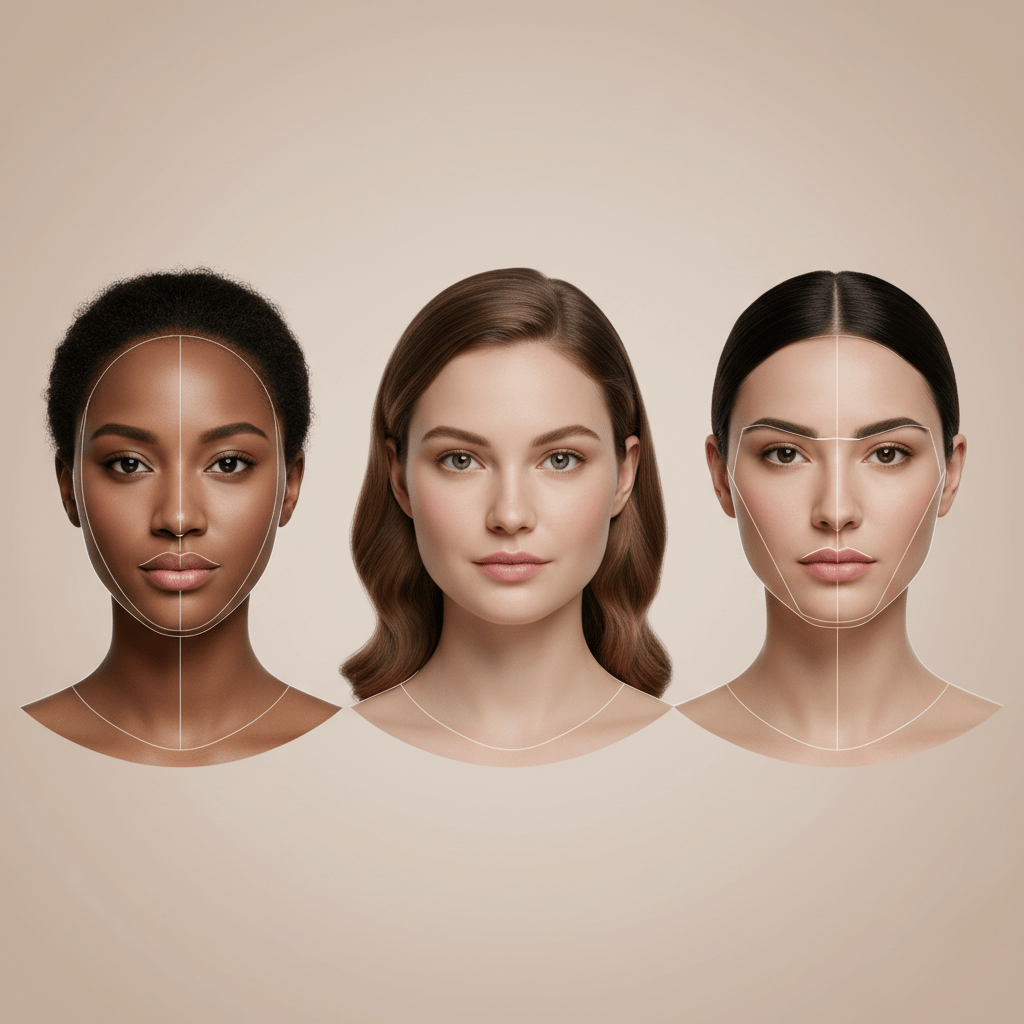
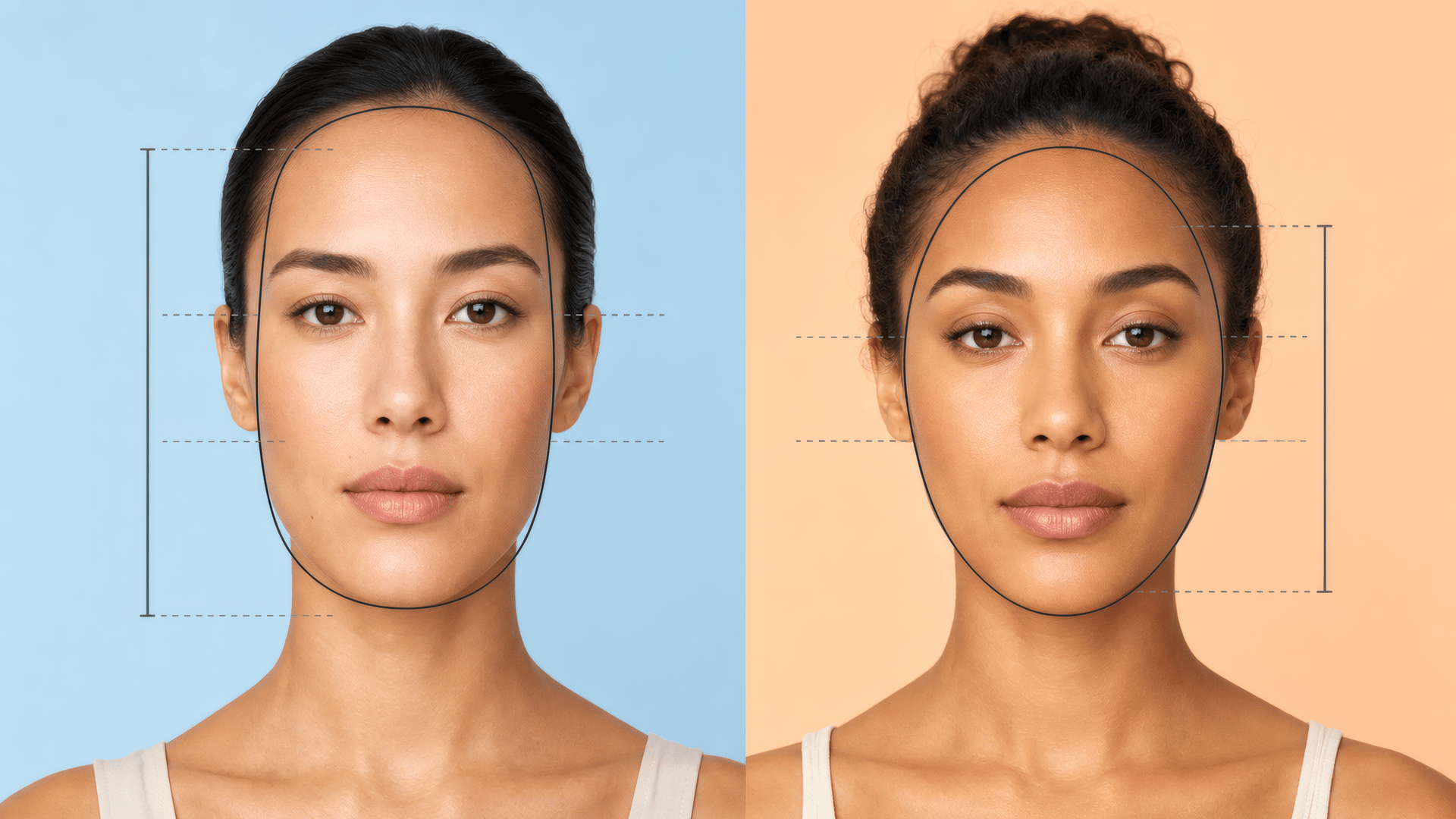
An oval curves out around the cheekbones and tapers soft toward the chin. Oblong keeps a steadier width the whole way down — forehead, cheeks, jaw, all sitting fairly close together — with sides that run straighter, more like a stretched rectangle than a curve. So the real test isn't length. It's what happens along the edges.
Quick and dirty, if you're skimming:
- Oval: cheekbones are usually the widest point, jaw tapers soft and rounded.
- Oblong: longer, straighter, width barely shifts from forehead to chin.
- Rectangle. Basically an oblong with sharper corners — a lot of stylists just fold it into the same bucket anyway.
- Long oval is the useful in-between one. Curved like an oval, just stretched further than the textbook version. Use it if neither of the other two feels right.
- Lighting and angle lie constantly. A tilted phone selfie can turn a perfectly normal oval into something that reads as oblong on screen.
More curve
Oval
- Widest: cheekbones
- Edges: curve out, then taper
- Read: balanced and softly elongated
More length
Oblong
- Widest: changes very little
- Edges: straighter and more parallel
- Read: noticeably longer overall
Comparing the outline instead of guessing
Two things decide the label: your widest point, and whether the sides curve or run flat. That's most of the test, honestly.
Milady's cosmetology textbook — the one nearly every licensed cosmetologist trained on at some point — actually files oblong and rectangle under one heading. Other guides split them into separate categories entirely. So when two sources hand you two different names for what's clearly the same face in the photo, that's not you doing it wrong. That's the industry not agreeing with itself, and it's been that way for decades.
Here's the part people skip: the widest-point rule only works if you're measuring at the right spot, which is the bone right under the outer corner of your eye, not further back near your ear like most people guess.
Actually measuring your face
Grab a soft tape measure. Not the metal one from a toolbox — pokes weird, doesn't sit flush.
Pull all your hair back first. Hairline, temples, jaw, chin, all of it visible.
Then measure straight down the middle, hairline to chin, for length. Cheekbone width comes next, across the highest points under your eyes. Forehead after that. Jaw last — measure chin to just below one ear, then double it, since measuring both sides separately throws off the number more often than people expect.
Numbers only tell half the story though. A ratio can't tell you whether your jawline curves or cuts at an angle, and that curve-versus-angle question matters more than the actual inches. There's research on facial proportions (the Farkas anthropometric studies get cited a lot in this space) but that's clinical measurement, not a styling verdict. Nobody's diagnosing you here.
How to tell if your face is oval or long
Photos ruin everything, basically
Face the camera straight on. Eye level. Even light from the front — a lamp off to one side will carve shadows that aren't really there.
Neutral expression. Hair pulled back off the sides. And step back further than feels necessary, then crop in later, instead of holding the phone six inches from your nose. Close-up lenses distort proportions in ways that genuinely surprise people the first time they see it side by side with a normal-distance shot. Skip filters. Skip contouring too, if you're testing this seriously — bronzer along the jaw will fake an angle that isn't structurally there.
When the label keeps flip-flopping on you
Selfie says oval, mirror says oblong? Try a photo from farther back, rear camera if you've got one. If the face still reads long but the cheekbones flare and the sides curve, work from oval advice. If width stays even top to bottom and the sides look parallel, go oblong.
The detector spit out "oval-oblong" and you want a straight answer. Keep the combined one. It's genuinely more useful than forcing a box — go for hair with movement through the sides, skip volume that's only piled at the crown, and look for glasses with enough lens height to balance the length. That combo works for a wider range of faces than either label alone, in my experience anyway.
Hair hiding your outline entirely, buns and layers doing their thing? Tie it back for one honest photo, or just trust your measurements over the mirror. A hairstyle isn't a face shape. Long flat hair can stretch almost any face into looking oblong even when the bone structure underneath is a totally normal oval.
Beard changing the jawline on you — that's cosmetic, not structural. One clean-shaven photo, then decide from there whether the beard should add length, width at the sides, or sharper definition along the jaw.
Styling from an oval base
Basically anything works here, though the details still matter more than people assume.
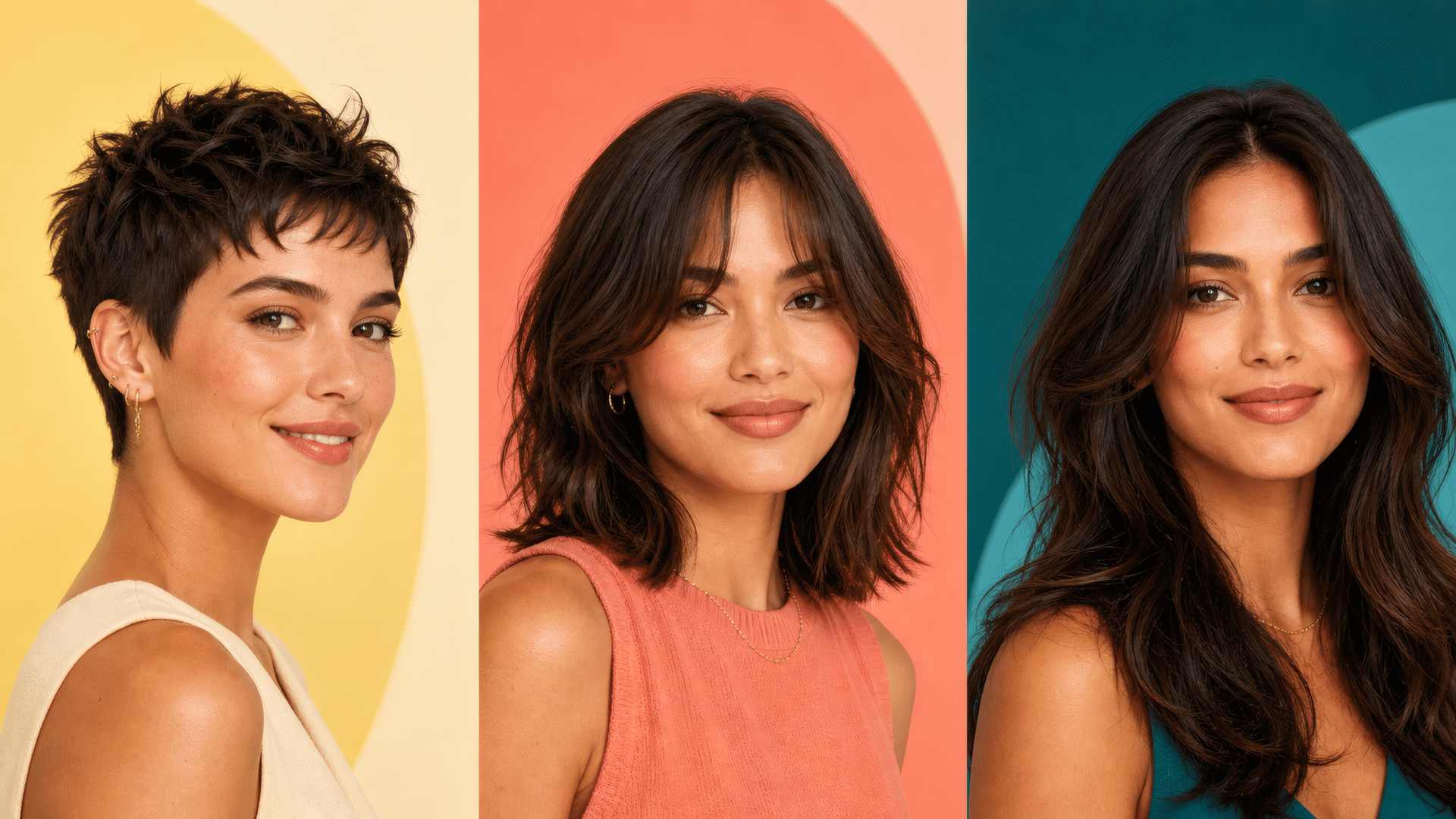
Layers or waves pull attention toward the cheekbones. Bangs shift the forehead-to-face ratio if that's a proportion you want to play with. A sleek one-length cut keeps the elongated look if that's your thing. And for glasses — fit comes first, always, before you even think about frame shape. Bridge width, temple length, pupillary distance. Get those wrong and the frame will slide, dig in behind your ear by 3pm, and you'll be adjusting it every four minutes at dinner. I had a pair of rimless frames years ago that slid straight down my nose the second I stepped outside in any kind of humidity — cheap bridge, wrong fit, looked fine in the store mirror and fell apart in real weather.
Styling from an oblong or rectangle base
Side-swept fringe. Curtain fringe. Textured layers that break up a long, uninterrupted line running top to bottom.
Keep some width at the temples if more length isn't the goal. Medium cuts and shoulder-length waves add horizontal movement without much effort. Avoid stacking all the volume at the crown while leaving the sides completely flat — unless that's specifically the silhouette you're after, in which case, fine, ignore this. Taller lens shapes with some depth tend to balance a long face better than small rounded frames, though I'll admit curtain fringe gets recommended a little too often for this shape. It works, sure. It's just not the only thing that does.
When it's worth asking someone in person
You don't need a professional to pick a haircut, honestly. Bring in a stylist, barber, or optician when your hairline hides most of the outline, you're eyeing a dramatic cut, your curls shrink up enough to change the visible length, or you need prescription frames fitted to an actual bridge and temple measurement instead of guessed off a chart.
Bring your numbers. Bring the photos you used. Skip asking someone to eyeball a shape from memory — that's how you end up with three different opinions in one afternoon.
Frequently asked questions
Is an oblong face the same as oval? Not always, though they're close enough to confuse constantly. Oval tends to show more cheekbone width and curved sides. Oblong runs more even, straighter along the edges.
Is long oval the same as oblong? They can describe a similar face, sure. Long oval leans into the curve. Oblong leans into the extra length and even width. Whichever one gets you better hair advice, use that one.
Which face shape is more attractive? There's no ranking here, and honestly anyone selling you one is selling something else too. Shape is one input among many — styling works better as a tool for choosing proportions you actually like wearing, not a scorecard.
Why does my face shape look different in every single photo? Lens distance, angle, tilt, lighting, hair, facial hair. All of it shifts the outline slightly. Straight-on, farther back, then confirm with a tape measure if you're still not sure.
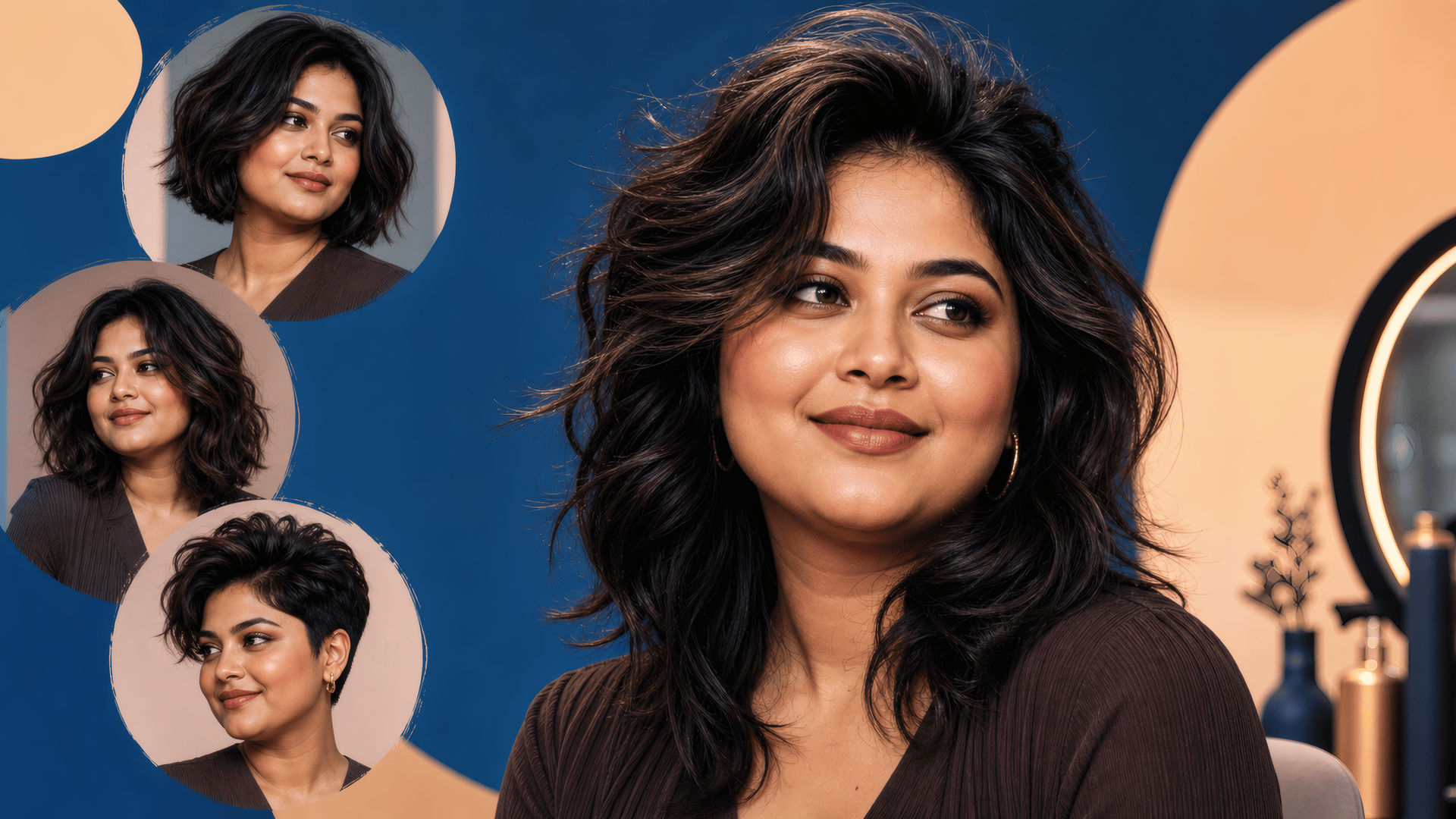
What haircut works for oval-oblong? Medium layers, side-swept movement, waves, some controlled height without going flat at the sides. If your cheeks run full too, that changes things slightly, worth a separate look.