More useful examples, fewer body myths
Kibbe body types plus size
Kibbe body types plus size should be discussed through clothing line, fit, and visual scale, not a thin-body template. This guide explains how to compare identities, find useful examples, and adapt recommendations at any size.
Face Shape ID is an independent educational resource. We are not affiliated with David Kibbe or his Image Identity System.
Quick answer
Kibbe body types plus size should be discussed through clothing line, fit, and visual scale, not a thin-body template. This guide explains how to compare identities, find useful examples, and adapt recommendations at any size.
The basics of Kibbe body types plus size
There is no separate plus-size set of Kibbe identities. Size can change how fabric fits, where a seam lands, and how much ease you need, but it does not turn the system into a different list of categories.
Start with line and fit together. A garment can have the right direction and still fail because the bust, hip, shoulder, rise, sleeve, or length does not fit your body. Fix the garment problem before deciding the line is wrong.
- Use photos and outfit references from people with a range of sizes, heights, ages, and styling contexts.
- Evaluate the garment on a body with its own proportions, not on a hanger or a sample-size model.
- Keep the type label flexible while you test silhouettes in your real wardrobe.
Common misconceptions about weight and Kibbe type
| Misconception | More useful question |
|---|---|
| A larger body automatically means a Soft or Romantic identity. | Does the complete outfit need vertical, width, balance, compact scale, curve, or a combination? |
| Weight gain creates a new Kibbe type. | Which clothing lines still work as fit, fabric, and styling change? |
| Loose clothes are always the safest choice. | Does the garment provide the right ease without hiding the line your outfit needs? |
| Celebrity examples prove a plus-size type. | Can you find repeated outfit evidence from people in a similar size and styling context? |
| A recommendation only works in straight sizes. | How can the same silhouette be cut, altered, or sourced in your size range? |
How to find inclusive Kibbe examples
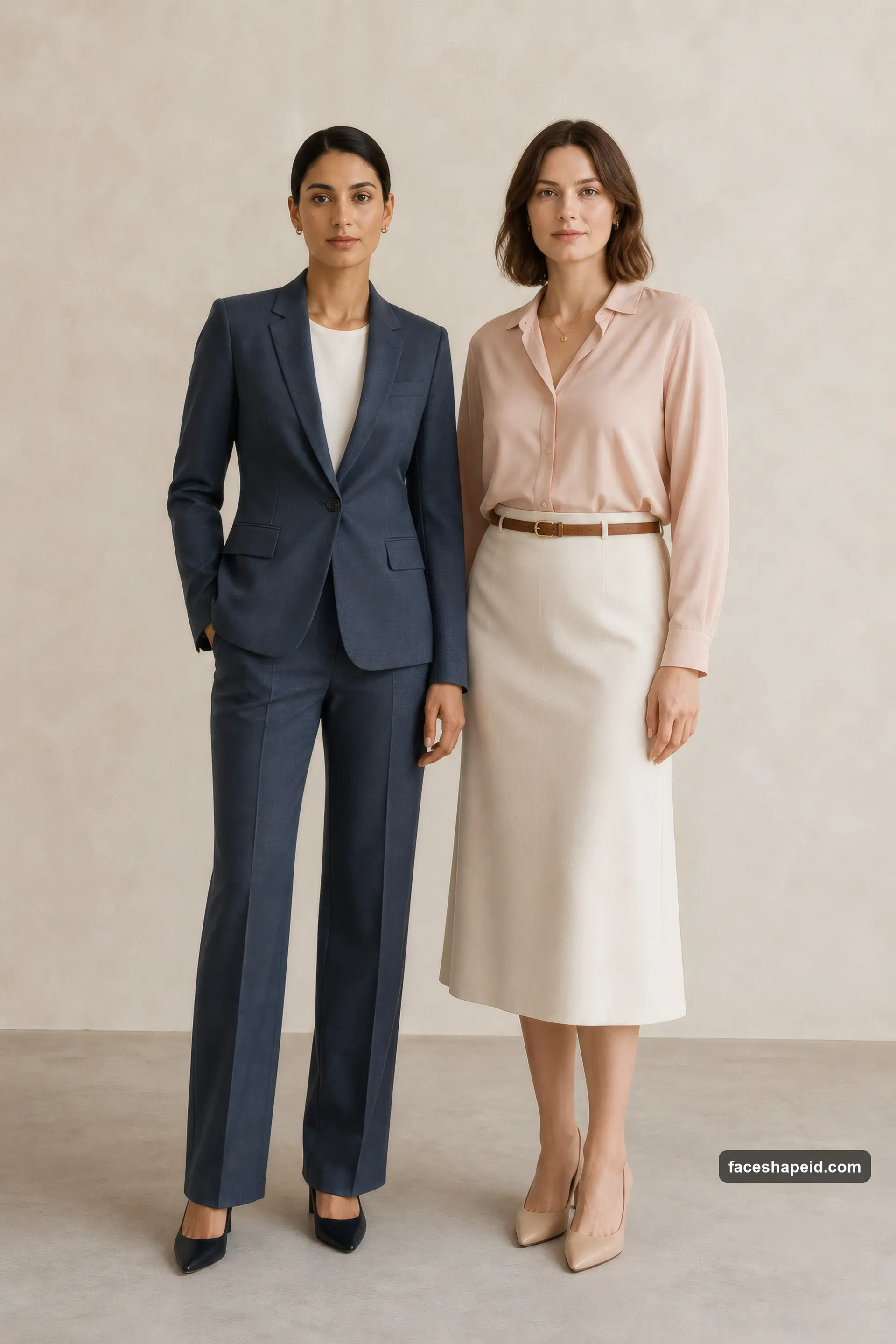
Look for outfit creators, retailers, and community members who show full looks in your size range. Prioritize clear front, side, and movement views over heavily edited mood boards. A useful example lets you see the relationship between the garment and the person wearing it.
Do not require an example to look like you. Compare the clothing job instead: long line, open ease, moderate proportion, compact contrast, or curve-following shape. Then adapt the garment for your height, fit preferences, climate, and daily movement.
Visual research
Search by garment job
Search for plus-size long column outfits, open overshirt looks, moderate tailoring, cropped contrast, or curve-following dresses instead of searching only for a type name.
Evidence
Check the full fit
Look at shoulder, bust, waist, hip, hem, and sleeve fit. A stretched or pinned garment can distort the line you are trying to study.
Wardrobe
Keep your own references
Photograph outfits which work after a normal day. Your repeat-wear evidence is more useful than a saved celebrity collage.
Dress for the line you want to support
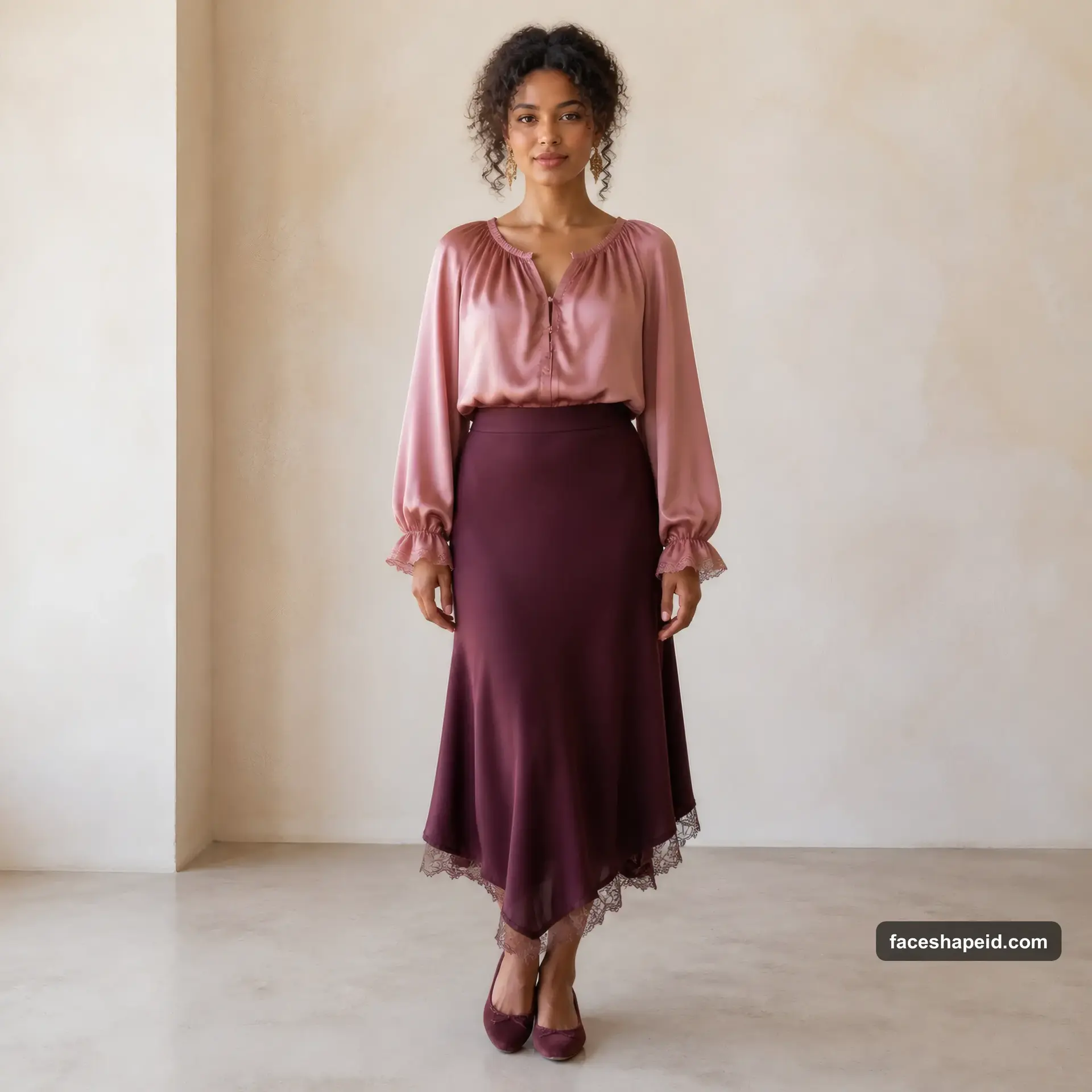
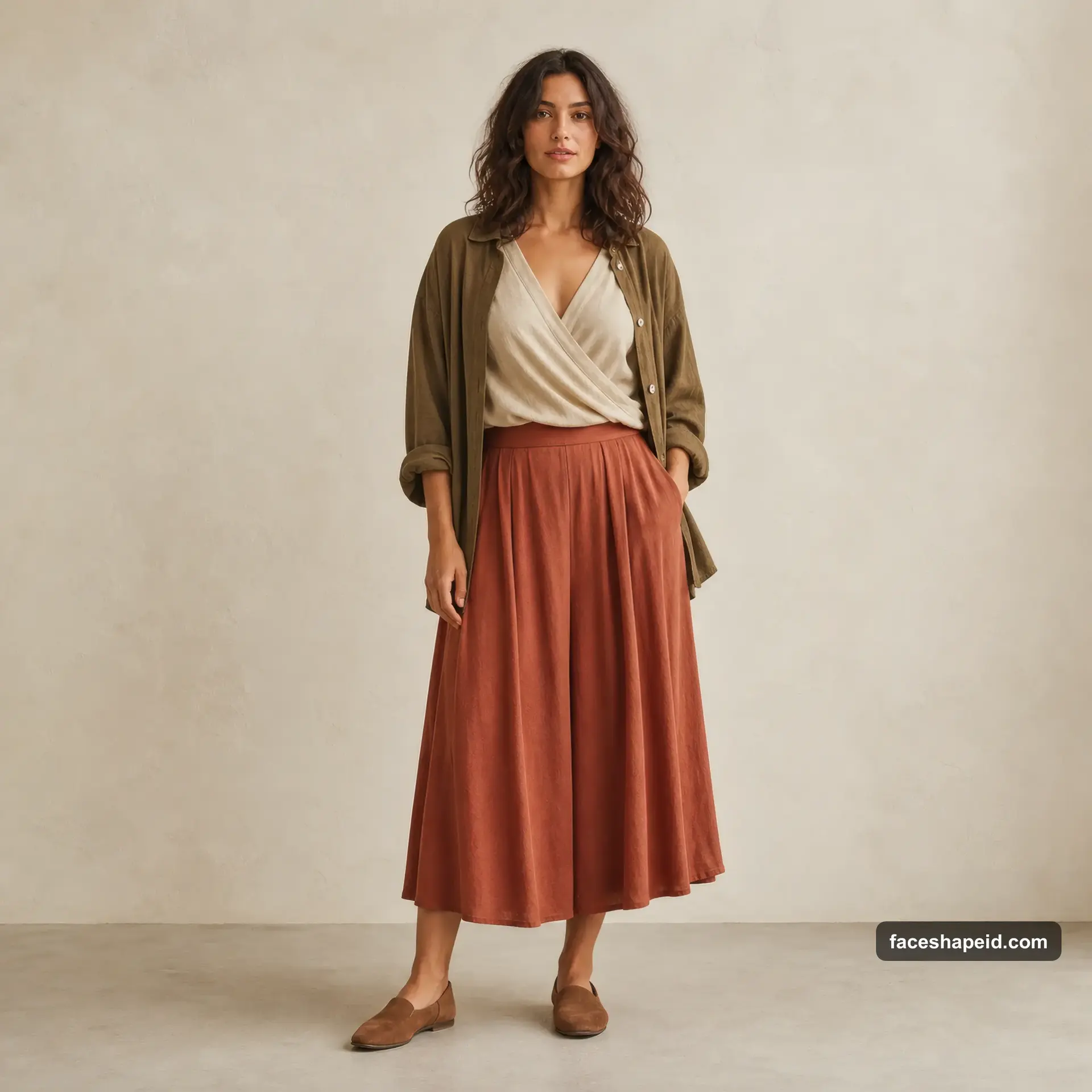
Once you have a likely direction, translate it into garments available to you. A long line can come from a tonal column, a coat, or a continuous dress. Width can come from an open overshirt or relaxed shoulder. Curve can come from drape, shaping, or a rounded neckline. Balance can come from measured proportion and controlled detail. Compact scale can come from cropped layers and clear breaks.
You do not need to wait for weight change, a perfect wardrobe, or a smaller size to use the framework. The point is to make current clothes easier to evaluate and easier to wear.
Frequently asked questions
Can plus-size people have any Kibbe body type?
Yes. Plus-size people can explore any of the line directions in the system. Size does not select one identity; clothing line, visual scale, fit, and complete-outfit response are more useful evidence.
Does weight change your Kibbe body type?
Weight can change fit and how visible some features are, but it does not create a separate plus-size identity. Recheck garments and line response as your wardrobe or body changes instead of relying on old fit assumptions.
Why are plus-size Kibbe examples hard to find?
Online references often favor celebrity photos, sample-size editorial images, and a narrow range of bodies. Search by clothing line and garment job, then build a personal library from people who show clothes in your size range.
Can Kibbe clothing recommendations work in extended sizes?
Yes. The recommendation describes silhouette, fabric, and detail direction. You may need different ease, support, tailoring, or retailers to achieve the same visual line comfortably.
Sources
These pages summarize a style framework for educational use. They do not provide an official David Kibbe typing service.