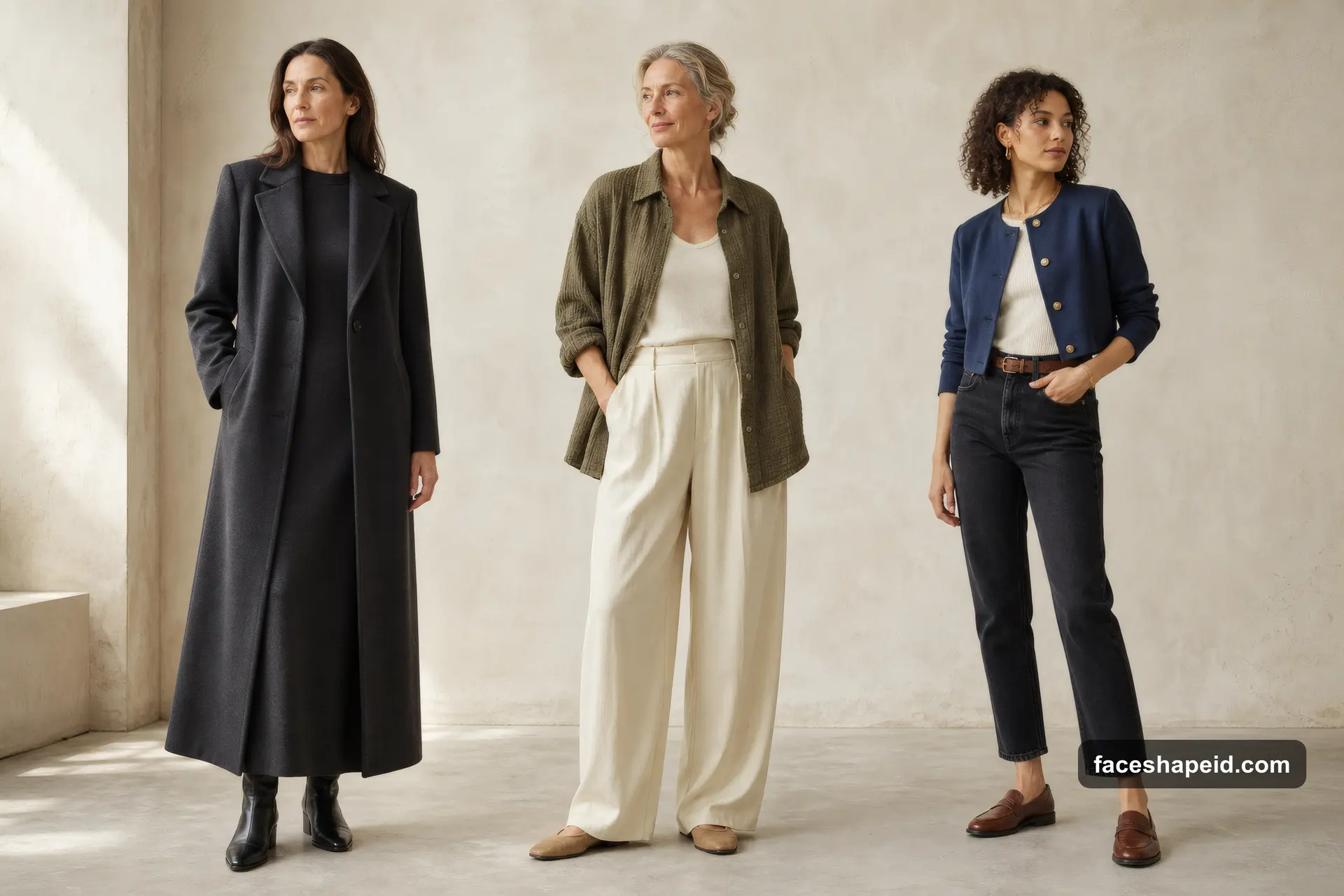
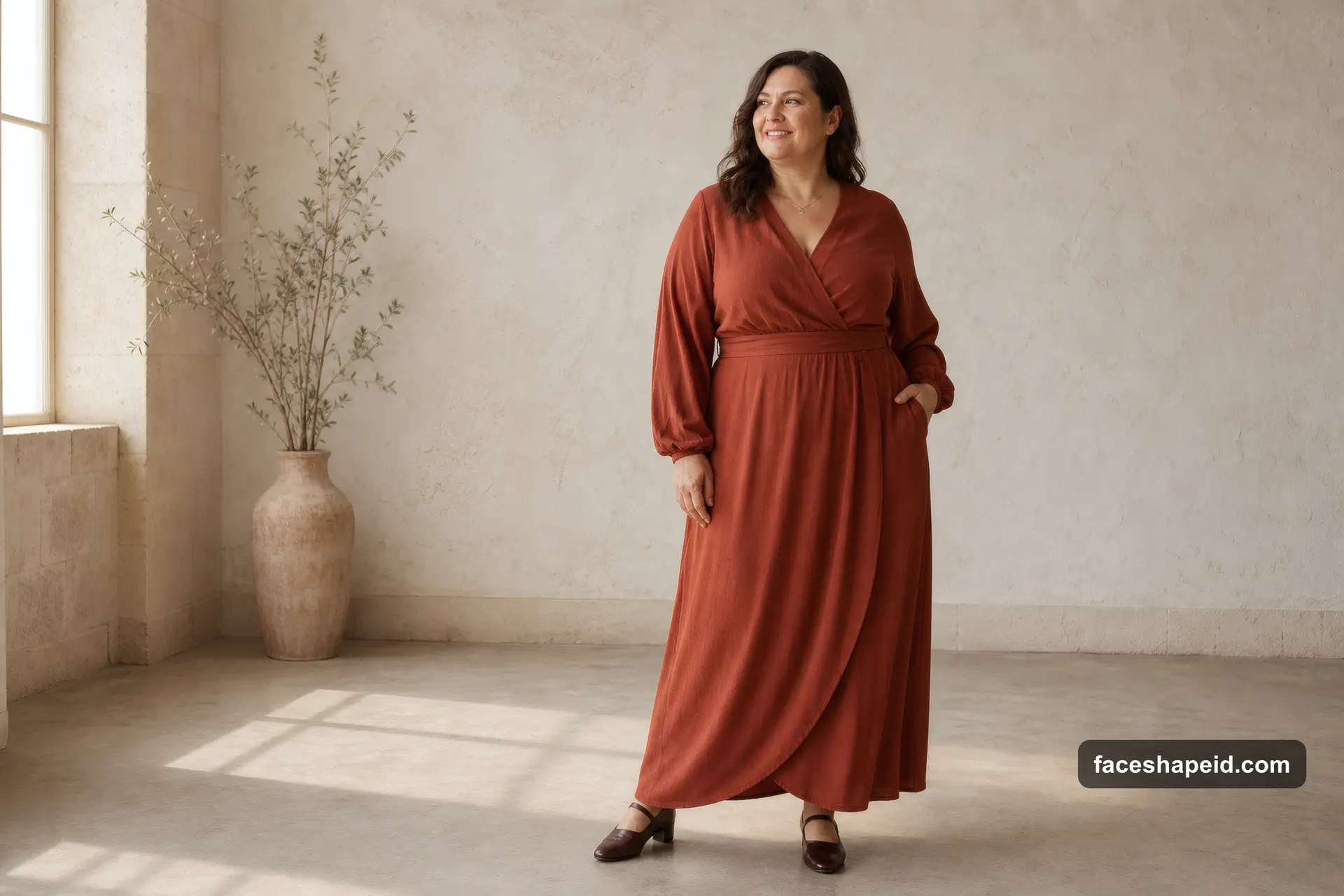
A chart you can use in the fitting room
Kibbe body types chart
This Kibbe body types chart puts the 10 identities in one place. Read the dominant line first, then compare the clothing direction and the nearby identity most likely to cause confusion.
Face Shape ID is an independent educational resource. We are not affiliated with David Kibbe or his Image Identity System.
Quick answer
This Kibbe body types chart puts the 10 identities in one place. Read the dominant line first, then compare the clothing direction and the nearby identity most likely to cause confusion.
The 10 Kibbe body types chart
The chart below uses five families and two current identities within each family. The dominant line is the quickest way to orient yourself, but the final distinction comes from how the rest of the composition handles scale, softness, and detail.
| Image Identity | Family | Dominant line | Clothing direction |
|---|---|---|---|
| Dramatic | Dramatic | Vertical and sharpness | Long, clean silhouettes; precise tailoring; clear geometric scale. |
| Soft Dramatic | Dramatic | Vertical and curve | Long lines, drape, bold scale, and room for curve. |
| Flamboyant Natural | Natural | Vertical and width | Long relaxed shapes, open necklines, texture, and generous scale. |
| Soft Natural | Natural | Width and curve | Relaxed shapes, soft drape, gentle definition, and tactile texture. |
| Dramatic Classic | Classic | Balance with sharpness | Measured tailoring with a crisp edge and controlled detail. |
| Soft Classic | Classic | Balance with curve | Smooth symmetry, soft shaping, and moderate refined detail. |
| Flamboyant Gamine | Gamine | Petite and vertical | Cropped shapes, broken lines, crisp contrast, and small geometry. |
| Soft Gamine | Gamine | Petite and curve | Compact fitted shapes, curved detail, and lively contrast. |
| Theatrical Romantic | Romantic | Curve with sharpness | Curve-following silhouettes with precise shaping and controlled ornament. |
| Romantic | Romantic | Curve and rounded softness | Soft drape, rounded shapes, clear waist shaping, and fluid detail. |
Read the five families before the type name
Families are useful because they reduce a long list of names to five line directions. They are a first pass, not a shortcut to a label. Two people in one family can still need different scale, softness, or detail.
Long and sharp
Dramatic family
Dramatic and Soft Dramatic both need vertical. Sharpness leads in Dramatic; curve and bold scale join the vertical in Soft Dramatic.
Open and relaxed
Natural family
Flamboyant Natural pairs length with width. Soft Natural pairs openness with curve. Both need room instead of a tightly controlled frame.
Even and measured
Classic family
Dramatic Classic adds sharpness to balance. Soft Classic adds curve. Moderate scale keeps both identities coherent.
Compact and broken
Gamine family
Flamboyant Gamine brings a vertical current through compact, broken lines. Soft Gamine brings curve. Both benefit from compact sections instead of one uninterrupted column.
Rounded and curve-led
Romantic family
Theatrical Romantic adds a precise edge to curve. Romantic keeps the direction rounded and soft. Both need shape which follows curve.
Why some Kibbe charts show 13 types
Older charts often include pure Natural, pure Classic, and pure Gamine alongside the 10 blended identities. This site uses the 10-identity version for its guides, while keeping the older list visible as historical context.
When two charts disagree, check the date and the terminology before treating one as a contradiction. The useful part is the line direction, not winning an argument about which number belongs in a graphic.
Frequently asked questions
How many Kibbe body types are on this chart?
This chart shows 10 current Image Identities across five families. Older material may show 13 because it includes pure Natural, Classic, and Gamine as separate names.
Is a Kibbe body types chart the same as a body-shape chart?
No. A body-shape chart usually compares selected measurements or outlines. A Kibbe chart summarizes head-to-toe clothing lines, visual scale, and the accommodations an outfit needs.
Which row should I start with?
Start with the dominant line you notice in complete outfits: vertical, width, balance, compact scale, or curve. Then compare the two identities within that family.
Sources
These pages summarize a style framework for educational use. They do not provide an official David Kibbe typing service.