Direct answer
Do nose types affect breathing or health?
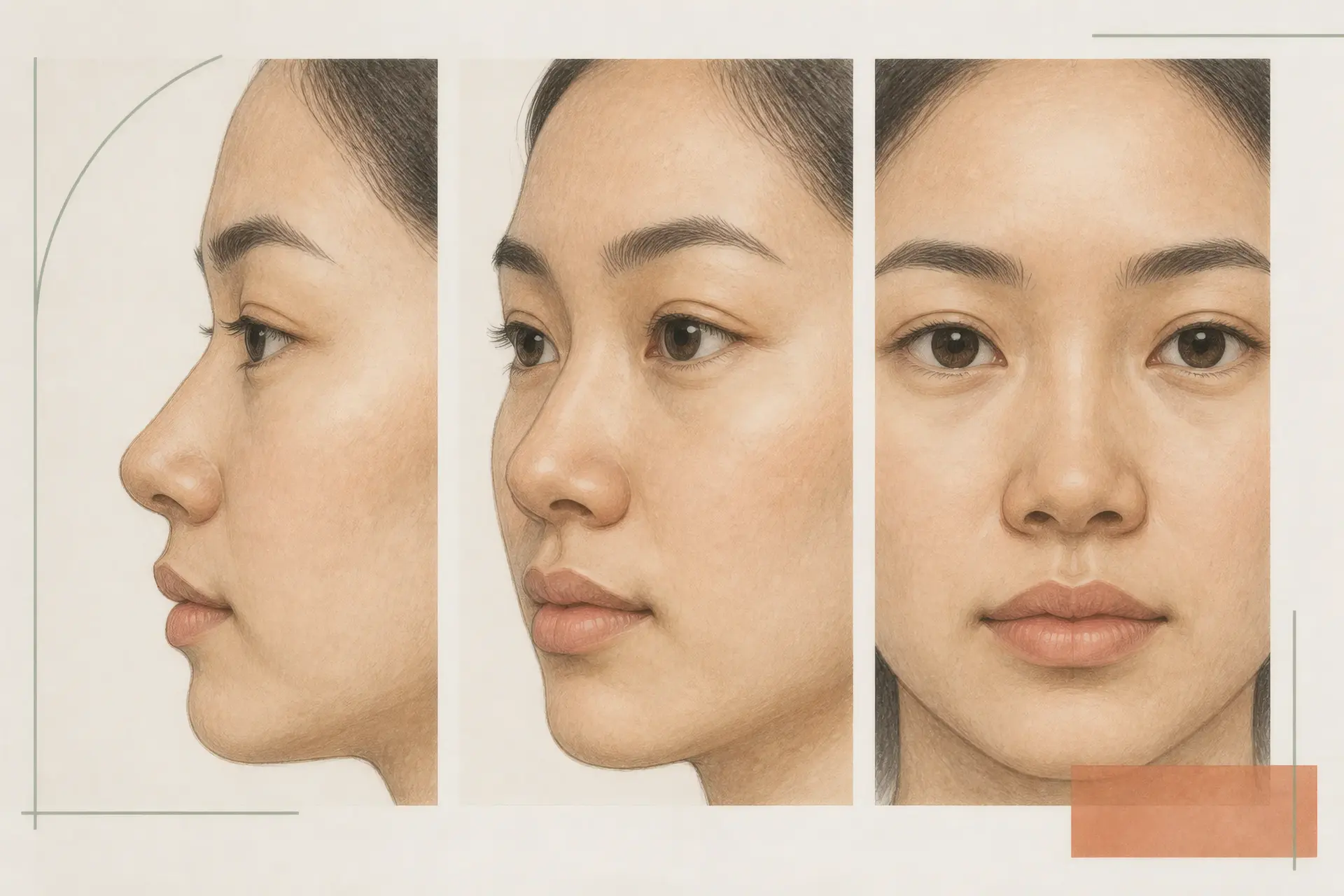
Every week, ear, nose, and throat clinics see the same scene. Someone points at a bump on their bridge or a wide tip and asks whether that's why one side never breathes right. The answer surprises them. Most of the time, the shape on the outside has nothing to do with the the trouble on the inside.
This page gives you the short version. What controls airflow, where looks and health genuinely cross paths, and which symptoms deserve a professional exam. Want the full structural tour? The nose anatomy guide goes deep on every part mentioned here.

The quick answer
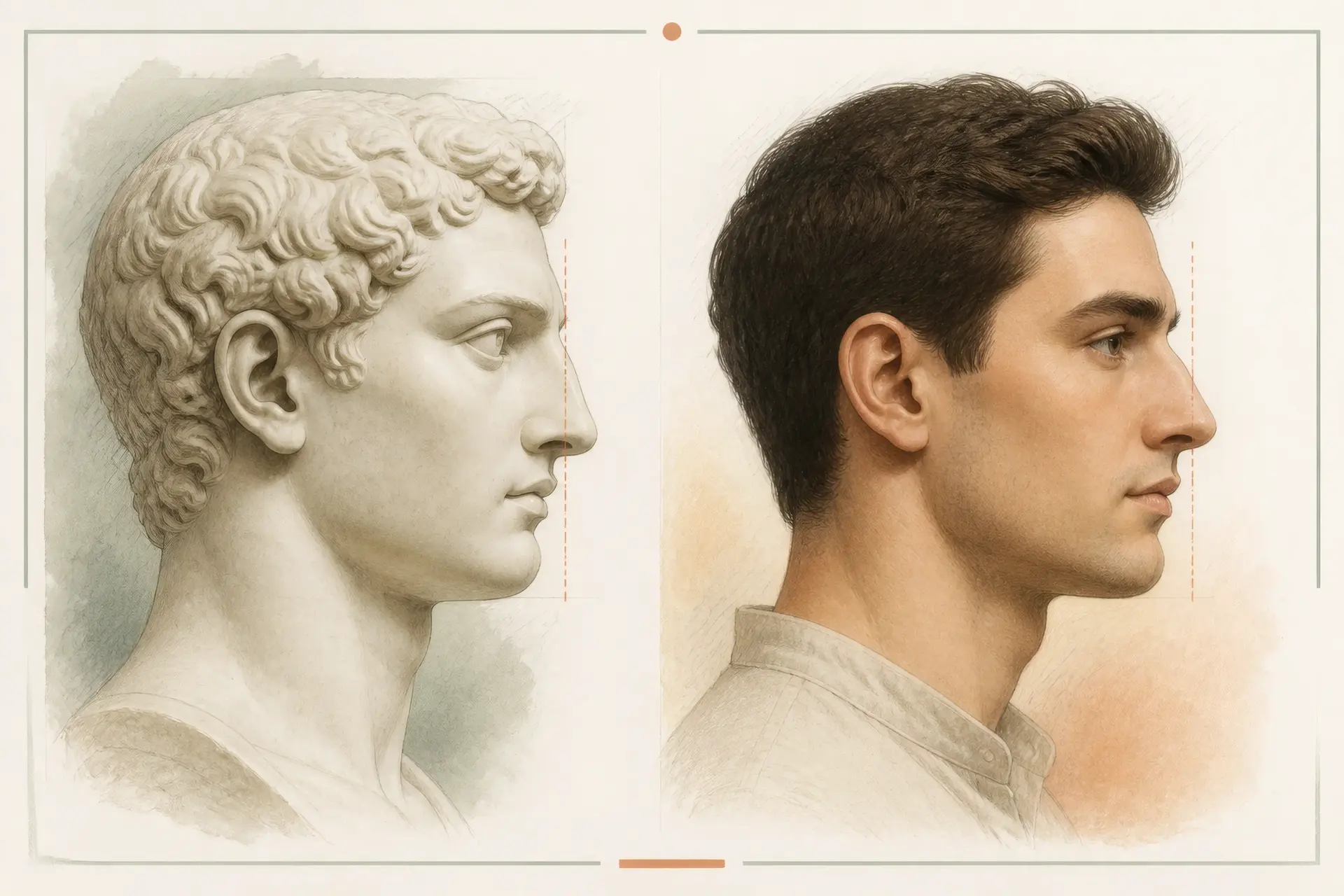
Mostly no. Whether your nose reads Roman, button, flat, or wide from the outside, that shape doesn't decide how well you breathe. Airflow runs through structures you can't see in the mirror. The septum. The nasal valves. The turbinates, plus a few square millimeters of cartilage at the rim. Two noses that look identical can move air completely differently.
What actually controls airflow
Four structures do the real work. None of them show up in a selfie.
The septum
The wall down the middle.
Cartilage and bone split your nose into two passages. When that wall bends to one side, a deviated septum, it narrows the passage on that side. Most people carry some deviation and never notice. It becomes a breathing problem when the bend is sharp enough to block airflow or trap mucus.
The internal nasal valve
The narrowest point in the whole airway.
This small segment sits between the upper lateral cartilage and the septum, at an angle of roughly 10 to 15 degrees. Because it is the tightest spot, tiny changes have outsized effects. A valve weakened by injury, aging, or past surgery can collapse inward on every breath.
The turbinates
Soft shelves that swell and shrink.
These warm and humidify incoming air, and they react fast. Allergies, a cold, or dry winter air can swell them enough to clog a nostril within minutes. That is why a stuffy nose comes and goes while your nose shape stays put.
The external valve
Right at the nostril rim.
The alar rim is the front door of the airway. If the cartilage there is weak, a hard sniff can suck the nostril wall inward. Athletes sometimes feel this mid-sprint, which is exactly why nasal strips exist.
One partial exception exists. A badly pinched or collapsed outside can signal weak valve cartilage underneath, which is why surgeons examine the silhouette and the internal valve before saying anything about airflow. I could be wrong here, but I'd guess this exception is where most of the "shape affects breathing" belief comes from. The full anatomy guide maps each of these structures with diagrams.
Where shape and health do cross paths
A few situations genuinely tie looks and function together.
- Trauma. A break that shifts the bridge can shift the septum behind it, so a newly crooked nose plus a newly blocked side belongs in front of a doctor once the swelling settles.
- Severe saddle nose, where the mid-bridge caves in after injury or certain illnesses, removes structural support. Airflow usually suffers along with the profile.
- Skin. Rosacea can thicken tip skin for years without touching the airway at all.
- Gradual change with age. Tips drop, the nasolabial angle closes, and support weakens, which is why a nose can breathe differently at sixty than it did at twenty.
On that last point, the guide to age-related nose changes covers what the slow drift looks like and what you can do about it.
What your nose shape can't tell you
Here's where I get on a small soapbox. People have been reading character and health off nose shapes for centuries, and the track record is awful. In the 1870s, Cesare Lombroso built an entire theory of criminality on skull and nose measurements. It was pseudoscience then, and it's pseudoscience now.
A hooked bridge says nothing reliable about your sinuses. A flat bridge says nothing about allergies. Wide nostrils say nothing about fitness. Classifying your own shape is fine for styling and curiosity, and the mirror method for identifying your nose type is a good five minutes. But classification is description, not diagnosis.
The marathon runner with the giant nose.
A training partner of mine has a nose that dominates every group photo. Big bridge, strong tip, the works. He ran a 3:12 marathon breathing through that nose for the first hour. His brother, owner of a small tidy nose, sleeps with his mouth open because of a deviated septum. The mirror never saw either of those coming.
When to see someone
None of this page is medical advice, and none of it replaces an exam. That said, a few patterns deserve a professional look.
- One side stays blocked for weeks and never clears.
- You snore, and a partner has watched you stop breathing for stretches during the night.
- Nosebleeds show up often, or keep landing on the same side.
- Your shape changed recently and it hurts. Pain plus a new silhouette after an injury needs eyes on it, soon rather than eventually.
An ENT can scope the inside in minutes. That one exam answers more than any mirror ever will.
Frequently asked questions
Can a big nose mean breathing problems?
Size outside does not map to space inside. A large nose can house a wide-open airway, and a small neat nose can hide a badly bent septum. Surgeons judge breathing with a scope and an airflow exam, never with a photograph.
Does a deviated septum change how the nose looks?
Sometimes. A septum bent far enough can push the external bridge off-center, so a visibly crooked nose can hint at a deviation. Plenty of deviations stay invisible, and plenty of crooked noses breathe fine. A noticable lean combined with one-sided blockage is the pairing worth checking.
Do wide nostrils breathe better?
Not measurably. The width of the alar base is set by cartilage and soft tissue at the rim, but the narrowest point in your airway is the internal valve, deeper inside. A wide nostril opening upstream of a tight valve moves no extra air. The nostril shape guide covers the rim variations in detail.
Next steps
Your mirror can classify your nose. It can't grade your airway, and now you know why. If you're curious about the septum, the valves, the turbinates, and the rest of the internal hardware, read the nose anatomy guide next. To identify your outside shape, try the free detector below or browse the full nose shape guide.