Nose type deep dive
Fleshy Nose
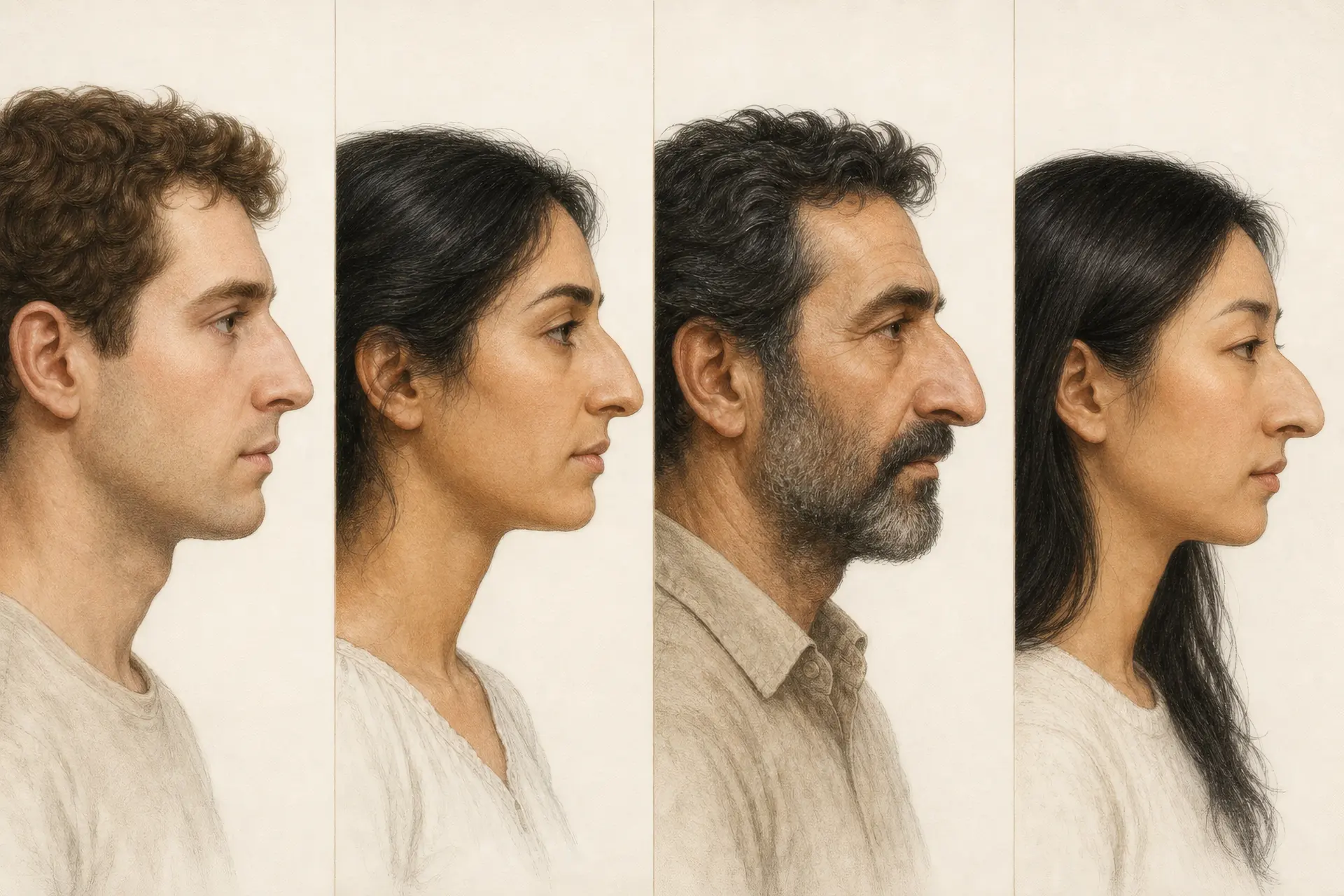
A fleshy nose shows up in photos as a soft, rounded silhouette where the skin seems to blur every edge the cartilage underneath tries to draw. People usually catch it while comparing front-camera shots with a friend. Same light, same angle, and one nose comes out crisp while the other reads like someone ran a softening filter over it. That blur has a physical cause, and it lives in the soft tissue, in the skin and the padding beneath it, more than in the framework below.
This page stays on that tissue. You'll get the traits that mark a fleshy nose, a clean comparison against the bulbous tip (the cartilage-driven cousin it gets confused with constantly), plus notes on styling and on talking to professionals. FAQs close it out.
The quick answer
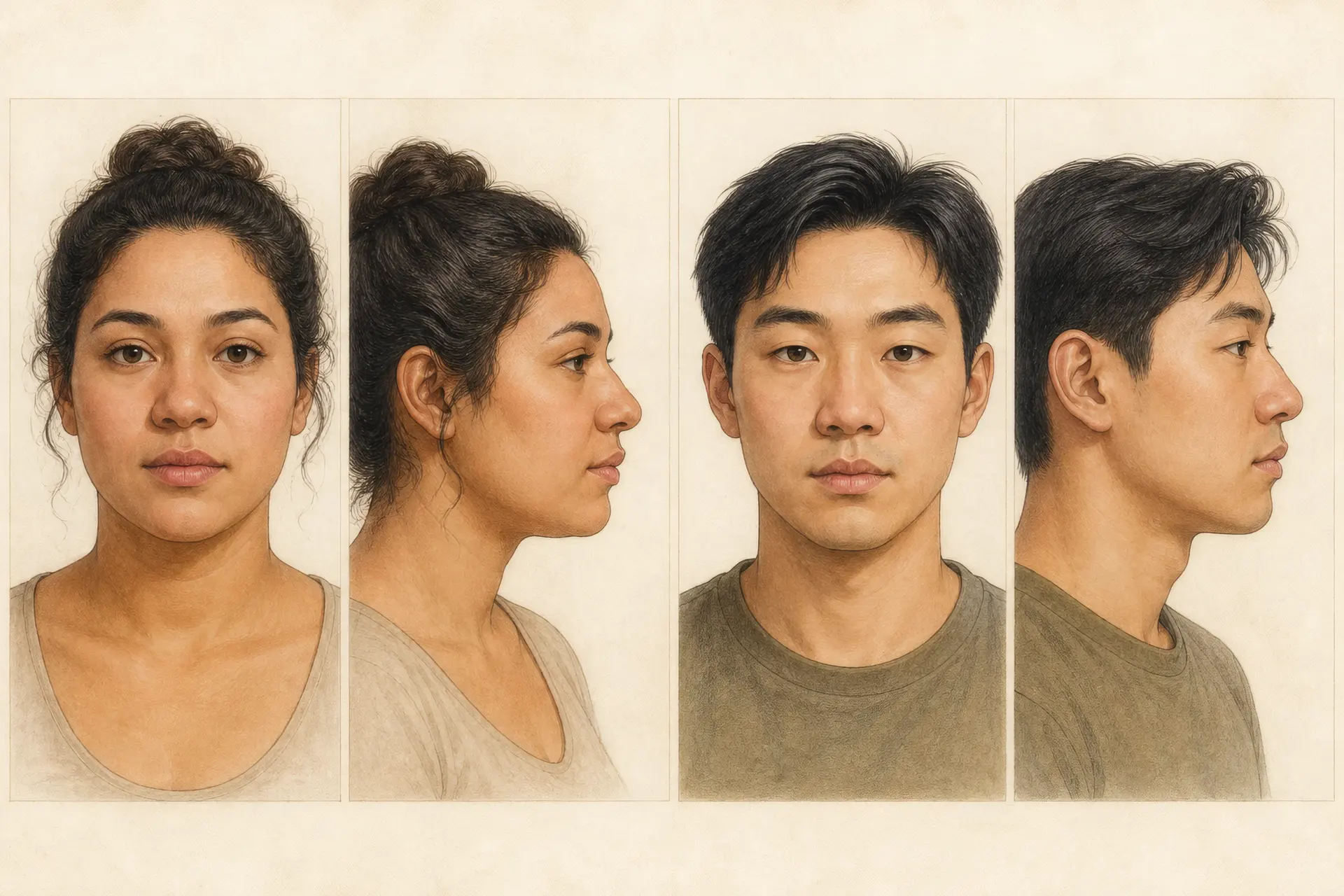
A fleshy nose carries thicker skin and subcutaneous padding over the whole nasal framework, so everything from the bridge downward reads soft and rounded. If the fullness parks at the tip alone, you are closer to bulbous territory. Judge it from a front photo in daylight and check where the softness starts.
Want a second pair of eyes? The free nose shape detector reads tip width and softness from a single photo.
In this article(6 sections)
What defines a fleshy nose shape
Three traits do most of the describing, and all of them live above the bone.
Skin and subcutaneous padding
The layer above the framework runs thick.
Every nose has skin and a thin fat layer draped over bone and cartilage. On a fleshy nose that drape runs heavier than average, sometimes from genetics, sometimes from an oilier, thicker skin type. The framework can be perfectly ordinary underneath while the surface still reads full.
Coverage across the nose
Fullness spans the bridge and the lower third.
The padding extends well past the tip. The bridge looks wide and smooth. Volume carries down the sidewalls into the lower third, and the front view reads full from root to base.
Tip definition
Rounded, with muted projection.
Thick tissue wraps the tip cartilages and softens their edges, so the domes and angles that give a tip its crispness get lost under the cover. The tip ends up looking rounder and less projected than the cartilage alone would suggest. (This is why two people can share cartilage shape and photograph completely differently.)
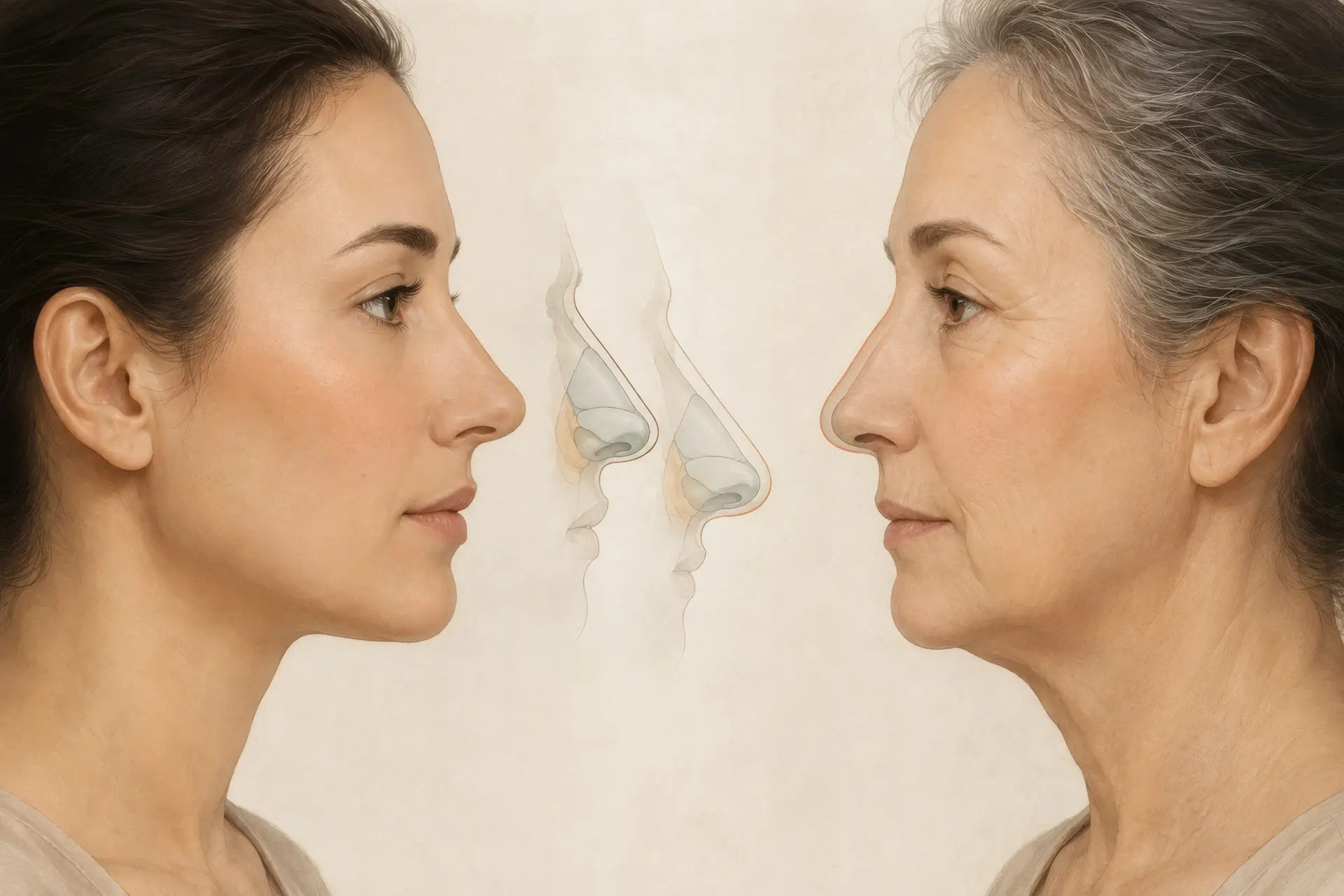
Surgeons have a shorthand for all this, thick skin, and it shows up constantly in rhinoplasty writing because tissue weight limits how much definition any reshaping can surface. The American Society of Plastic Surgeons' rhinoplasty overview touches on how skin thickness factors into results. The evidence on nose taping shows why home reshaping claims hit the same wall. One common occurence in thicker skin types is sebaceous texture across the tip, which adds to the soft look in close-up photos. Skin can also thicken with age, and how to prevent the nose from getting bigger with age covers what you can and can't control there. The full nose shape guide shows where fleshy sits inside the wider soft-tip family.
Fleshy nose vs bulbous nose: full-nose vs tip-only
These two labels get swapped constantly, and the split comes down to geography, meaning where on the nose the fullness sits.
| Label | Where the fullness sits | What drives it |
|---|---|---|
| Fleshy nose | Spread over the bridge and down through the lower third | Skin and subcutaneous tissue across the whole framework |
| Bulbous nose | Concentrated at the tip, which reads wider than everything above it | Tip cartilage shape, amplified by the skin envelope over it |
A bulbous tip is tip-led. The bridge can be narrow and straight while the end of the nose rounds out like a ball, and the drivers are the lower lateral cartilages plus whatever skin covers them. A fleshy nose works differently. The whole organ reads soft and wide because padding wraps everything, so the bridge loses its edges along with the tip. Fleshy is a whole-nose condition, not a tip-only one.
The field cue I use. Open a front photo and find where the roundness starts. If it begins at the the end of the nose, think bulbous. If the softness runs from the bridge downward and the whole shape looks padded, fleshy is the better label. And plenty of noses qualify for both, since thick skin over bulbous cartilages is a common pairing. The bulbous nose guide goes deeper on the tip-only version.
Styling and consultation notes
Soft tissue changes what fits and what to ask for. A few notes worth keeping.
- Frames first. Adjustable nose pads and a slightly wider bridge measurement keep glasses resting on soft sidewalls without pinching, and fixed pads on a padded bridge tend to dig in and slide at the same time.
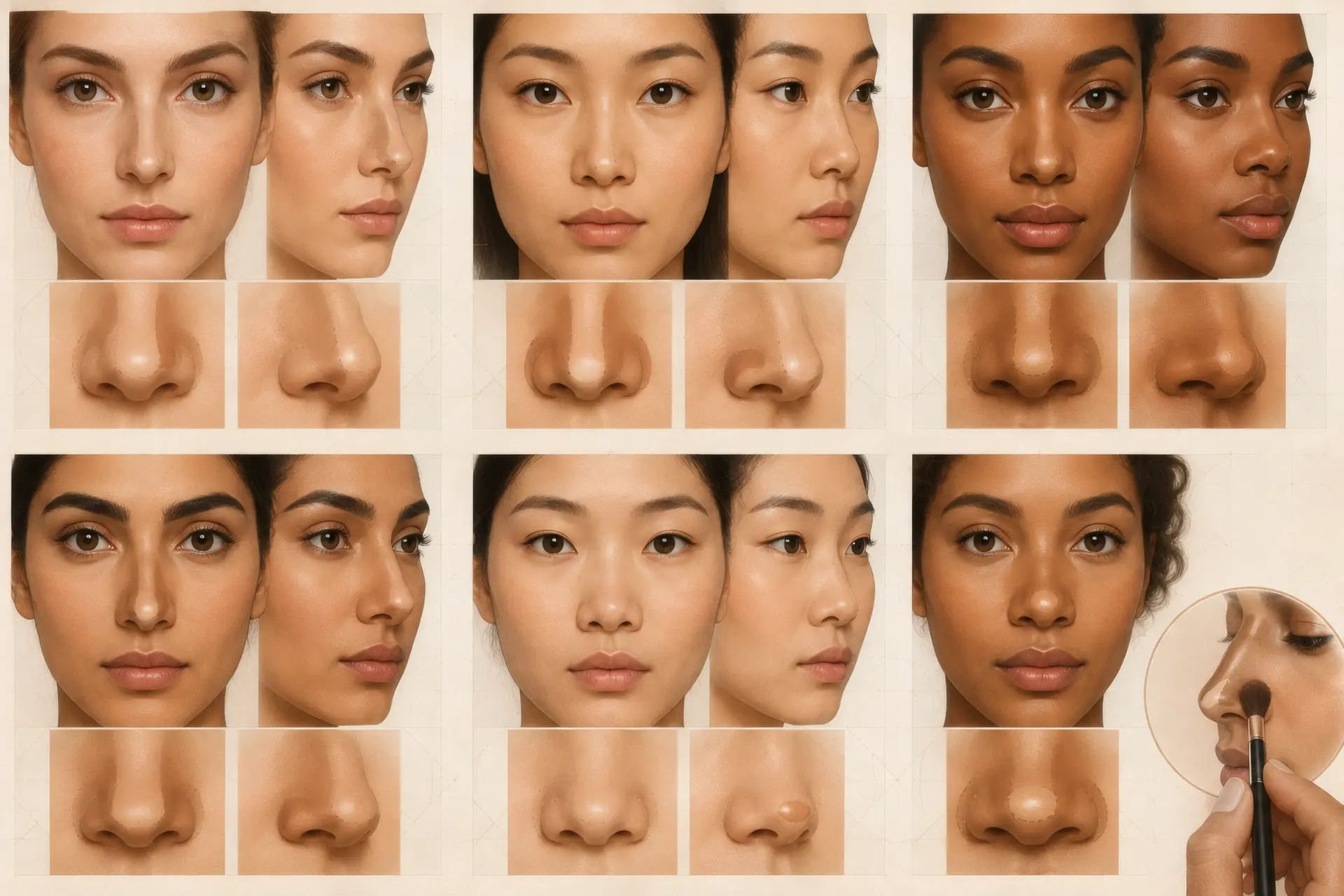
- Contouring still works, but go light. A soft matte shade down each side of the bridge adds structure, and a thin highlight along the center gives the eye a line to follow.
- Thick skin eats powder contour fast, so a mattifying primer under any highlight buys you hours.
- Walking into a consultation, use the terms thick skin, soft-tissue coverage, and tip definition limits. They set realistic expectations faster than any photo on your phone, and a good surgeon will respect that you came in speaking the language.
The glasses frames guide covers bridge fit in detail if frames are the pressing issue.
The wedding contour that melted.
A makeup artist I know once spent forty minutes building a contour on a bridesmaid with a fleshy nose, July wedding, outdoor ceremony in brutal humidity. By the vows it had slid into one shiny stripe down the center, and the photos show it. In my experience, skin prep matters more on thick nasal skin than any brush technique, and honestly I'd skip contour on hot days entirely.
At least for most people, frames and lighting do more for a fleshy nose than makeup does. I could be wrong here, but the effort-to-payoff ratio on contouring thick skin has never impressed me.
Frequently asked questions
Is a fleshy nose the same as a bulbous nose?
No. Fleshy describes soft-tissue fullness spread across the nose, bridge included. Bulbous describes roundness parked at the tip, driven mostly by cartilage shape. One is a coverage story, the other is a shape story, and a single nose can carry both at once.
Can filler refine a fleshy nose?
Only at the margins. Filler can smooth a small dip or balance proportions, but it adds volume, and thick skin already limits how much tip definition can show through. Adding volume under heavy tissue rarely sharpens anything. Surgical cartilage work is the route that changes definition, and that decision belongs to you and a qualified surgeon.
Does weight change affect a fleshy nose?
It can. The nose holds less fat than the cheeks or jawline, but the soft-tissue layer does respond to big weight swings, and the face around the nose changes too. Gains tend to soften definition further, while losses can reveal edges that were always under there. The effect stays modest for most people.
Is a fleshy nose a medical problem?
No. Fleshy is a cosmetic descriptor for tissue thickness, and on its own it says nothing about breathing or health. If you ever have airflow concerns, that is an airway question for an ENT, and it has nothing to do with how padded the outside looks.
Next steps
Fleshy means soft-tissue fullness spread across the nose, while bulbous keeps its roundness parked at the tip. Compare the bulbous nose page for the tip-only picture, then look at the wide nose, flat nose, and Nubian nose pages, since width and bridge height overlap with fullness more than people expect. Still sorting out your own nose? Start with what type of nose do I have.