A compact type, decoded
Button Nose Shape
Spend ten minutes at an eyewear counter and you will hear fitters say button nose for a specific look, small and compact overall, shorter in length, finished with a soft rounded dome of a tip. Nothing juts. Nothing hooks. The whole thing sits neat and balanced against the rest of the face, which is exactly why it gets called cute so often (more on that later).
This page answers the question what is a button nose in plain terms, and it covers button noses only. Upturned and snub are seperate combination types with pages of their own, linked below. Ahead, the defining traits, a side-by-side comparison with those two neighbors, styling and makeup notes, and the questions readers ask most.
The quick answer
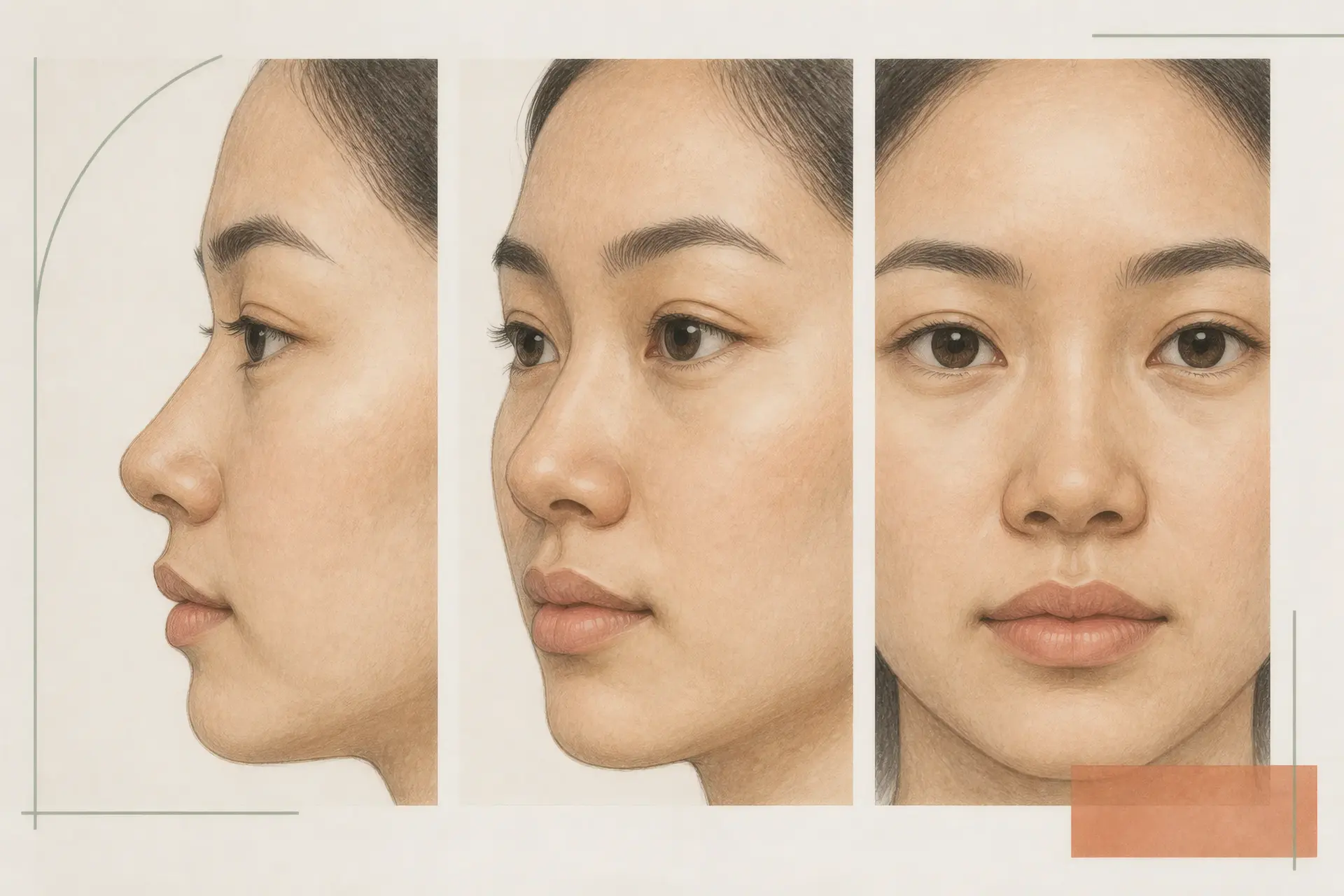
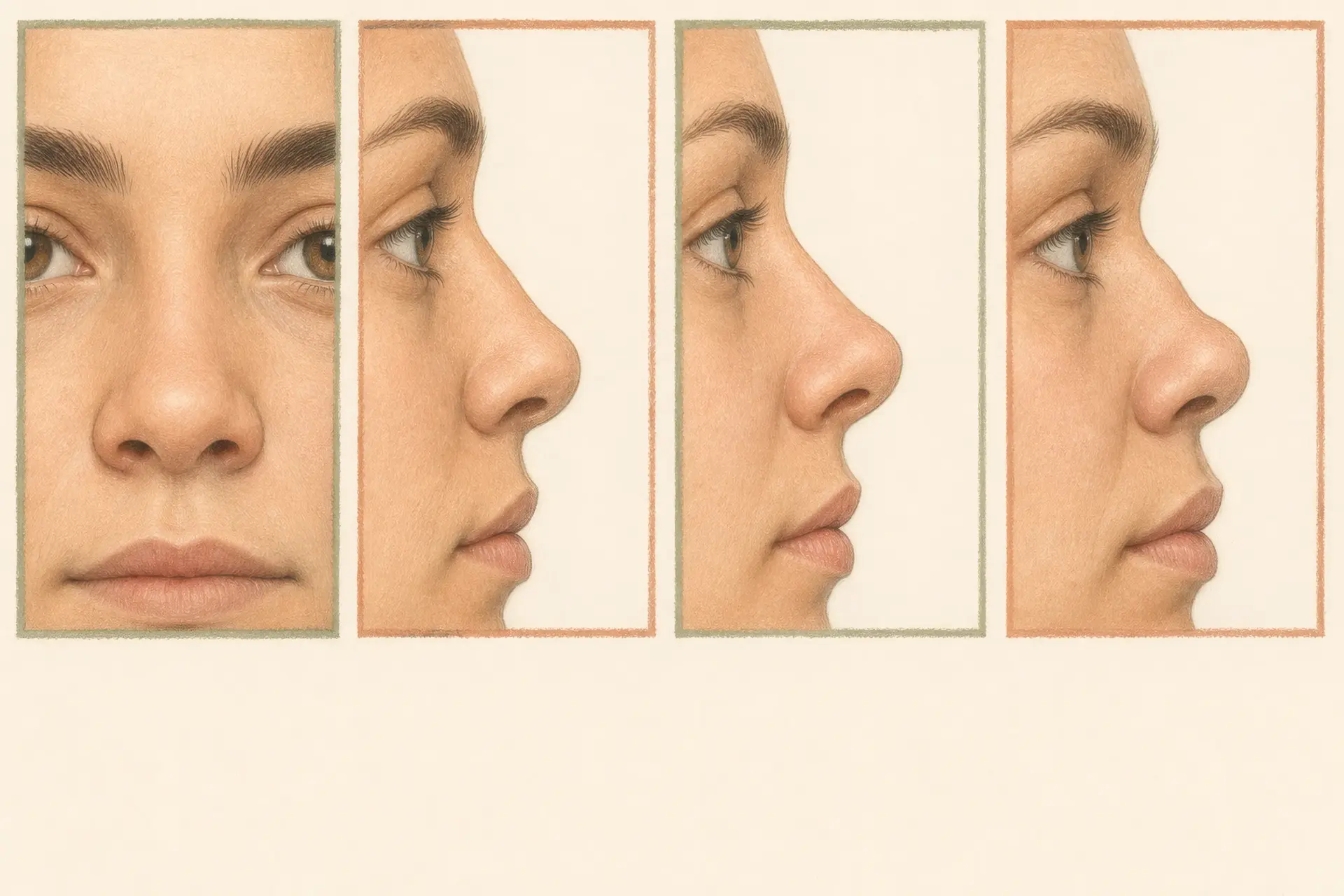
A button nose is small and compact overall, usually shorter in length, with a low-to-moderate bridge and a small, rounded, neatly domed tip. Check yours in a mirror. From the front, the nostrils stay mostly hidden and no single feature dominates. From the side, the bridge runs smooth with no strong hump. If the first word a stranger would pick is "small" and the second is "round," you likely have one.
Want a second opinion? The free nose shape detector classifies your size, tip, and bridge from one photo.
In this article(5 sections)
Defining traits: size, tip, and bridge
Three features do the work here. Each one on its own is common enough, but the combination is what makes a button nose read as a button nose.
Compact size
Small overall, often shorter in length.
Length from the radix (the top of the bridge, between the eyes) down to the tip sits on the short side, and projection stays modest, so the nose doesn't push far off the face. Relative to the eyes and lips it reads small. On a larger face it can look petite. On a small face it looks proportional.
Rounded, domed tip
Soft, neat, and gently curved.
The tip is the signature. It's small and rounded, with the two tip-defining points blending into one gentle dome instead of a sharp angle. It isn't wide, and it doesn't carry the soft heaviness of a bulbous tip. From the front, the nostrils mostly stay hidden.
Low to moderate bridge
Smooth dorsum, no strong hump.
The bridge runs smooth from top to tip at a modest height. You won't find a Roman-style hump here, and you won't find a deep scoop either. Calm projection keeps the profile quiet and lets the rounded tip carry the whole shape.
Put them together and the impression is youthful and neat. People with this nose hear the word cute for decades, sometimes well past the point of enjoying it. But the same compact proportions are why this type photographs evenly and pairs with nearly any frame style. The traits don't change. The relationship with them can.
Worth separating from its widest neighbor. A bulbous tip is rounded too, but it runs wide and soft with less defined edges, and it shows up on noses of every size. The button tip stays small and neat on a small nose. Round alone doesn't make a button nose. Round plus compact does.
Button Nose vs Upturned Nose vs Snub Nose
These three get mixed up constantly, partly because a button nose can borrow traits from both of the others. The difference is which dimension defines the type. Rotation is measured by the nasolabial angle, the angle between the columella and the upper lip, and anything noticeably past the level range counts as upturned.
| Type | Defined by | What you see |
|---|---|---|
| Button Nose | Small size plus a rounded tip | Compact length, a low-to-moderate bridge, and a soft domed tip. The tip may sit slightly lifted, but size is what carries the label. |
| Upturned Nose | Tip rotation | The nasolabial angle opens wide and the tip visibly lifts toward the forehead. Size can run from petite to prominent, because rotation defines it. |
| Snub Nose | Short length plus a clearly upturned tip | A short nose where the lifted tip exposes the nostrils from the front. It combines length and rotation in one package. |
So which label wins when two seem to apply? Go with the trait that dominates. If "small and round" is the first thing a stranger would say, button fits. If "lifted tip" is what people notice, look at upturned or snub instead. I could be wrong here, but most borderline noses I've classified had one trait that clearly led, and the confusion came from weighing the rest too heavily. If you honestly can't pick a leader, take a front and profile photo in daylight and compare them against the table above. The dominant trait gets easier to see once it's frozen in a picture.
Styling and makeup tips
A compact nose changes what works on the face around it. Frames first, because fit problems show up fastest there.
- Delicate frames flatter compact proportions. Thin acetate or metal rims keep the visual balance, while chunky oversized styles can swallow a small nose whole.
- Bridge fit matters more than style. Many button noses sit on low-to-moderate bridges, so look for adjustable nose pads or a lower bridge fit, or the frames will creep toward your tip all day.
- Love a bold frame anyway? Size down before you give up. The same shape in a smaller lens width often works.
Our glasses frames guide covers bridge fit and frame sizing in more detail.
Why I push scale over style.
A reader sent me photos last year asking why every frame she ordered online looked wrong in person. Trendy oversized squares, all of them. On her button nose they covered half her cheekbones, and the pads rested on her tip instead of her dorsum. We switched her to a narrow wire frame with adjustable pads and her whole face opened up. Compact noses don't need hiding. They need scale.
Makeup is lighter work. A soft highlight across the tip emphasizes the natural roundness, and contour can stay minimal since there's no hump to soften and no width to narrow. If you want a touch more definition, a faint shadow along each side of the dorsum is enough. The nose contouring guide maps the techniques by type if you want specifics. The hub on how to contour different nose shapes compares placement across every type. Whatever you try, check it in daylight. Bathroom downlights flatten a tip highlight fast, and what looked subtle indoors can vanish outside.
Button nose FAQs
Three questions land in the inbox more than any others.
What is a button nose?
A button nose is a small, compact nose with a rounded, neat tip and a low-to-moderate bridge. The tip looks like a soft dome, the bridge stays smooth with no strong hump, and the whole nose reads youthful and balanced against the rest of the face. Nothing about it dominates.
Are all button noses upturned?
No. Many button noses have a tip that sits level, and some tilt slightly upward without anyone noticing. Upturn is a separate dimension (tip rotation), and plenty of compact, round-tipped noses never show it. If the lift is obvious and your nostrils show from the front, you're in upturned or snub territory instead.
Can a button nose be wide?
It can carry noticable width at the alar base, sure. Width alone doesn't disqualify the label. The defining traits are the small overall size and the rounded tip, and a somewhat broader base can still sit under that description. When width becomes the first thing people notice about your nose, the wide nose type is the closer match.
Where to go next
Button means compact size plus a rounded tip, and it stays distinct from the rotation-based types. For those, read about upturned noses and the other combination types. If bridge height or base width is what stands out on your nose, the flat nose and wide nose pages cover those dimensions. And if none of this fits, the mirror method guide walks you through a full self-check.