Bridge-led nose traits
Flat Nose
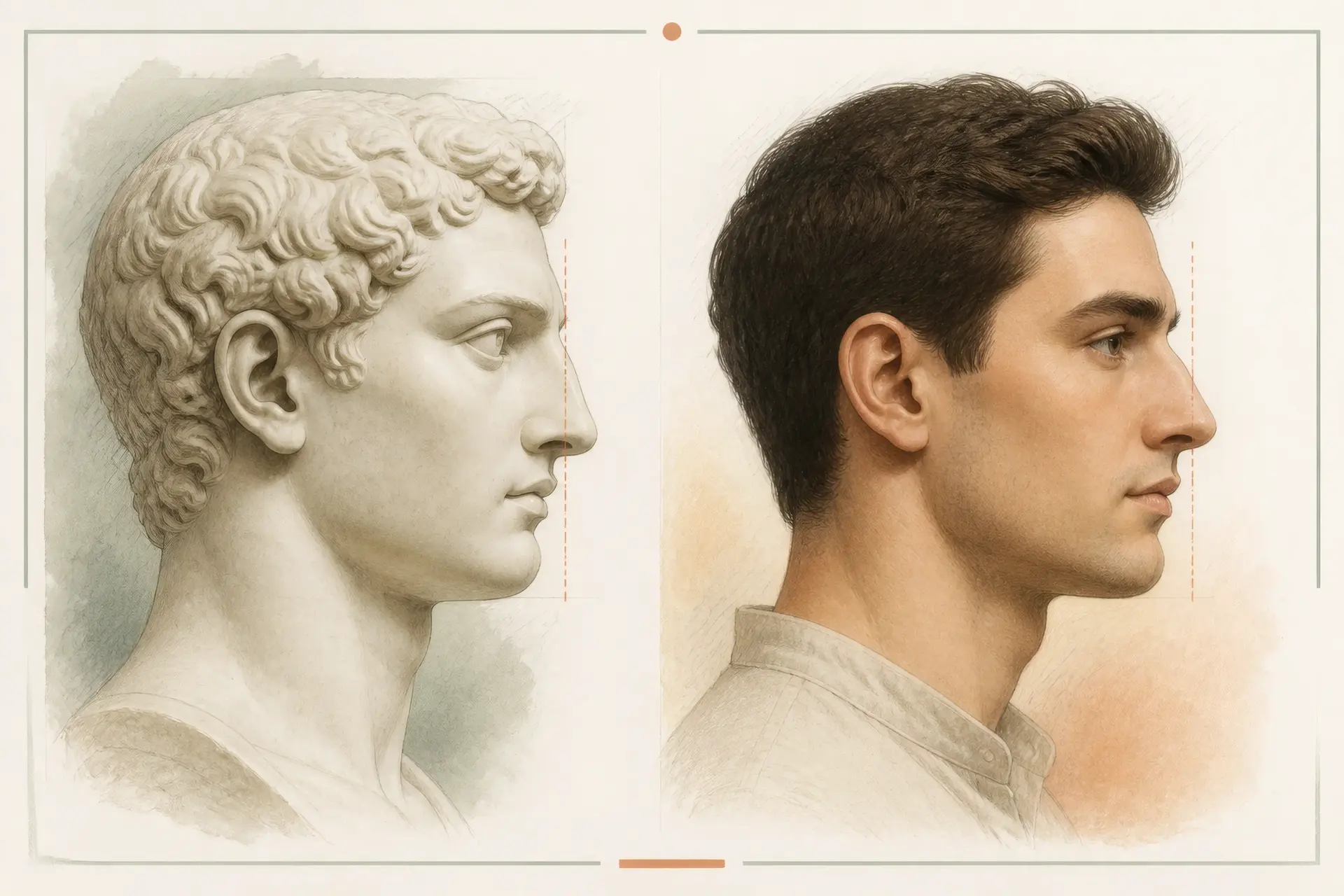
Summer humidity has a rude way of announcing a flat nose. Frames with nothing to grip start their slow slide toward your upper lip, and pushing them back up changes nothing about the underlying geometry. A flat nose comes down to two measurements: a low bridge height and minimal forward projection. Both show up most clearly in your side profile, where the dorsum runs smooth and close to the face.
This page stays focused on bridge-led traits, meaning height and projection. Width is its own conversation, and mixing the two causes most of the label confusion online. So we'll compare the flat nose against the wide nose and the Nubian nose first, then close with the button.
The quick answer
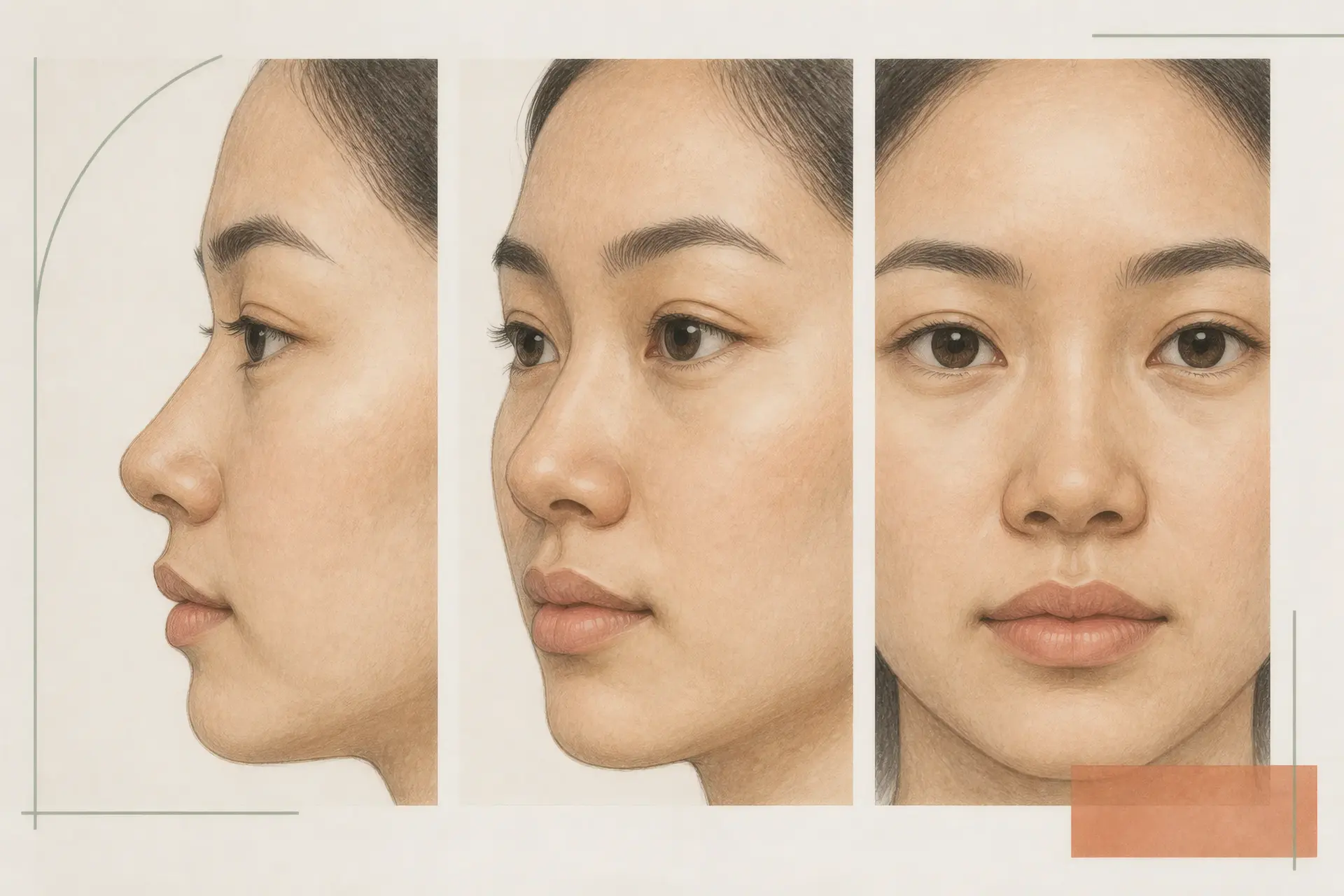
A flat nose has a low bridge and reduced projection. In side profile the dorsum sits smooth and close to the face, with little ridge between the eyes and the tip. From the front, everything else can vary, from width to tip shape. Check a profile photo first. If the bridge barely rises off the face, you're in flat territory.
Want a second opinion? The free nose shape detector reads bridge height and projection from one photo.
Bridge height and projection explained
Two numbers do all the work here. Bridge height is the vertical prominence of the nasal dorsum, measured from the radix (the root between your eyes) down to the tip. Projection is different. It measures how far the nose reaches forward off the face, and you judge it from the side, face at rest. The nose bridge types guide maps the full range from low to high dorsum profiles.
To gauge projection at home, take a profile shot with the camera held at nose height, or rest a finger alongside your cheek and note how far the tip travels past it. Neither method is clinical, but both are repeatable, and repeatable is what matters when you compare types.
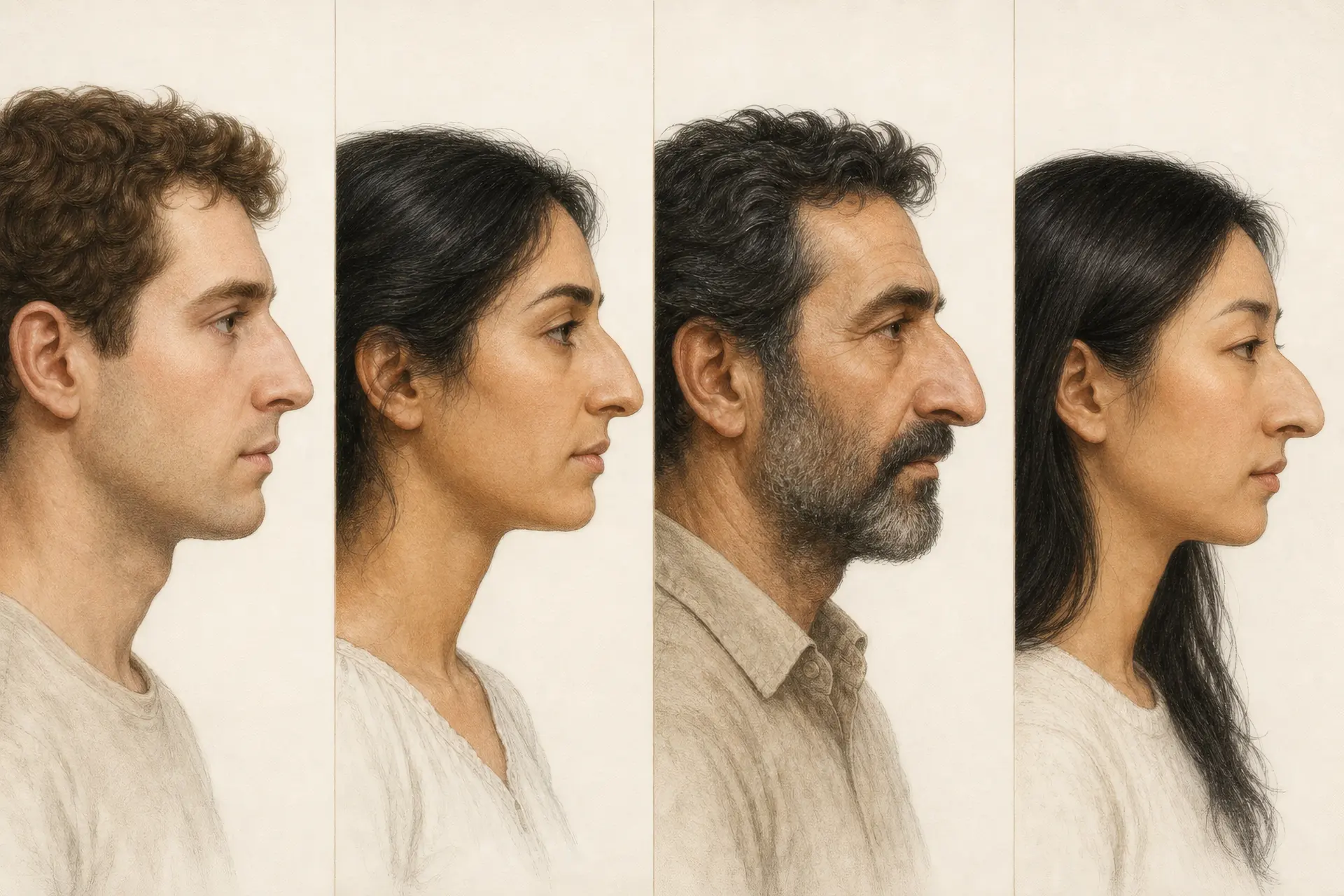
A flat nose scores low on both. The dorsum runs smooth, with little ridge catching light between brow and tip. In profile the nose appears to sit close to the face, almost recessed next to high-bridge types, and the radix can blend into the brow with no noticable step. Tip rotation varies. So does the nasolabial angle.
People miss one thing. Flatness describes the bridge, and only the bridge. A flat nose can be narrow or broad at the alar base. It can carry a rounded tip or a soft dome. Length is open too. I've seen long flat noses and short ones, and both confused their owners for years because everyone talks about width and nobody talks about projection. In my experience, one honest side photo settles the question in under ten seconds. Low bridges also show up across every population, and the nose types by ethnicity guide covers where they occur more often.
Flat Nose vs Wide Nose: bridge-led vs width-led
These two get conflated constantly, and the mix-up costs people money on frames and contour palettes.
A flat nose is bridge-led. The strongest clues are a low bridge plus low projection, both visible from the side. Width is incidental. Plenty of flat noses measure average at the alar base, and some run narrow.
A wide nose is width-led. From the front you see a broad alar base or wide-set nostrils, sometimes a broad bridge line too. But turn to the side and the bridge height can be perfectly normal, even strong. That's the trap. A wide nose can project well off the face while a narrow flat nose barely projects at all.
The self-check takes two photos. Take the side profile first. If the ridge sits low and smooth, flat is in play. Then the front view. If the base spans wide against the mid-face, wide is in play. Both can be true at once, since height and width are independent measurements, and the nose type identification guide walks the full mirror method if you want every step.
One more wrinkle. Front phone cameras widen whatever sits closest to the lens, so a selfie exaggerates base width while flattening the bridge. Judge width from a photo taken across the room. Judge height from the profile.
Flat Nose vs Nubian Nose: length and projection differences
This comparison is subtler, because both types can carry a broad base and a smooth dorsum. Length splits them.
A Nubian nose runs a longer bridge, often with a broader base and more forward or downward tip projection. The bridge sits at moderate height yet has presence, and the whole nose reads elongated. A flat nose has low bridge prominence without the added length. Projection stays reduced. The profile reads compact and close to the face.
Put two profile photos side by side and the difference is obvious. The Nubian nose reaches. The flat nose rests. I could be wrong here, but I'd guess half the people who land on this page from a Nubian nose search have a shorter, flatter version and sense the mismatch without having the words for it. The nasolabial angle helps too. Nubian tips often angle slightly down over the upper lip, while flat noses show every rotation from upturned through level. Width muddies this comparison least. Both types can run broad at the alar base, so skip the front view here and let bridge length and forward reach decide.
Styling, glasses, and consultation notes
Frames are the daily battle. A low bridge gives standard nose pads nothing to hold, so look for adjustable nose pads or frames built on a low-bridge fit line. Adjustable pads can be widened and angled to grip where a fixed pad floats. Our glasses frames guide covers the fit side by face shape. Stick-on silicone pads are the cheap fallback, and they grip well enough for occasional wear. Frame weight matters too. Lighter frames slide less, full stop.
I learned this the hard way on a five-hour flight in thick acetate frames, pushing them up every few minutes as the cabin air dried the pads slick (summer humidity does the same thing in reverse). By landing I had a red dent across the dorsum that lasted until dinner. It never occured to me that a two-minute pad adjustment at an optician would fix years of sliding. It did.
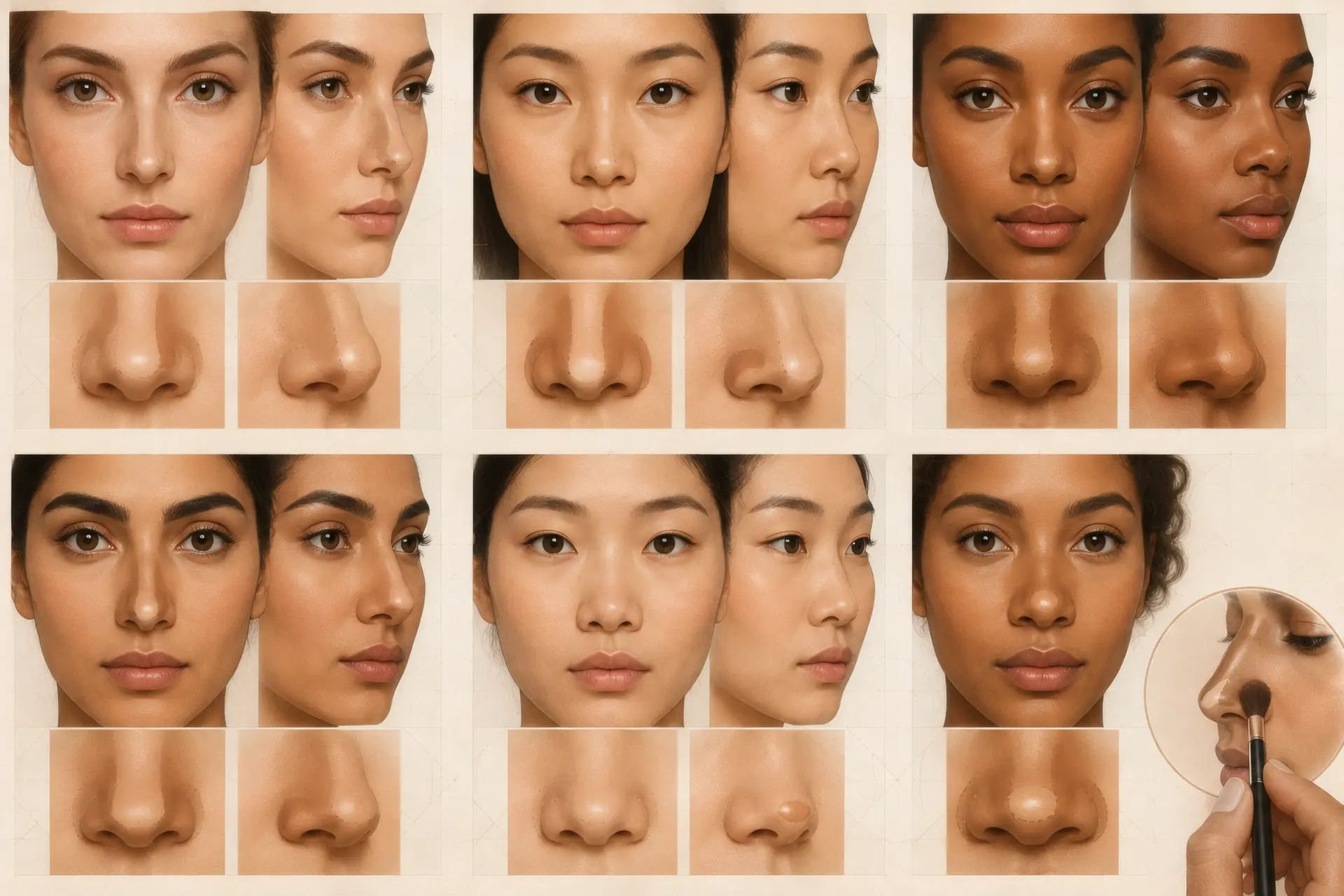
Makeup plays the opposite game. Run a soft highlight down the bridge to create the illusion of height, then a light contour along each side of the dorsum for definition. The nose contouring guide maps the placement by nose type.
| Consultation term | What it means |
|---|---|
| Low dorsal height | Describes the bridge sitting close to the face along the dorsum, the clearest single phrase for a flat nose. |
| Reduced projection | Describes how far the nose reaches forward off the face. Projection is what profile photos reveal. |
| Bridge augmentation | The umbrella term professionals use if you ever explore adding height to a low dorsum, surgically or with filler. |
Flat nose FAQs
Is a flat nose the same as a wide nose?
No. Flat is bridge-led: it describes a low bridge and reduced projection, judged from the side. Wide is width-led, describing a broad alar base or broad bridge line from the front. The two measurements are independent, so a nose can be flat and narrow, wide with a normal bridge, or both at once.
Can flat noses be long?
Yes. Flat refers to height and projection. Length is a separate variable. A long nose with a low, smooth dorsum and modest projection is still flat, and I have measured plenty of them. Length is exactly what separates the flat nose from the Nubian nose, which pairs its moderate bridge with real length.
Are flat noses tied to ethnicity?
Low bridges occur more often in some populations, including many East and Southeast Asian groups and many African groups, but they appear across every ethnicity. Faces don't follow borders that neatly. At least for most people, family resemblance predicts bridge height better than any broad label.
Next steps
Flat means low bridge plus low projection, and a profile photo settles it. Wide is width-led. Nubian adds length, and button adds tiny and round. Compare the details in the wide nose guide, the Nubian nose guide, and the button nose guide, or see the high-bridge contrast in the Greek nose guide. The full nose shape guide covers every type in one place.