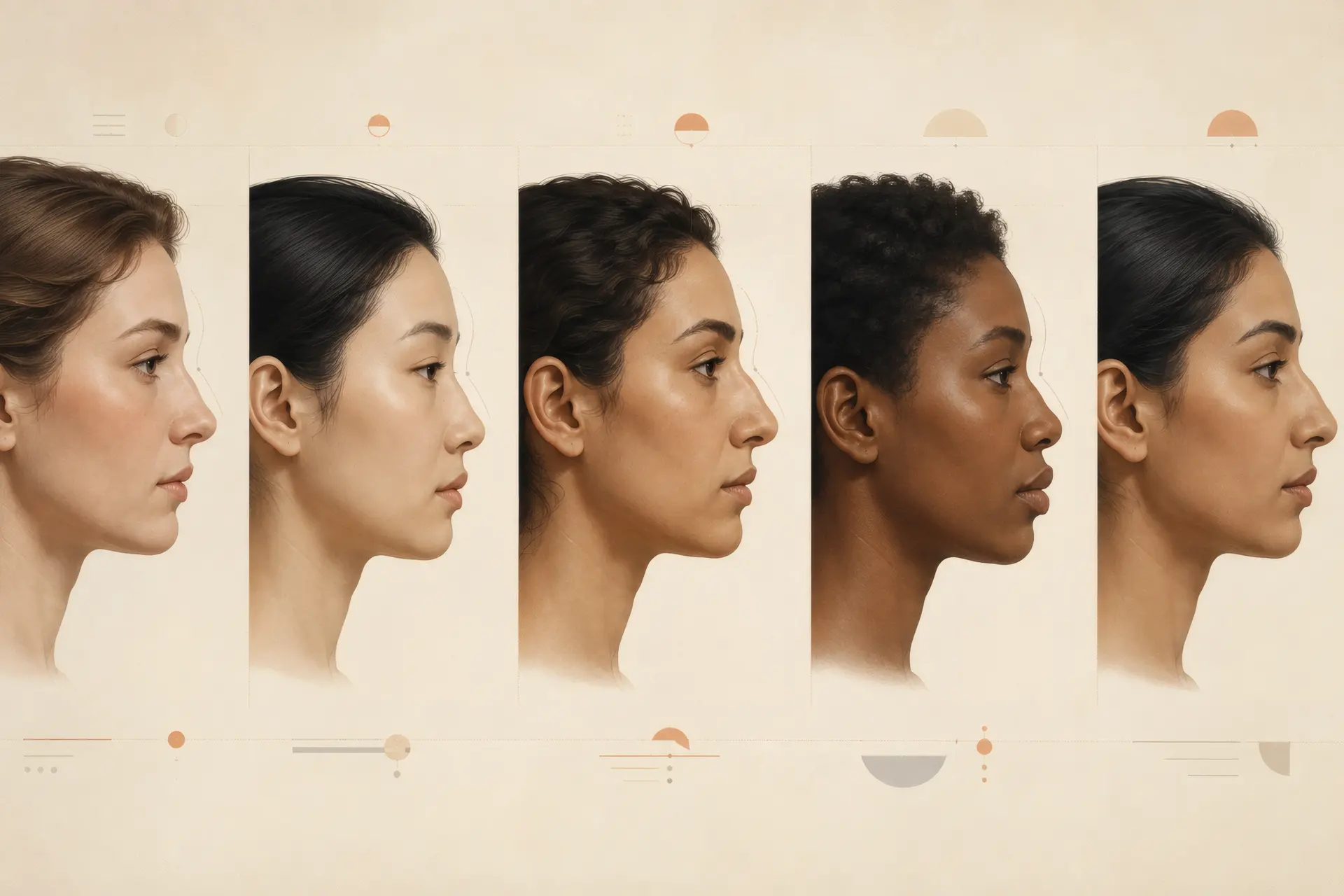
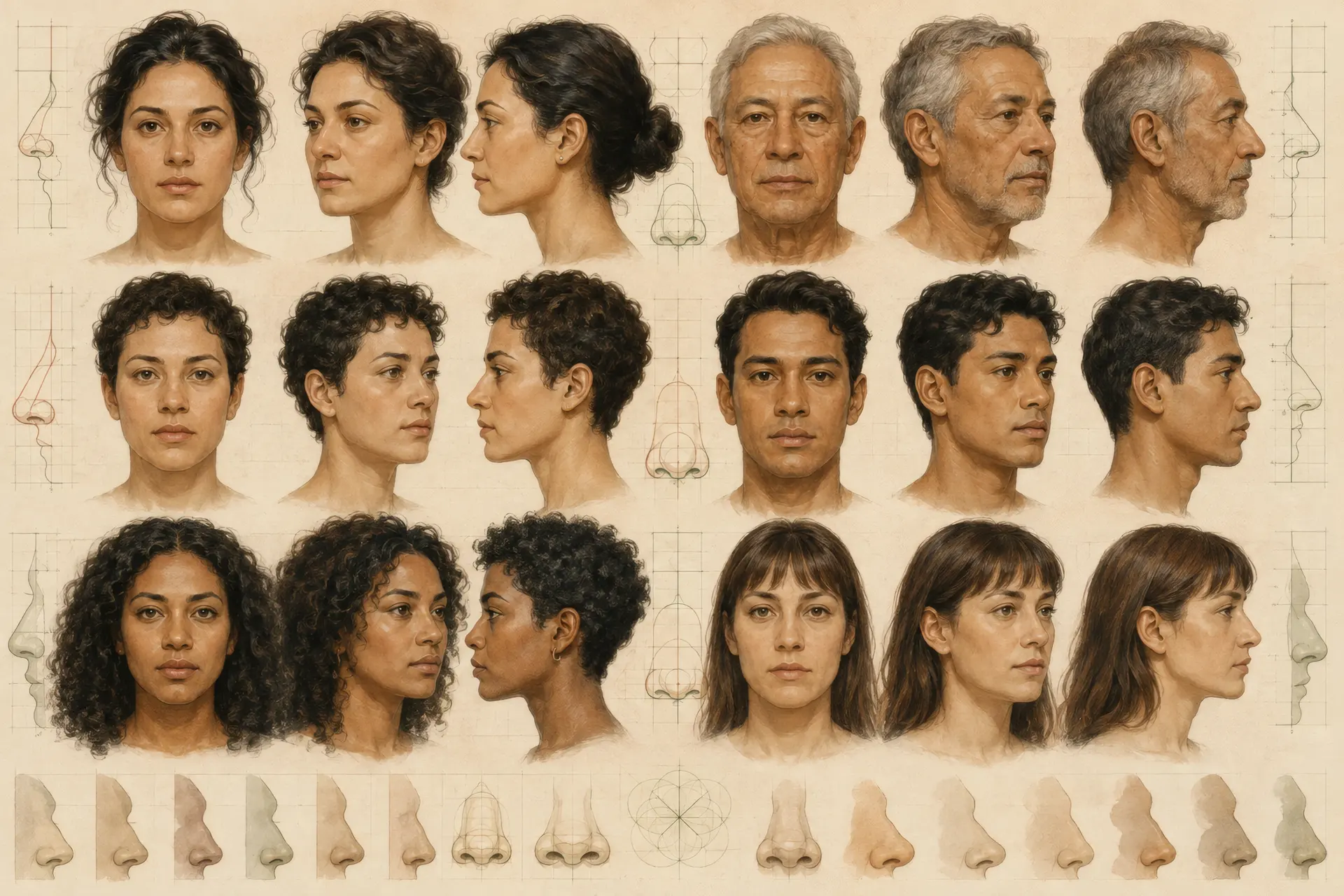
Aging and appearance
How to Prevent Nose From Getting Bigger With Age
The first time most people notice is in a photo. Same face, same smile, ten years apart, and the nose in the newer shot sits lower and looks wider at the base. So the question arrives right on schedule. Is my nose still growing?
Short version, no. Adult noses don't grow the way childhood noses do, because the skeleton underneath finished its expansion years ago. What changes is the scaffolding around that skeleton, the cartilage support, the elasticity of the skin, and the slow, undefeated pull of gravity. Some of that is inevitable, and pretending otherwise sells you false hope. But habits genuinely slow the visible part of the process, and surgery remains the only route that definitively reshapes the structure.
The quick answer
Your adult nose is not still growing. What ages is the support around it, weaker cartilage, looser skin, gravity. You cannot stop that, but daily sunscreen, retinoids, and early rosacea care slow the visible part by years. Only surgery reshapes structure. Want a baseline first? The free nose shape detector reads your bridge curve and tip angle from one photo.
Why noses appear bigger over time
Three drivers do most of the damage, and none of them is growth.
Weakening cartilage
The framework loosens before anything visibly moves.
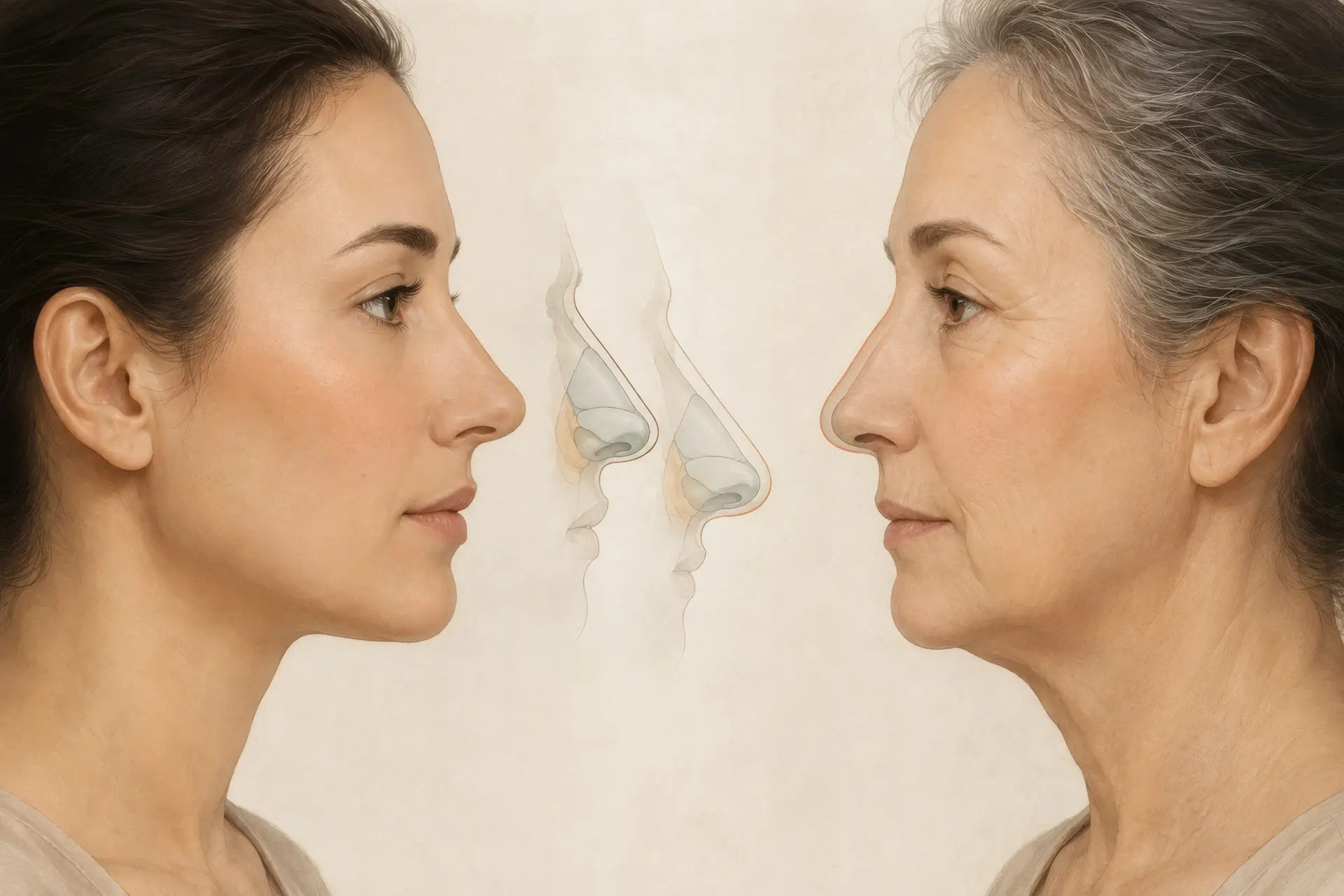
The lower lateral cartilages that hold your tip up lose stiffness across the decades, and the fibrous attachments between cartilage and bone relax with them. Tip projection drops a few millimeters, the nasolabial angle closes, and the tip starts pointing down instead of forward. A drooping tip reads as a longer nose even when nothing has grown.
Skin and soft tissue
Elasticity leaves, and the envelope gets looser.
Nasal skin thins over the upper two thirds but can thicken at the tip, especially after years of sun damage or untreated rosacea. Collagen production falls off steadily after your twenties. The result is a softer, less taut envelope over the same framework, so the alar base spreads and the whole lower nose looks wider from the front.
The hump illusion
Dorsal humps look bigger without any bone growth.
Soft tissue above and below a dorsal hump shrinks faster than the tissue sitting on the hump itself. The hump stays put while its neighbors deflate, so a bump you barely registered at thirty announces itself at fifty-five. Annoying. But it explains most late-appearing 'new' humps.
Anthropometric studies that photograph and measure the same faces across decades find modest, consistent increases in nasal length, tip projection changes, and width. Millimeters, not centimeters. And the old claim that cartilage keeps growing forever doesn't hold up. Histologic work on nasal cartilage across age groups shows active cartilage growth declining with age (we link the study in the sources below). The nose isn't expanding. The support is sagging, and sag reads as size.
The changes don't arrive on one schedule either. The tip usually moves first. Width and the hump illusion tend to show up later, sometimes a full decade behind.
Gravity does the pulling, but it only wins because the attachments weaken first. Young cartilage springs back against the same downward force that drags an older tip toward the lip. The force never changed. The resistance did.
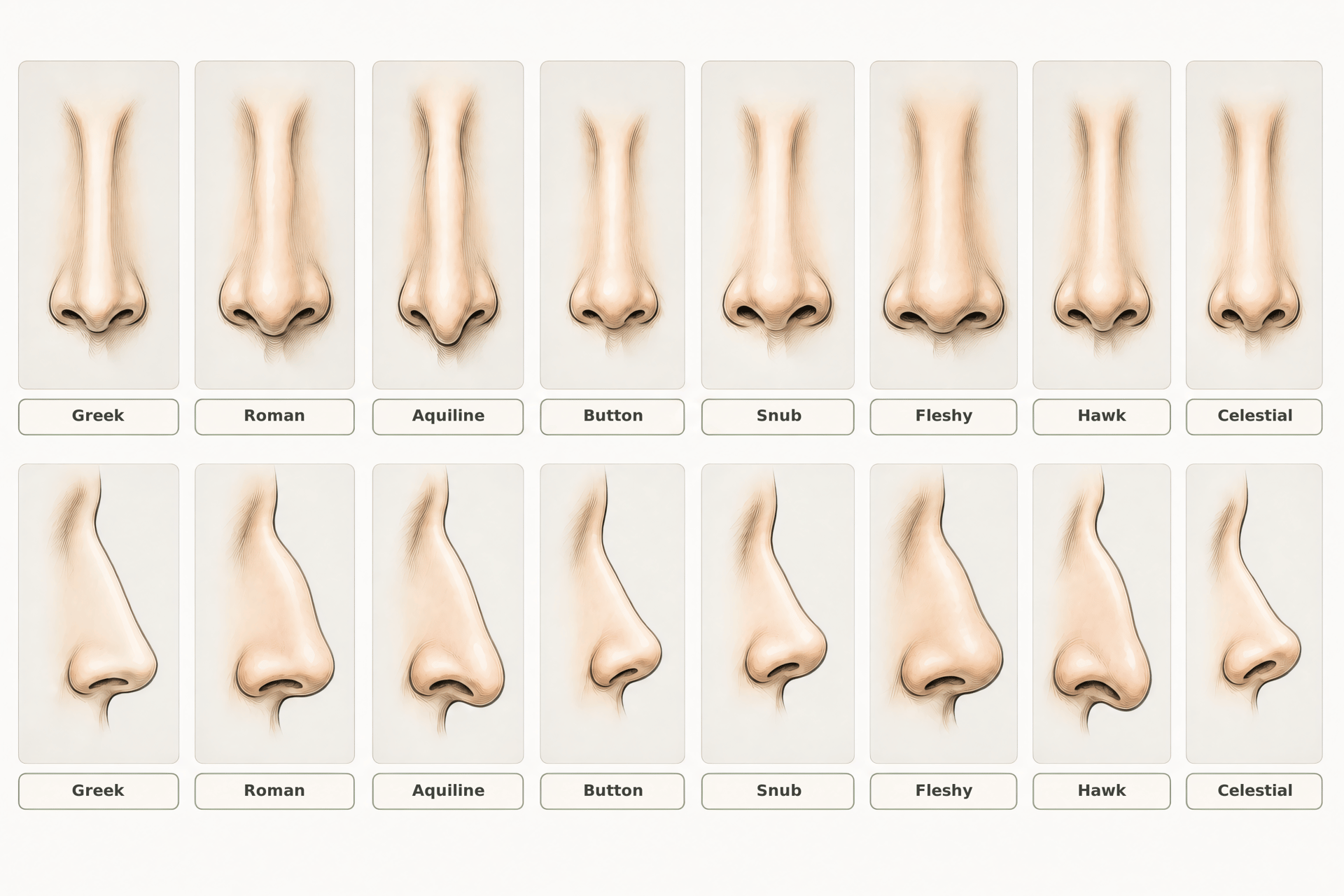
Skin thickness is its own nose-shape category, by the way. The pages on fleshy noses and bulbous nose shapes show how much of what we call size is soft tissue, and the nose bridge types guide covers how high, low, and wide dorsums age differently.
What you can realistically do
None of this stops the clock. It keeps the skin and support structures in better shape for longer, which is where the visible aging happens.
- Sunscreen, every day, nose included. UV breaks down the collagen that keeps nasal skin taut, and the nose catches more direct sun than almost any other feature on your face. Broad-spectrum SPF 30 or higher, reapplied if you are outside for hours.
- Retinoids.
- A pea-sized dab of retinoid at night builds collagen density and improves skin texture over months. Start two or three nights a week, because the peeling phase on the nose is genuinely unpleasant. A vitamin C serum in the morning pairs well with it.
- Treat rosacea early. Untreated rosacea can thicken nasal skin and dilate surface vessels, and in advanced cases it produces the enlarged, bumpy tip called rhinophyma. Topicals, trigger avoidance (alcohol, spicy food, and heat are the usual suspects), and IPL or laser for vessels, all under a dermatologist's care, keep that from progressing.
- Check your glasses fit. Frames pressing the same two spots on the lateral sidewalls for a decade irritate skin and leave dents. A relative of mine wore one heavy acetate frame for fifteen years, and the groove it carved into the left side of her bridge is still there, two years after she switched.
In my experience the sunscreen habit matters more than any serum, and it costs the least. I could be wrong here, but I'd rank glasses fit second, because pressure damage is the one cause you fully control.
And to be blunt. No exercise, cream, supplement, or facial yoga routine stops cartilage aging or shrinks your nose. Anyone selling one is selling the hope, and the the results never arrive.
What doesn't work
Save your money on these.
- Nose exercises and massages. There is no published evidence that wiggling, pinching, or massaging the nose changes cartilage shape. Cartilage has no muscle to train, so there is nothing for the workout to work on.
- Clips and taping devices that promise permanent reshaping.
- Collagen supplements sold for nasal shape. Oral collagen can help skin hydration modestly, but nothing you swallow gets routed to the cartilage under your tip.
- Contouring photos as proof. A darker stripe down the sides of the bridge photographs smaller, sure. Wipe off the makeup and the nose underneath is unchanged, which makes contour a styling tool rather than a shrinking method.
On taping specifically, the evidence review on nose taping goes claim by claim, and the short version is skin irritation without lasting change.
The before-and-after photos sell all of it. Tip the chin down two degrees, soften the light, and any nose photographs smaller. The people selling clips and courses know this, and the model in the "after" shot is always tilted exactly so. Once you see the trick, you can't unsee it.
When to consider professional options
Filler earns a mention, with a caveat. A skilled injector can place a small amount above and below a minor dorsal hump and smooth the profile for six to eighteen months. It camouflages. It adds volume to hide a bump, so the nose is technically a touch larger afterward, straighter but not smaller.
Rhinoplasty is the definitive route for humps, tip droop, and width. A qualified surgeon can rotate a drooping tip, narrow the alar base, and refine the dorsum, with results that hold for decades. Bring photos of your nose from ten years back and describe what you want changed in structural terms. Rotation, projection, width. Dermatology covers the skin side, including rosacea, thickened sebaceous skin, and rough texture.
Recovery is the part people underestimate. Splints come off after about a week, most visible bruising fades within two, and the tip keeps refining for a year or longer as swelling drains. Surgeons often show morph simulations at consult. Useful for aligning expectations, less useful as a promise of the final millimeter.
One line that deserves its own box.
A sudden change in shape, new pain, or trouble breathing through one side warrants a doctor, not a skincare routine. Gradual aging is a cosmetic topic. Abrupt change is a medical one.
Frequently asked questions
Does the nose keep growing forever?
No. The facial skeleton stops expanding in the late teens. What continues is tissue change, with cartilage support weakening, skin losing elasticity, and gravity pulling the tip down. Histologic studies show cartilage growth activity declining with age, not continuing. The 'growth' people notice is sag, and sag reads as size.
Can I prevent all aging changes to my nose?
No, and be suspicious of anyone who says otherwise. Gravity and tissue aging happen to every face on the planet. Sunscreen, retinoids, and rosacea care slow the visible effects, sometimes by years. They don't freeze the process.
Do glasses make my nose bigger?
Poorly fitted frames irritate skin, leave pressure marks, and can carve temporary dents where the pads sit. They do not structurally enlarge the nose. If your frames leave deep red marks after an hour, get the fit adjusted, because years of pressure in the same spot is worth avoiding for comfort alone.
At what age do nose changes become noticable?
Most people spot the difference somewhere in their forties or fifties, usually in photos rather than the mirror. The shift is gradual enough that you won't catch it day to day. (This is one reason side-by-side photos a decade apart feel so startling.)
Will losing or gaining weight change my nose size?
The nose carries little fat, so weight shifts barely move it. What weight change alters is the face around the nose, and a leaner face makes the same nose look larger by contrast. The nose stayed put. The frame around it moved.
Sources
- Age-related histologic changes in human nasal cartilage (PubMed), the study behind the point that active cartilage growth declines with age, which corrects the "cartilage keeps growing forever" myth.
Next steps
Start with a baseline. Figure out your current nose type with the mirror method, keep a profile photo or two for future comparison, and put the sunscreen where it counts. If the changes bother you more than the mirror says they should, the perfect nose guide is an honest look at proportion ideals and why chasing them rarely ends well.