Nose type deep dive
Hawk Nose
Ask three people to describe a hawk nose and you'll get three swooping hand gestures, none of them precise. The label points to one specific combination. A dramatic convex bridge, a real hump you can catch from across a room, paired with a tip that turns clearly downward and hooks toward the upper lip. Among the curved-profile types, this one sits at the pronounced end.
This page is the deep dive on that strong-curve-plus-droop pairing. The Roman nose guide compares the two briefly and links over here, so we can skip the family reunion and get into detail. Coming up, the core traits, an honest comparison against Roman and aquiline, styling and consultation notes, and the questions readers keep asking.
The quick answer
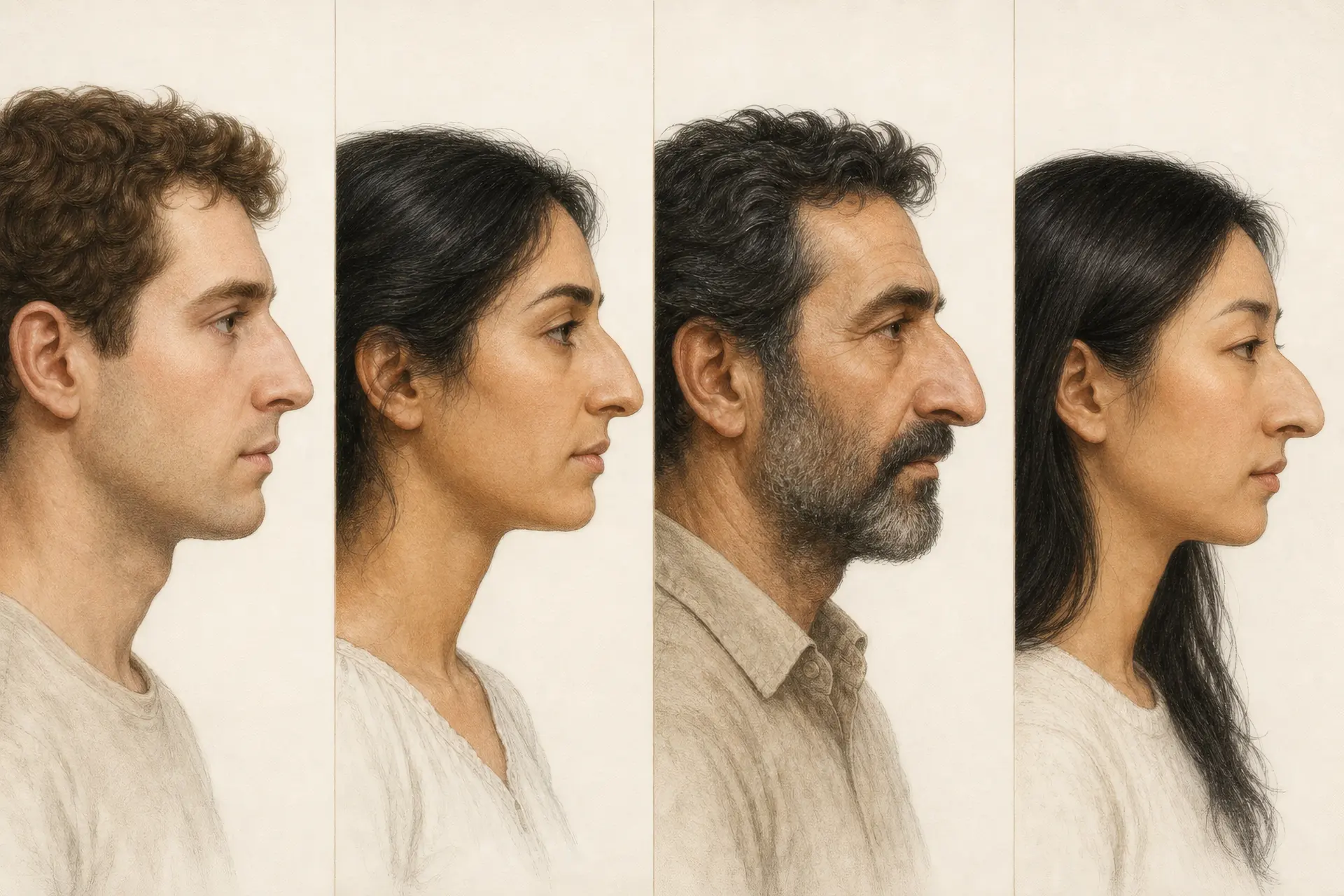
A hawk nose pairs two features. A prominent hump on the bridge, usually in the upper-to-middle third, and a tip angled down hard enough to read as hooked. Check a profile photo. If the bridge bows outward and the curve keeps descending straight into a drooping tip, hawk is the everyday label that fits.
If a mirror check leaves you unsure, this page is for anyone confirming the label on their own profile or decoding what a stylist meant by it, and the free nose shape detector reads your bridge curve and tip direction from a single photo.
Hawk nose shape: convex bridge and downturned tip
Forget the label for a minute and look at the geometry. Two features carry the whole classification.
The bridge
Pronounced convexity, often in the upper-to-middle third.
The dorsum bows outward with a hump you can't talk away. Sometimes it shows as a distinct bump, sometimes as one long arch from root to tip. Either way, dorsal prominence runs generous on a hawk profile, and the bridge does most of the classifying work before the tip even enters the conversation.
The tip
Clearly downturned, hooked in stronger cases.
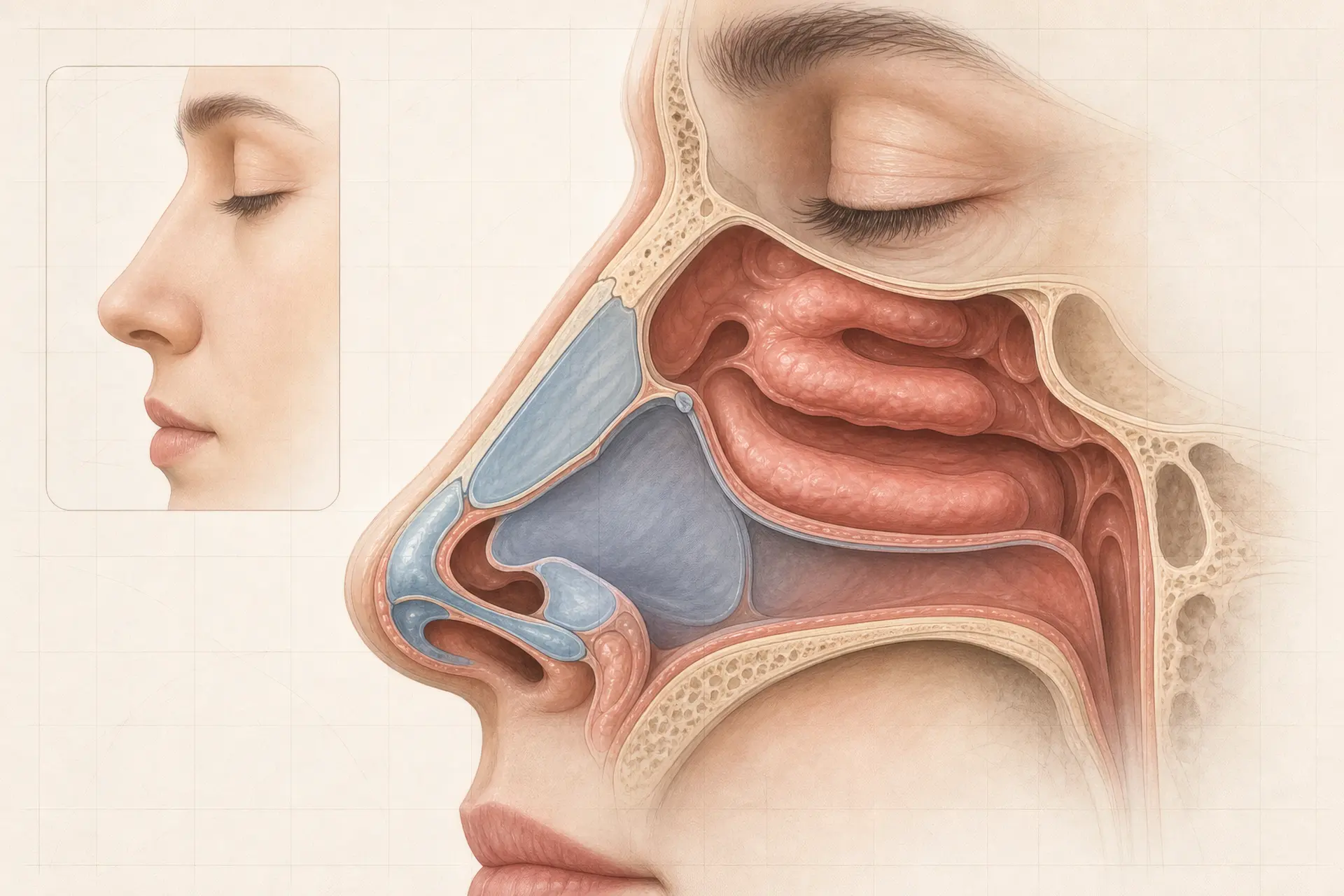
The tip angles toward the upper lip instead of pointing ahead. Milder cases read as a firm downward tilt. Stronger ones curl far enough to partially cover the nostrils when you look at the face head-on, and the whole lower nose seems to pull toward the mouth.
The overall read
More dramatic and wider-looking than aquiline.
Step back and the silhouette reads bold. The curve from brow to tip is long, the droop adds visual weight, and hawk noses often appear a touch wider than their aquiline cousins. Partly an illusion cast by shadow under the tip, in my experience. None of it looks accidental, either. The profile reads deliberate, which is half of its appeal.
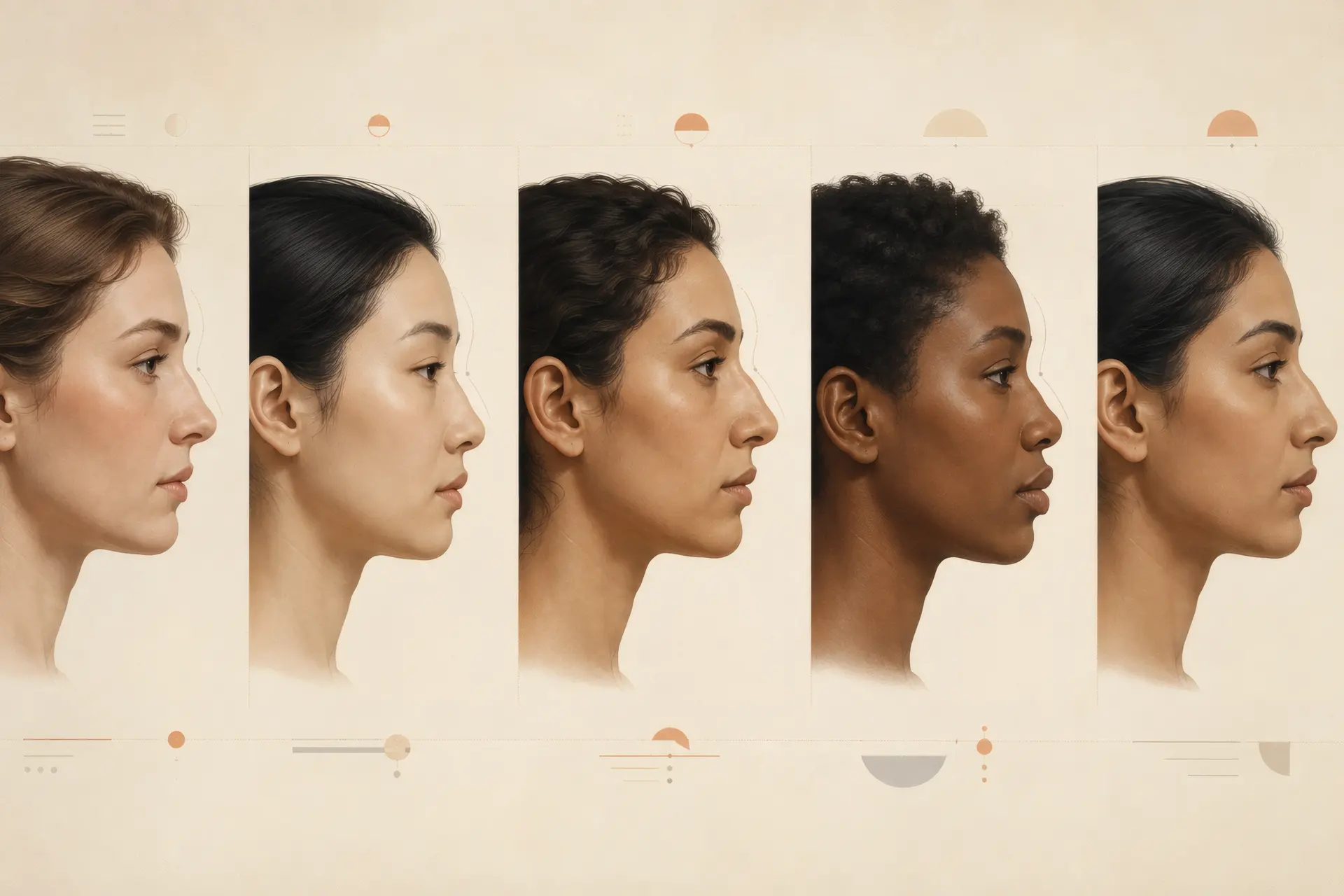
Width is the trait people misjudge most here. A drooping tip throws a shadow that makes the base look broader in photos than it measures in person, so judge width from a straight-on shot in flat light. The nose shapes chart places hawk beside the rest of the family if you want the visual spread.
So the working test is two photos. A profile shot in soft daylight tells you about the hump and the droop. A relaxed front shot tells you how much of the nostrils the tip hides and how wide the base honestly measures. If both point to a strong curve plus a hard droop, you have your answer, and the whole check took under five minutes.
Hawk nose vs Roman nose vs aquiline nose
Same convex family, three degrees of commitment to the downward curve. The nose bridge types guide zooms out to every bridge family if you want the wider map.
A Roman nose carries the hump but holds its tip level or forward-facing. The profile is strong, the end of the nose keeps its line, and nothing dives. Aquiline splits the difference. The hump continues into a gentle downward curve through the lower bridge, which produces the eagle-like arc the name literally refers to, without an extreme droop. Hawk pushes furthest. Hump plus a strong downward curve. The tip droops hard, and the front view often looks wider and heavier because of it.
| Label | Bridge curve | Tip behavior | Front view |
|---|---|---|---|
| Roman | Hump present on the bridge | Level or forward-facing | Nostrils fully visible from the front |
| Aquiline | Hump, then a gentle arc through the lower bridge | Mildly downturned | Nostrils still show from the front |
| Hawk | Pronounced hump, often the strongest of the group | Strongly downturned and hooked | Tip may partly cover the nostrils head-on |
The front view deserves its own note. Roman and aquiline tips never drop far enough to cast over the nostrils, so both stay fully visible head-on. A strong hawk tip can shadow or partly cover them, and that single observation separates the labels faster than any side-profile debate. Check it in flat light. Overhead bathroom lighting fakes a droop on nearly any nose, and phone front cameras held below eye level make it worse.
Everyday usage blurs all of this. Hooked and hawk get swapped so freely that separating them is a fool's errand, and aquiline gets thrown at any profile with a bend in in it. I could be wrong here, but I'd guess half of the aquiline noses in magazine profiles would land in hawk territory under the definitions above. The honest distinction lives at the tip, not the bridge. And one mild opinion I won't defend hard, the hawk silhouette is the most interesting of the group in a profile photograph.
The Roman nose page maps the wider label family, arched and beak included, if you want every cousin accounted for.
Styling, glasses, and consultation notes
A high hump changes how frames sit and how contour behaves. A few field notes.
- Adjustable nose pads, every time. They let the frame rest on the sides of the bridge instead of seesawing on top of the hump.
- Skip fixed keyhole bridges. They pinch at the crest of the hump and slide at the base, and some days they manage both within the same hour.
- Contour, if you want it, stays soft. A muted shade along each side of the hump reduces its prominence, then a light highlight down the center keeps the profile dimensional. A bit of emphasis at the brows and eyes pulls attention upward, which does more than any shading trick.
- Or skip contour entirely. Plenty of hawk profiles photograph best untouched.
- For sunglasses, weight matters. A saddle-style bridge spreads the load across a wider contact patch instead of parking the whole frame on the crest of the hump, and lighter acetate beats heavy metal when the bridge is doing this much work.
The August humidity lesson.
One summer I helped a friend with a pronounced hawk bridge shop for sunglasses in Houston. Ninety percent humidity, and every acetate frame she tried slid down the slope within minutes, leaving a red line across the hump. The pair that stayed put had adjustable pads and slightly looser temple arms, though those left their own sore spot behind her left ear by evening. Fit on a strong convex bridge is a compromise you tune, at least for most people.
If you ever sit down with a surgeon, skip the label debate. "Convex dorsum," "dorsal hump," and "tip rotation" describe the structure in terms that travel between clinics without ambiguity. Filler placed above and below a small hump can smooth the line for months at a time, while a meaningful change to the bridge or tip typically means rhinoplasty (the American Society of Plastic Surgeons has a plain overview). Bring two unfiltered photos to the appointment, one profile and one front, because the planning conversation runs on structure the surgeon can examine. Whether to change anything stays your call.
Frequently asked questions
Is hawk the same as hooked?
In everyday use, yes, the two get swapped constantly, and both imply a strong downturned tip. When people bother to split them, hooked describes the tip curl by itself while hawk describes the whole silhouette, hump included. The overlap is bigger than the gap, so don't lose sleep over which one someone used. Surgeons skip both words entirely and talk about tip rotation instead.
Can non-surgical treatments fix a hawk nose?
Depends what you mean by fix. Filler placed above and below a small hump can camouflage it for months at a time, smoothing the profile line without touching bone or cartilage. It does nothing for tip droop, though. Significant changes to the bridge or tip typically require rhinoplasty, and plenty of people look at the options and decide the profile was fine all along.
Does a hawk nose mean a specific ethnicity?
No. Convex bridges and downturned tips are a common occurence across every population on the planet, even if prevalence runs higher in some regions than others. The shape belongs to no single ancestry, and nobody can read your heritage off your profile.
Can a hawk nose change with age?
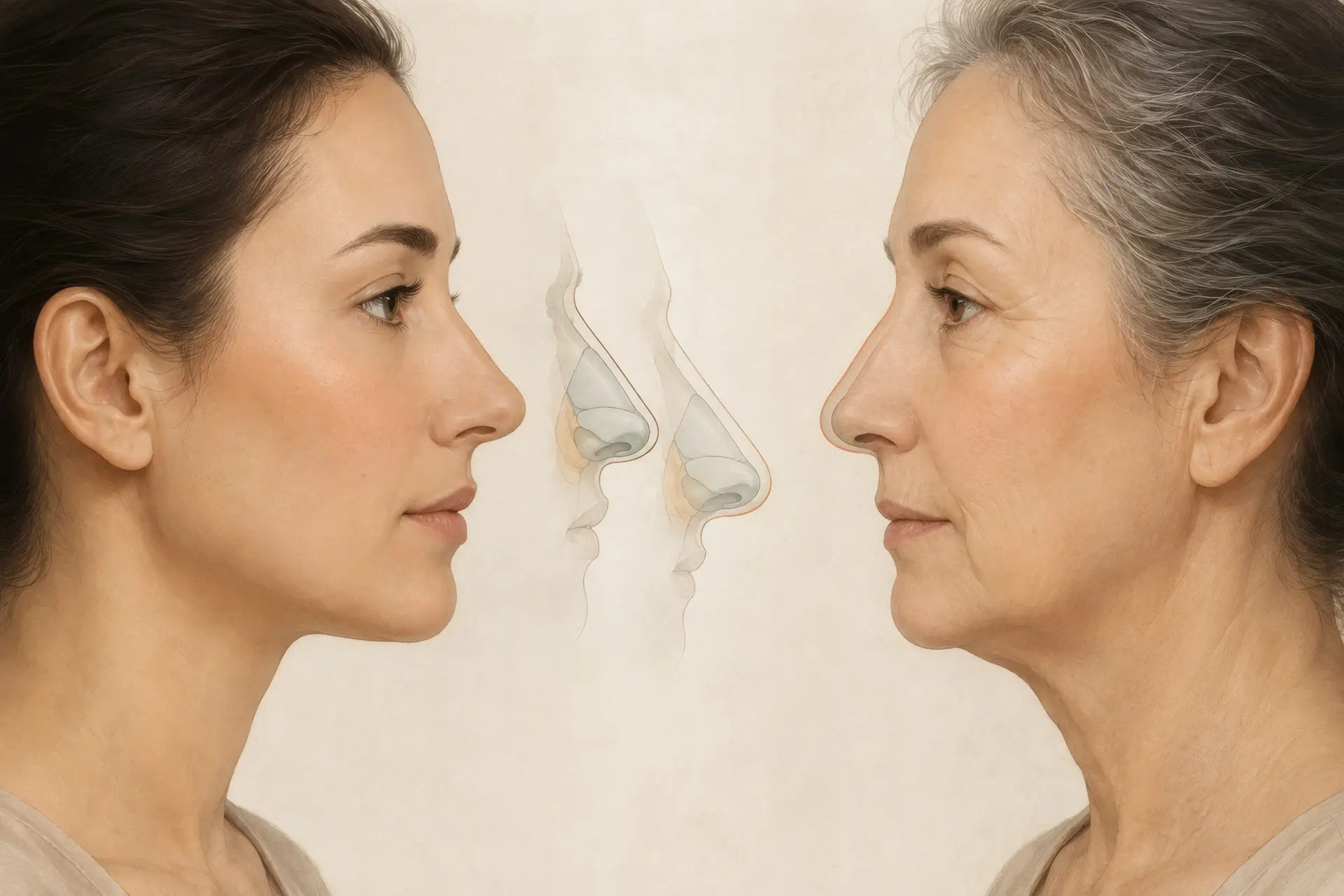
It can deepen. The ligaments and cartilage that hold the tip up weaken gradually, so a tip that sat close to level at twenty can droop by fifty, and an existing droop tends to look stronger. Old injuries play a part too, since a healed fracture can leave or exaggerate a hump. The bony bridge itself stays put unless trauma or surgery gets involved.
Conclusion and next steps
A hawk nose is the strong end of the convex family, pronounced hump and a clearly downturned tip on a bold silhouette. Roman keeps its tip level. Aquiline takes the same hump with a lighter touch, and hawk commits to the droop. Compare against the Roman nose, look at the downturned nose for tip behavior on its own, or run the mirror method in what type of nose do I have.