Aesthetics and proportion
Perfect Nose
A portrait painter I know keeps a plastic angle finder in her kit, and the nose she measured most last year belonged to a dog groomer with a dorsal hump and zero interest in changing it. That tracks. The chase for a perfect nose is older than the Parthenon friezes, and nobody has caught one yet.
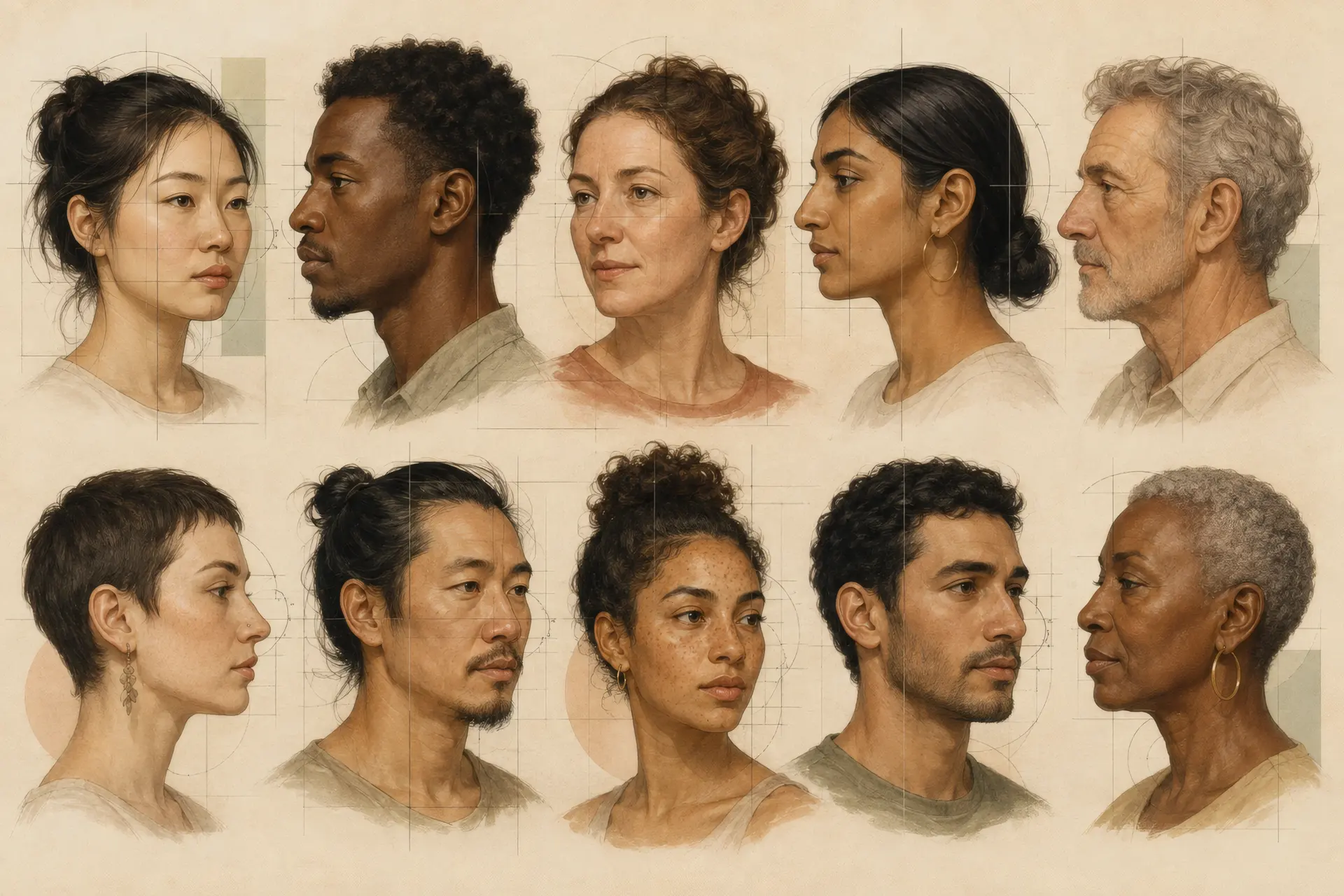
So here is the honest frame. Ideals shift with your face, your sex, and your ethnic background, and harmony with the rest of your features beats any single template. What we can do is walk through the tools people use to talk about proportion. The neoclassical canons, the golden ratio, the angles surgeons measure in degrees, and the airflow a good-looking nose still has to deliver. Treat all of it as vocabulary, not a verdict.
The quick answer
There is no single perfect nose. Aesthetic science describes harmony through proportion ranges, a nose width near one-fifth of face width, a nasolabial angle around 90 to 120 degrees, but the right numbers depend on your face, sex, and background. The free nose shape detector reads your bridge curve and tip angle from one photo, so you can see your own starting point.
Neoclassical canons and facial proportions
Artists worked these rules out centuries before surgery existed, mostly by staring at Greek and Roman sculpture. Three of them still show up in every consultation room.
Vertical thirds
Hairline to brows, brows to nose base, nose base to chin.
Divide the face horizontally into three stacked zones and classical proportion wants them roughly equal. Your nose lives in the middle third and partly defines where that third ends, since its base marks the lower boundary. When one zone runs long or short, the whole face reads slightly off, even if nobody can name why.
Horizontal fifths
The nose claims the middle fifth of face width.
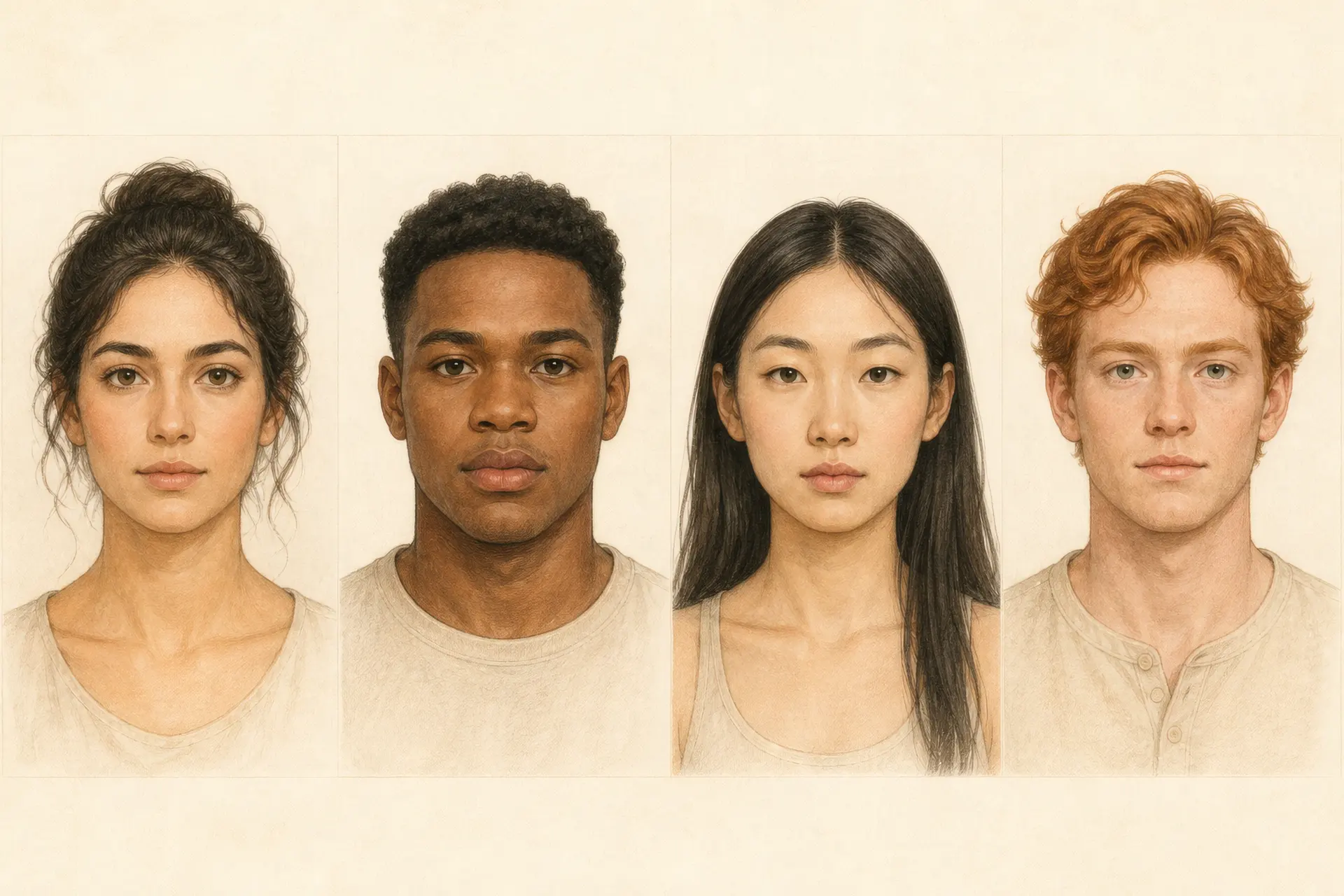
Slice the face into five vertical columns, each about one eye width. The ideal alar base width, the distance across the nostrils, fills the central fifth and lands close to the intercanthal distance between the inner eye corners. Wider than that and the nose draws attention. Narrower and the eyes start to look far apart.
The 0.67 length rule
Nasal length against midfacial height.
One commonly cited proportion sets nasal length, root to tip, at around 0.67 times the height of the midface. It gives surgeons a fast sanity check on whether a nose reads long or short for the face carrying it, which matters far more than the raw millimeter count.
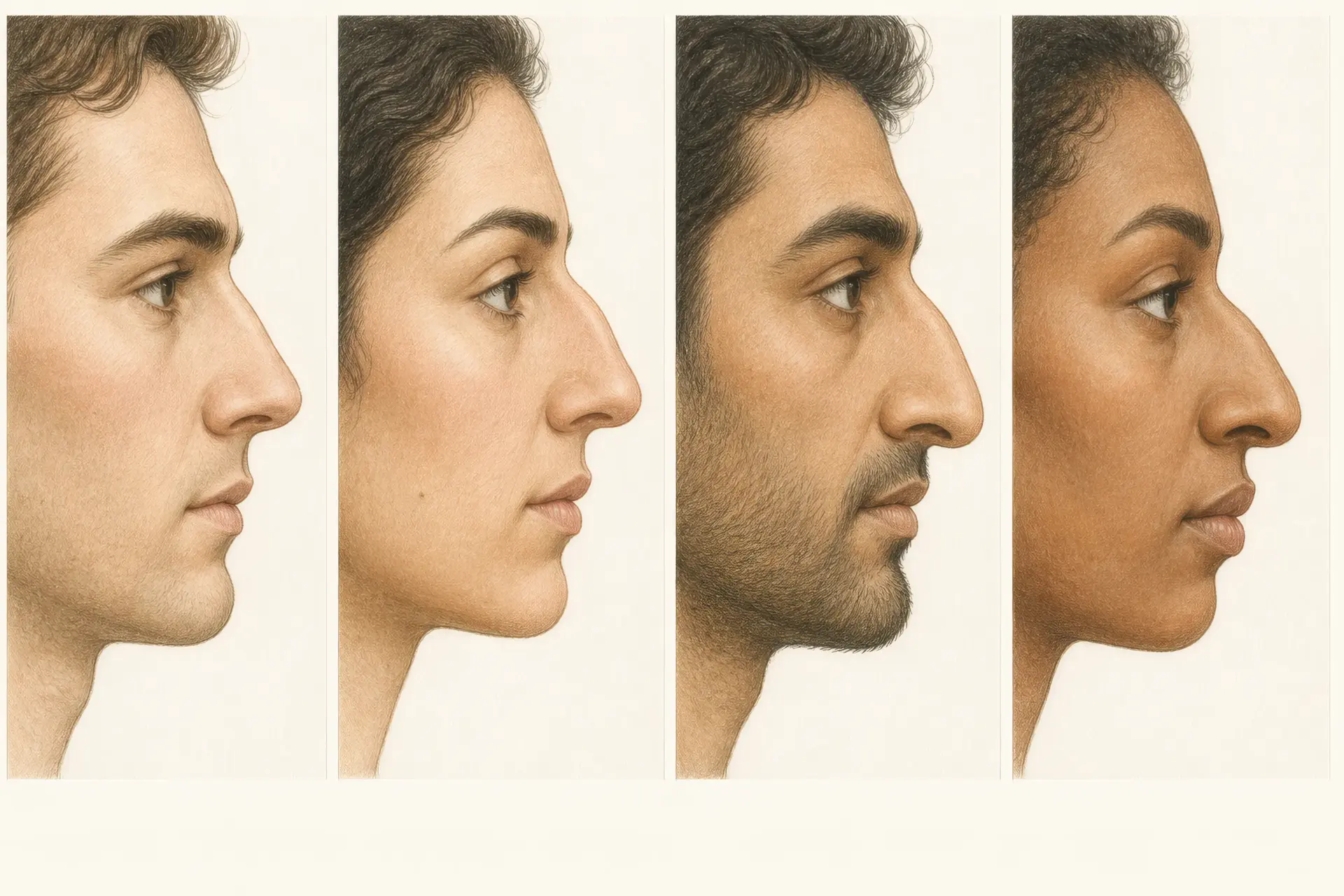
Hold these loosely. The canons came out of classical European art, and plenty of admired faces break them in both directions. A lower third that runs long can read as striking. A nose wider than the central fifth can anchor a strong face beautifully. If you want to see how these width and height dimensions play out in real shapes, the guide to nose types by ethnicity shows how far population norms sit from any single canon.
The golden ratio and nasal ideals
Phi is roughly 1.618, and beauty writing has been in love with it for about a century. Applied to the face, the claim runs like this. Segments that divide near 1 to 1.618 feel balanced to the human eye, so an ideal nose width lands near one-fifth of face width, and the gap between the eyes sits near one eye width. Neat. Maybe too neat.
The controversy deserves a paragraph of its own. When researchers measure faces rated attractive by actual humans, golden ratio fits explain less of the judgment than the marketing suggests (sometimes barely any). Cultural exposure and individual taste do heavy lifting that no ratio captures. I could be wrong here, but the ratio works best as a description of averages across big groups. It describes, it doesn't prescribe.
Keep the parts that are useful. The fifths rule and the one-eye-width spacing rule are quick checks you can run on your own front photo in two minutes, and they tell you something real about where your nose sits in your face. Just don't grade yourself against phi to three decimal places. Nobody attractive was ever measured that way.
The key angles, measured in degrees
Where artists used ratios, surgeons use goniometers. Three measurements do most of the talking in a profile analysis.
| Measurement | Where it's read | Commonly cited range | What it tells you |
|---|---|---|---|
| Nasofrontal angle | Where the forehead meets the bridge, seen in profile | 115 to 130 degrees | Sets how deep or soft the radix looks |
| Nasolabial angle | Between the columella and the upper lip | 90 to 120 degrees | Reads as tip rotation; higher values mean an upturned tip |
| Goode ratio | Tip projection divided by dorsal length | 0.55 to 0.60 | Checks whether the tip projects in proportion to the bridge |
A nasofrontal angle near the low end, around 115 degrees, gives a deeper, more defined start to the bridge. Closer to 130 the forehead melts into the dorsum with barely a corner. Neither is wrong. The nasolabial angle is the one people feel without naming, since it controls how upturned the tip reads, and the cited ideal shifts with both sex and ethnic aesthetics. And the Goode ratio quietly answers whether a tip that looks "too big" is over-projected or whether the dorsum behind it runs short.
If you want the anatomy behind these terms, the nose anatomy guide labels the radix, dorsum, columella, and alar base, and the nose bridge types page shows what high, low, and wide bridges do to the nasofrontal corner.
How the ideal shifts with sex, ethnicity, and function
Feminine aesthetics usually sit toward more tip rotation, a nasolabial angle in the 100 to 120 zone, and a slightly lower or softer dorsum. Masculine ideals pull the other way, toward 90 to 95 degrees and a stronger, straighter bridge. These are tendencies, and individual faces bend them constantly.
Population norms stretch the frame further. The nasal index, width as a percentage of height, varies widely across ancestry groups, and a bridge height that reads average in one population reads low or high in another. Modern rhinoplasty literature now states preserving ethnic identity as an explicit goal, which is a quiet admission of how much damage the one-template era did.
Then function, the part the beauty pages skip. Your nose moves air through the internal and external valves, past the septum, over turbinates that warm and humidify every breath. A profile that photographs perfectly but whistles at mile two of a run is a failed design. Any credible aesthetic plan protects breathing first, and improving both at once is common practice.
Styling and consultation notes
You can change how proportional your nose reads without touching its structure, and you can walk into any professional conversation better armed. Some of both.
- Glasses first. A higher dorsum can carry heavier acetate without the frame swallowing your face, while a low bridge usually wants adjustable nose pads to keep lenses off your cheeks.
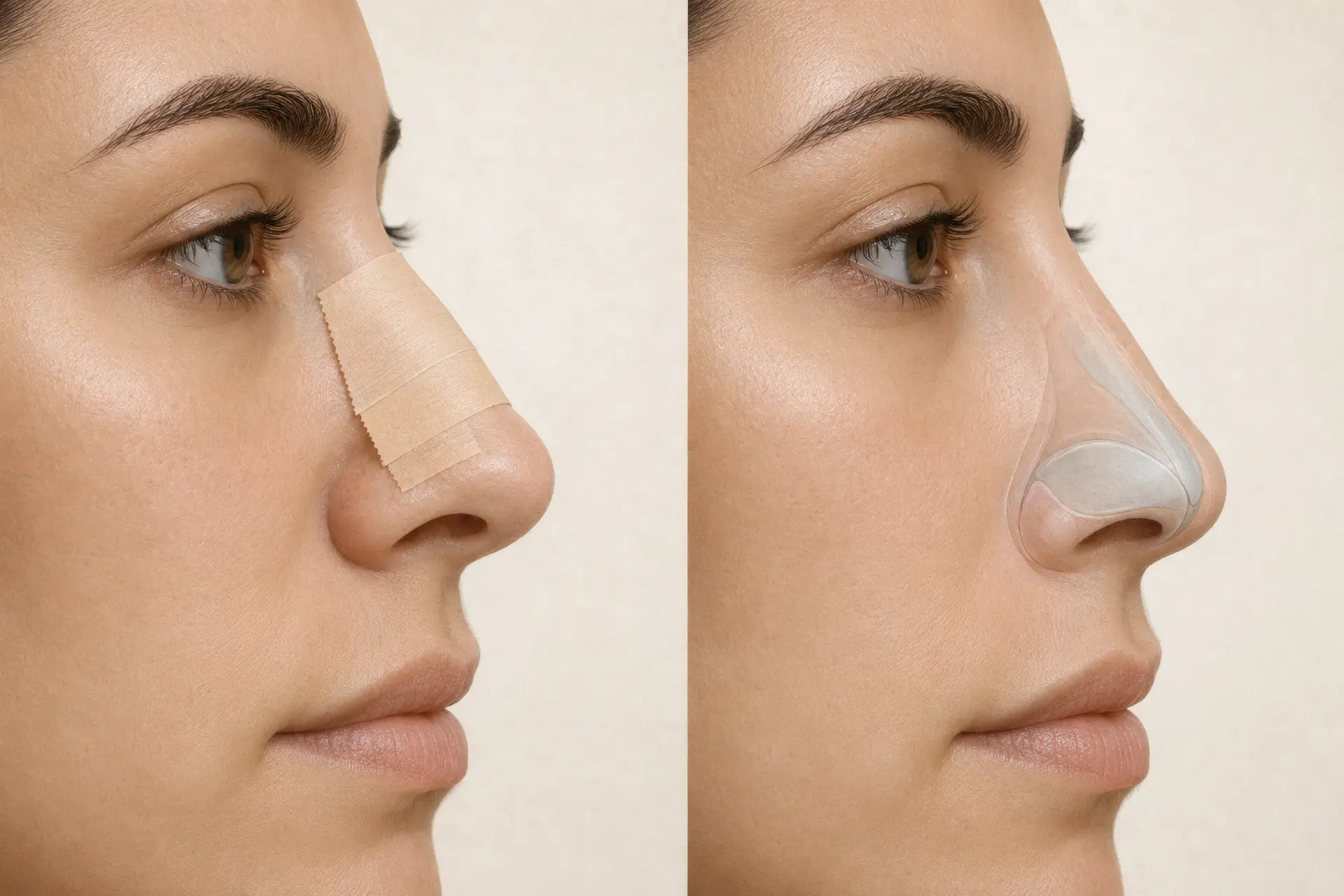
- Contour changes perception, not structure. A matte shadow along both sides of the bridge narrows it in photos, and a thin highlight down the dorsum pulls the eye to the center line.
- If you book a consultation, speak in measurements. Tip rotation, dorsal height, alar base width, projection. Surgeons think in those terms, and you will get a straighter answer than asking for a celebrity nose.
- Bring photos of your own face from three angles. Front, both profiles. Surgeons plan from your proportions, and a phone gallery of strangers slows that conversation down.
- Surgery can refine. It cannot manufacture a universal ideal, and any surgeon who promises one is selling a template your face never agreed to.
The glasses frames guide covers bridge fit in detail, including the fixed-pad frames that left a noticable red dent on my friend's high bridge by dinner one July. For structure questions, a board-certified surgeon or dermatologist beats any article, this one included.
Frequently asked questions
Is there one perfect nose shape?
No. Aesthetic research describes ranges and proportions that read as harmonious, but the right numbers depend on the face around the nose, plus sex and ethnic background. A tip rotation that looks balanced on one face can look pinched on another. Harmony with your own features is the target, not a single template.
Do golden ratio rules apply to everyone?
They describe population averages better than they judge individual faces. Many people rated highly attractive deviate from golden ratio proportions in measurable ways, and the ratio framework itself comes from a narrow slice of classical European art. Use it as a vocabulary for proportion, not as a scorecard.
What nasolabial angle is considered ideal?
Most sources cite a range of 90 to 120 degrees between the columella and the upper lip, with feminine aesthetics typically sitting toward the higher end and masculine aesthetics toward the lower. Ethnic background shifts the norm too, so the honest answer is a range plus context, not one magic number.
Can surgery give me a perfect nose?
Rhinoplasty can improve harmony between your nose and the rest of your face, and it can fix breathing problems at the same time. Perfect stays subjective. Surgeons plan in millimeters and degrees against your own proportions, and the good ones will tell you plainly when a request would throw your features out of balance.
Can a nose shape detector tell me if my nose is perfect?
No tool can score perfection, and you should be suspicious of any that claims to. What a detector can do is read observable traits, your bridge curve and tip angle, from a photo. That gives you the vocabulary to describe your nose and compare it against the proportion guides on this page.
Sources
The anatomical terms on this page follow the standard clinical vocabulary set out in Elements of morphology: standard terminology for the nose and philtrum (Hennekam et al., 2009), an international consensus paper on describing nasal anatomy.
Next steps
Perfect is a moving target, and now you have the vocabulary the professionals use to chase it. See the ideals at two extremes with the Greek nose (straight bridge, minimal radix dip) and the upturned nose (the high end of tip rotation). Not sure where your own nose lands? Start with what type of nose do I have, then let the detector read your bridge curve and tip angle.