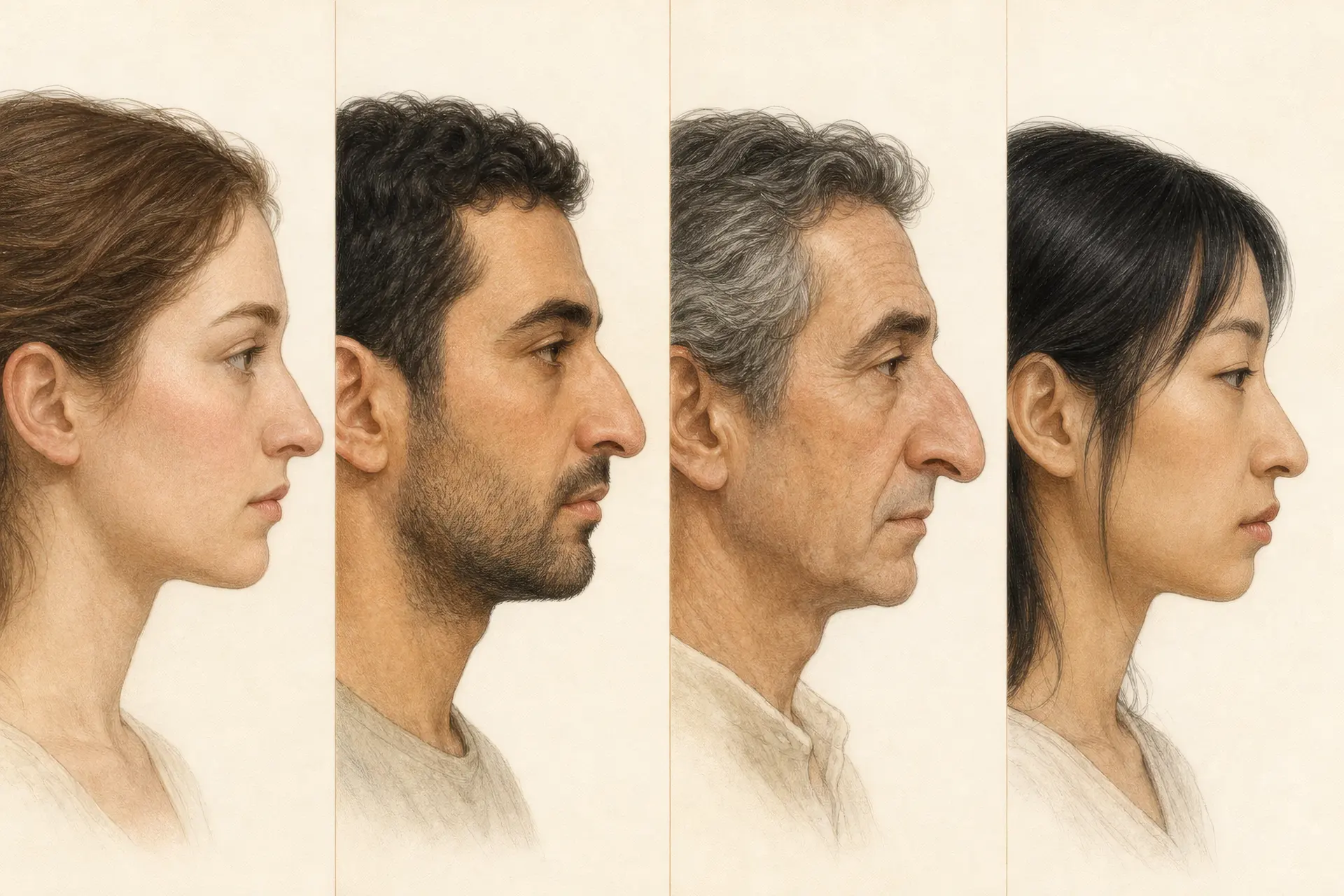
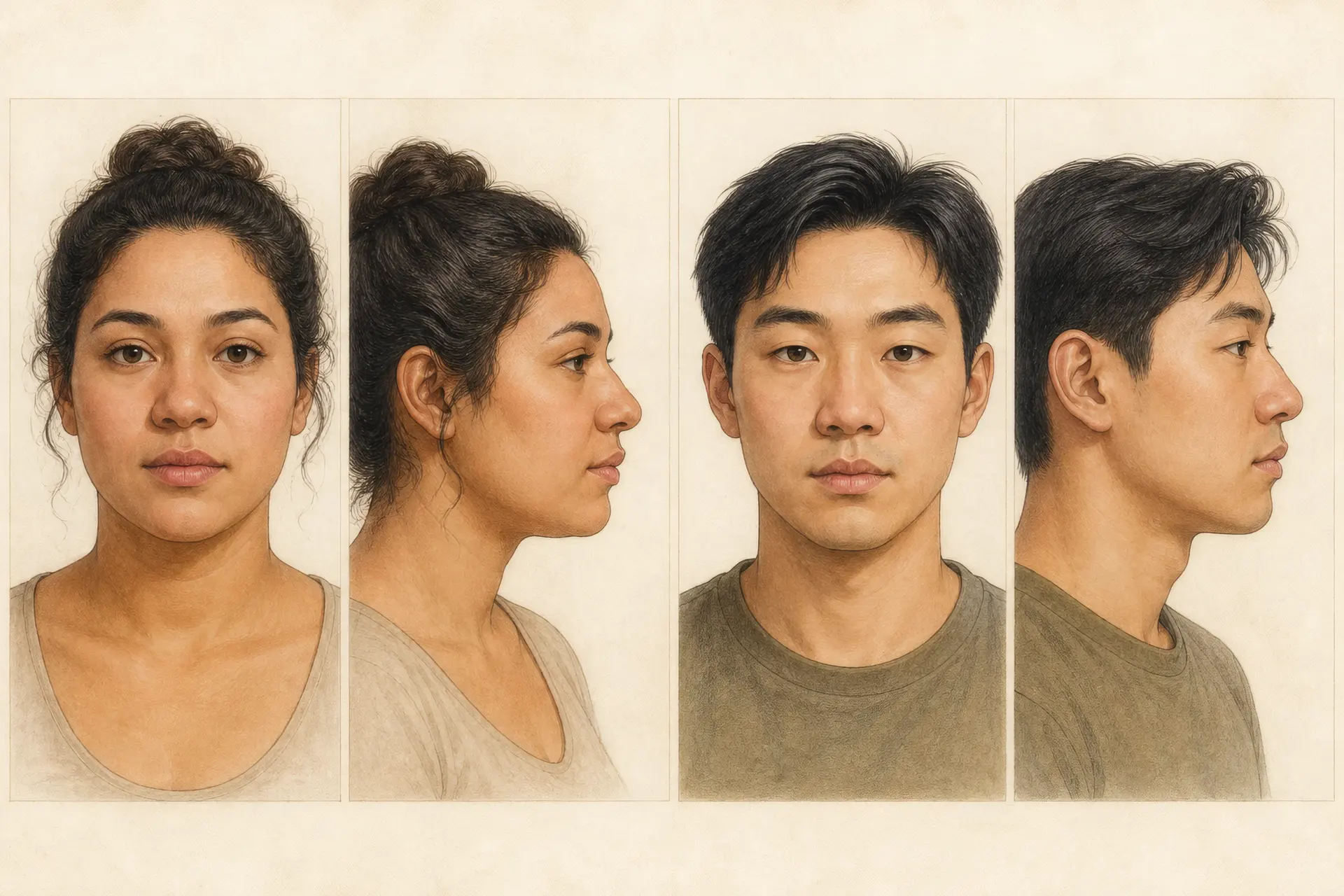
Nose type deep dive
Bulbous Nose Shape
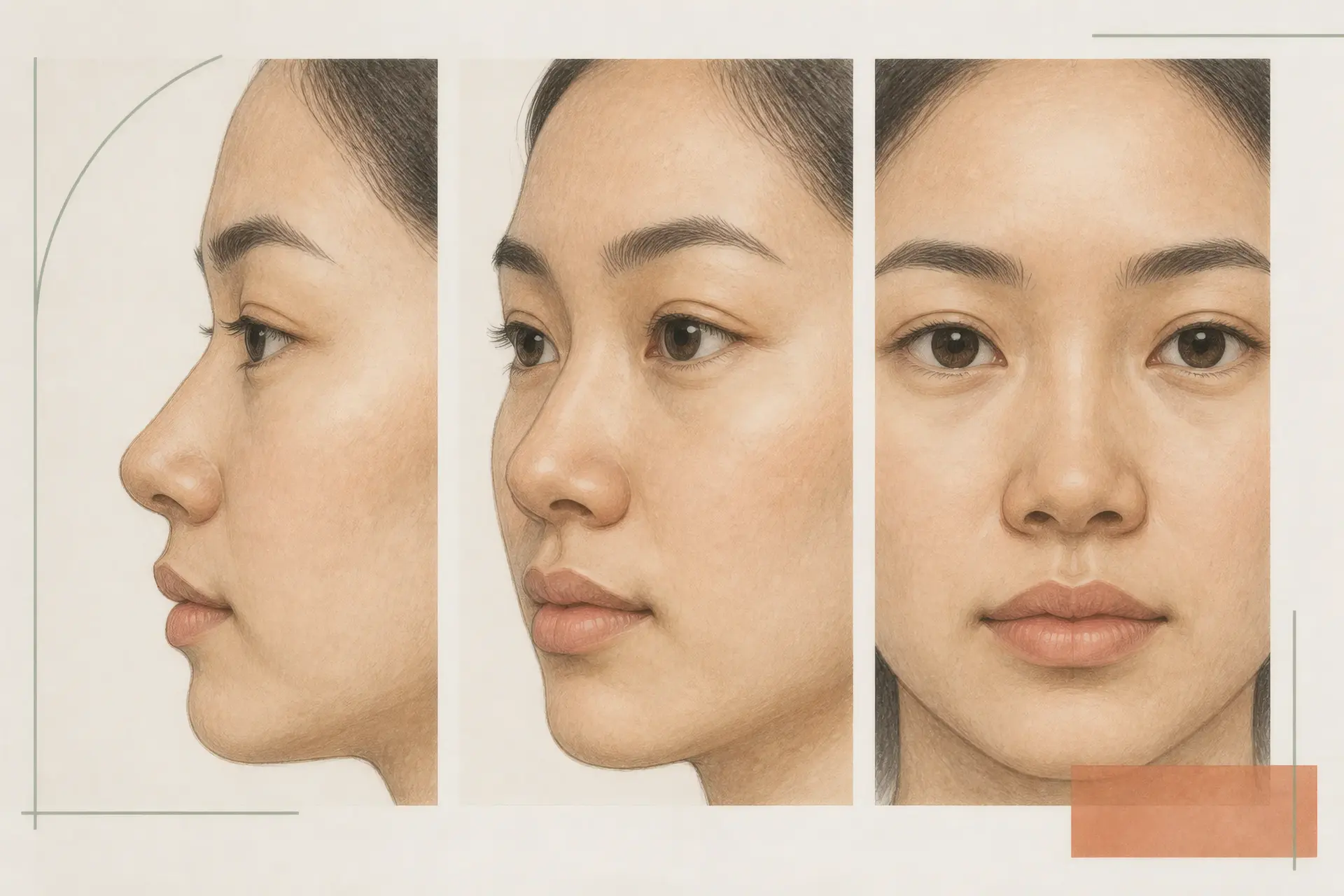
The first thing people notice about a bulbous nose shape is the lower third of the nose, where the tip sits like a soft rounded dome that never quite comes to a point. The definition is technical and simple at once: a bulbous nose is one whose tip reads round, wide, or poorly defined, while the bridge above it can look entirely ordinary.
It is also one of the most common results people land on with the nose shape detector, partly because the tip is what the eye judges first in a front photo. Below you'll get the traits that define the shape, the cartilage and skin causes underneath, a clean comparison against wide and fleshy noses, styling and consultation notes, and straight answers to the usual questions.
The quick answer
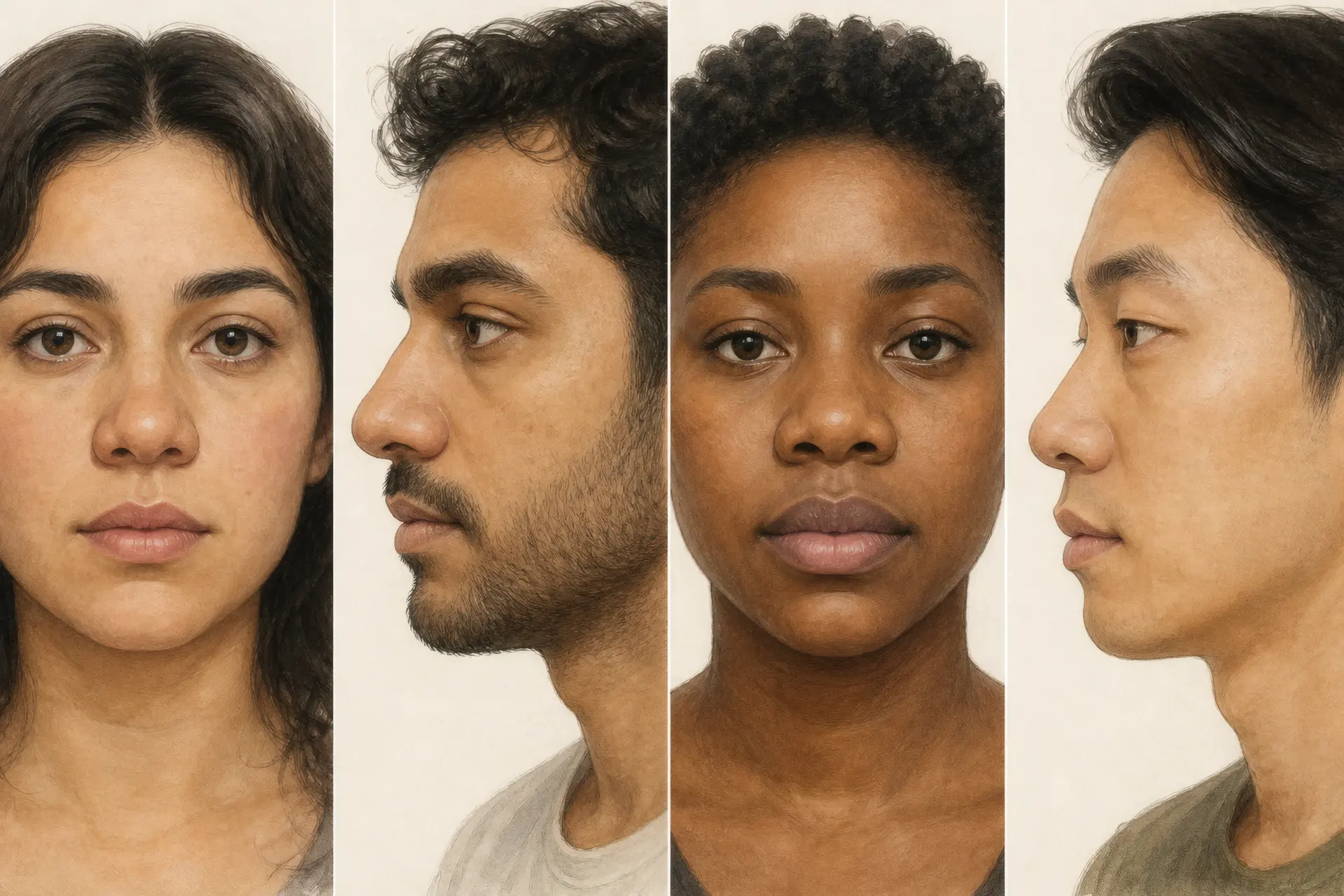
A bulbous nose has a tip that looks round, wide, or poorly defined, with the roundness concentrated in the lower third of the nose. Check a straight-on photo. If the end of your nose reads as a soft circle where you'd expect a tapered point, and the bridge and nostrils look average, the label fits.
Want a second opinion from a camera? The free nose shape detector measures tip width and definition from a single photo.
Bulbous nose tip morphology: round, wide, and softly defined
Surgeons talk about tip-defining points, the two spots where the paired domes of the lower lateral cartilages catch the light. On a refined tip those points sit close together and read as one small highlight. When the domes sit wide apart, or each dome is broad and convex on its own, the highlight smears into a soft ball. That smear is bulbosity.
The bridge barely enters the classification. A bulbous tip can ride on a straight bridge, a humped one, or a gently curved one, and two noses can share an identical profile line yet land in different categories purely because one tip comes to a point and the other stays round. Bridge shape is a seperate question, answered by pages like the Roman nose or the straight nose.
Geography matters too. The roundness concentrates near the end of the nose, in the lower third between the nostrils and the tip's highest point. From the front it reads as a circle where a refined tip would show a triangle. From the side it shows as a full convex curve at the very end. (Passport photos, with their flat frontal lighting, exaggerate the effect brutally.) The nostril shape guide covers how the nostrils frame that lower third.
What causes a bulbous nose tip
Two structures decide whether a tip reads refined or bulbous, the cartilage scaffold and the skin wrapped over it.
Cartilage first. The lower lateral cartilages form the tip's skeleton, and when they're broad or their domes diverge at a wide angle, the tip spreads sideways. Weak cartilage produces something similar from the other direction. Without enough stiffness, the tip loses its edges and rounds out under its own skin.
Then skin. Thick skin with a layer of subcutaneous fat over the tip blurs whatever definition the cartilage provides. I could be wrong here, but I'd guess thick skin accounts for more bulbous tips than cartilage shape does, at least in the photos people send around online. It's also the reason tip refinement surgery has limits, which comes up again below.
Occasionally the cause is medical. Rhinophyma, a form of rosacea where the skin and oil glands of the nose thicken, can enlarge the tip over the years. It's an uncommon occurence, but the condition is real and progressive. And it calls for a dermatologist visit, full stop. Contour tutorials can sit this one out.
For classification purposes the cause changes nothing. Broad domes and a thicker skin envelope produce the same rounded front photo, so every tool on this site, and every mirror session, sorts on what's visible.
Bulbous nose vs wide nose vs fleshy nose
Three labels get confused constantly, and each one locates the fullness somewhere different. A bulbous nose is a tip story, not a width story. The wide nose carries its breadth low, through the base and the nostrils, and its tip may be bulbous or neatly pointed. The fleshy nose runs soft and full across the entire structure, bridge included.
| Label | Where the size concentrates | The tip | Bridge and base |
|---|---|---|---|
| Bulbous | The tip alone | Rounded, wide, softly defined | Can be completely average |
| Wide | The bridge, base, and nostrils | May be bulbous or neatly pointed | Broad through the middle and bottom |
| Fleshy | The whole nose | Soft, often rounded | Thick soft tissue from bridge to base |
So try a field test. Cover the tip with your thumb in a front photo and study the the bridge and base that remain. If the nose suddenly looks proportional, you were looking at a bulbous tip. If it still reads wide through the nostrils, lean wide. If the whole structure reads soft even with the tip hidden, that's fleshy territory. (Overhead bathroom downlights widen every tip, so run this test in daylight.)
Styling and consultation notes
Glasses rest on the bridge, so a bulbous tip never affects frame fit. Frame style still changes where attention lands on the face, and a few practical things are worth knowing.
- Frames with a strong top bar or a gentle upsweep pull attention toward the eyes. Tiny rimless pairs do the opposite and leave the lower third as the busiest feature on your face.
- Contour, if you wear it. Shade both sides of the tip and run a thin highlight down the bridge so the eye travels upward and the tip reads narrower from the front.
- Skip the shimmer highlighter on the tip itself.
- Consultation vocabulary matters. Ask about “tip refinement,” mention the “lower lateral cartilages,” and expect the surgeon to raise skin thickness as the hard limit on how much definition is achievable.
The contour lesson from a humid July.
A reader once sent me two photos of her tip contour, one taken at 8 a.m. and one after a ninety-minute commute in swampy heat. The highlight stripe down her bridge survived intact. The shading on both sides of her tip had melted into a single shiny oval. In my experience, rounded tips hold product badly because the surface curves away in every direction, so keep tip contour minimal and let the bridge highlight do the work. The how to contour different nose shapes hub walks the full technique by type.
One opinion I'll stand by. Rounded tips photograph kinder than sharp points in candid shots, because the soft edge catches light gently, and I'd call that an asset for most people. If a consultation is ever on the table, walk in with structural terms and realistic expectations. A surgeon can reshape cartilage decisively, while thick skin caps how crisp the result can get, and any honest bulbous tip rhinoplasty page will tell you the same.
Frequently asked questions
Is a bulbous nose the same as a wide nose?
No. Bulbous describes the tip, which looks rounded, wide, or poorly defined while the bridge and base can stay average. Wide describes breadth that starts at the base and nostrils. One nose can be both at once, and plenty are only one or the other.
Can non-surgical treatments refine a bulbous tip?
Filler can shift proportions slightly, usually by adding projection above or below the tip so it reads smaller by comparison. It cannot remove cartilage or thin the skin. Meaningful, lasting refinement of a bulbous tip generally involves rhinoplasty, where a surgeon reshapes the lower lateral cartilages directly.
Does a bulbous tip affect breathing?
Tip shape alone says little about airflow. Breathing depends on internal structures like the septum and the nasal valves. Someone with a bulbous tip can breathe perfectly, and someone with a small pointed tip can struggle nightly. Anything persistent deserves an ENT exam.
Is a bulbous nose genetic?
Mostly, yes. Cartilage shape and skin thickness both run in families, so if a parent has a rounded tip you may well have inherited the ingredients for one. Weight gain and aging can soften definition further over the years, but the underlying scaffold was there from the start.
Conclusion and next steps
A bulbous nose comes down to one feature, a tip that reads round, wide, or poorly defined while the rest of the nose minds its own business. Distinct from wide, distinct from fleshy, and more common than the name suggests. Keep going with the fleshy nose for whole-nose softness, the wide nose for base-led breadth, the pointy nose for the opposite tip extreme, or what type of nose do I have to run the full mirror method on yourself.