Nose type deep dive
Snub Nose Shape
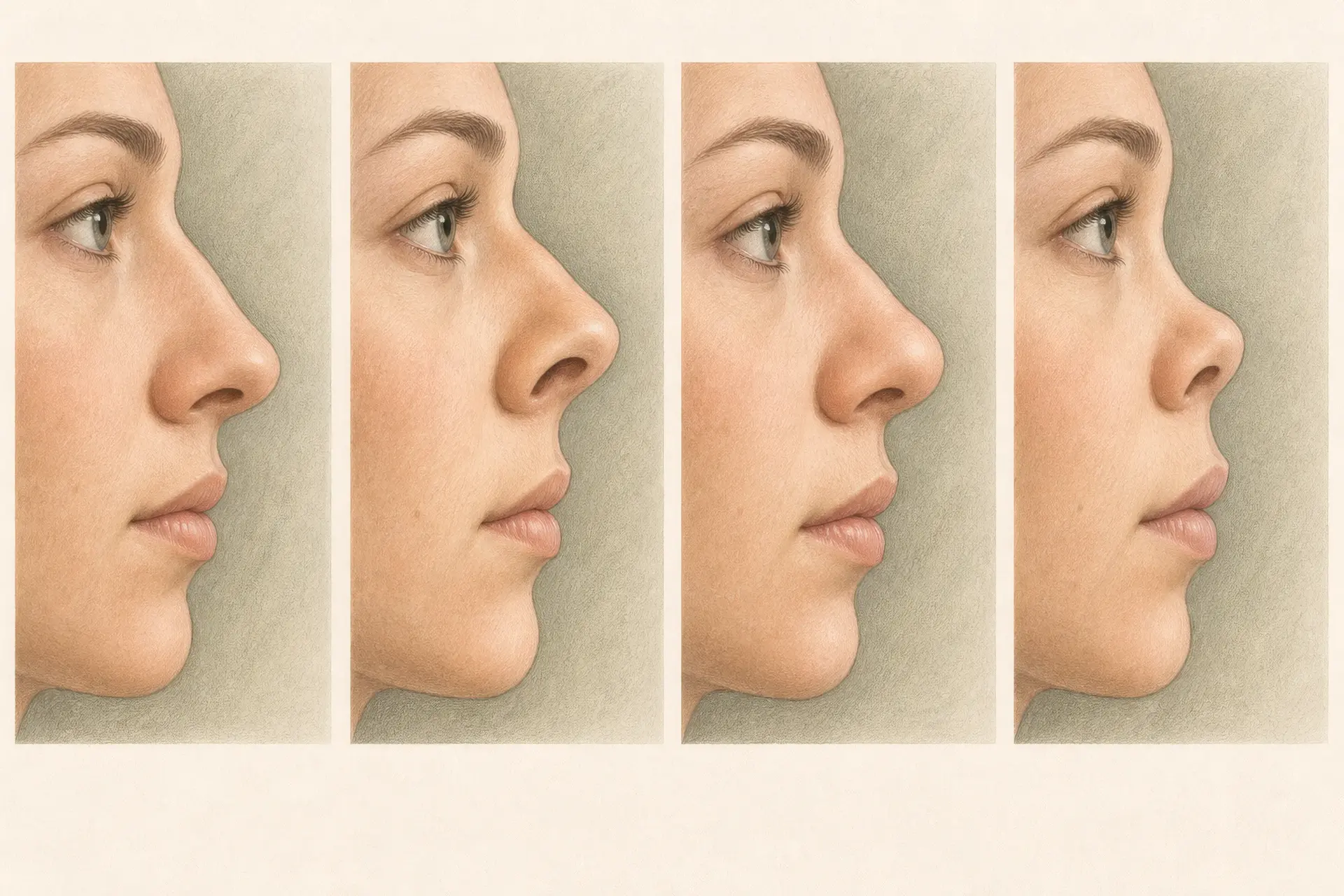
Catch your reflection from a low angle and a snub nose shape announces itself fast. The tip rotates upward, and a crescent of nostril shows where straighter noses keep theirs covered. Some people love the openness of it. Others spend years tilting their chin down in group photos.
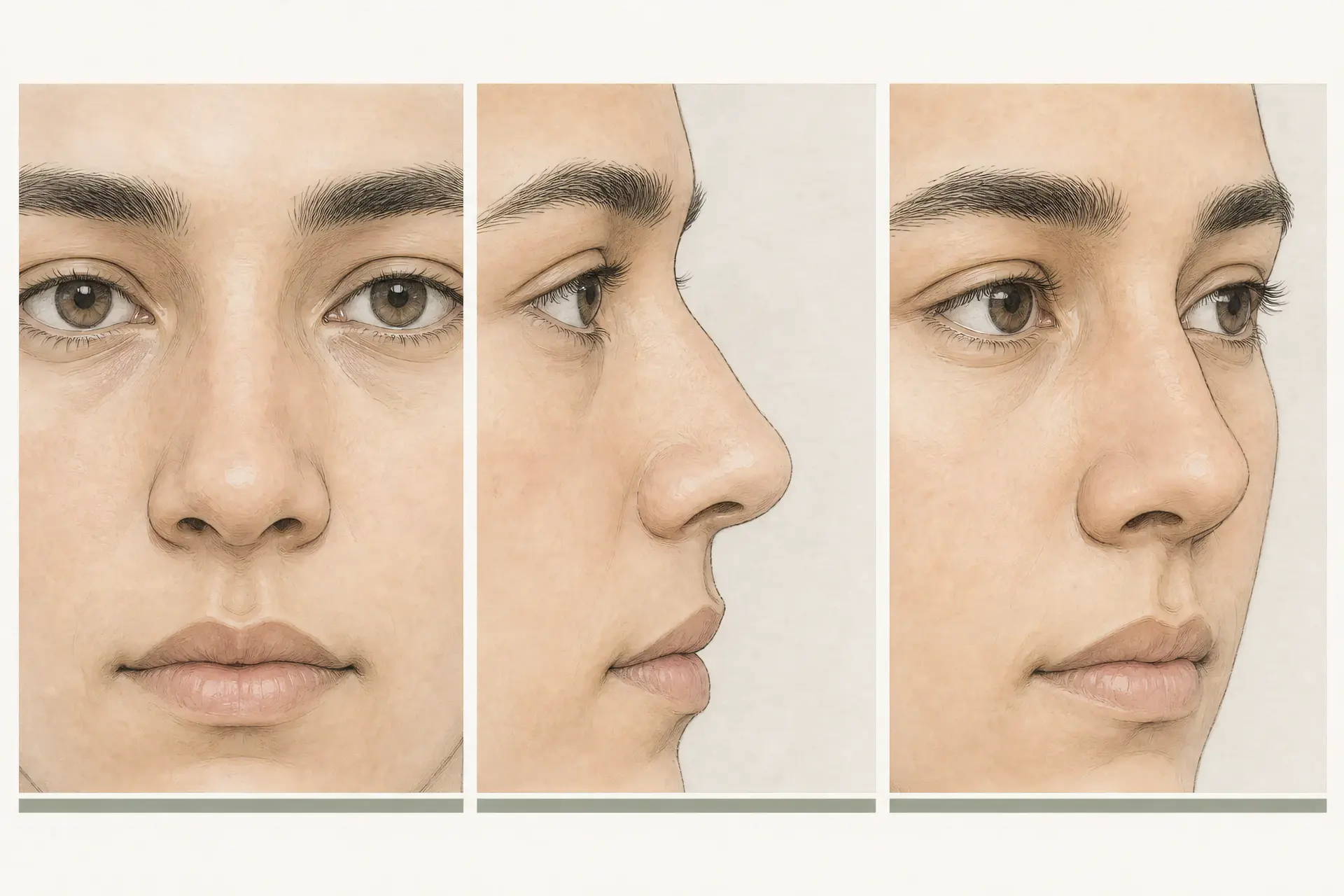
The definition, plainly. A snub nose is a short, slightly upturned nose with a compact bridge and some nostril visibility from the front. Other types borrow single traits from that list. This page covers the combined pattern, short bridge, slightly concave line, upturned tip, and visible nostrils together, because the mix is what separates snub from its two nearest neighbors, button and celestial. Below you'll find the four traits broken down, head-to-head comparisons, styling and makeup notes, and the questions people bring to this label.
The quick answer
A snub nose is short overall, with a low or slightly concave bridge, an upturned tip, and nostrils that show from a neutral front view. If a front photo and a side photo both confirm that stack, snub is your closest match. Small and rounded without the nostril show leans button. Lifted but longer leans celestial.
This page is for anyone who suspects the label fits and wants to know what to do with it, glasses fit, contour, and all. If you'd sooner skip the mirror work, the free nose shape detector reads tip rotation and bridge length from a single photo.
What defines a snub nose shape
No single trait makes a nose snub. It's the stack, and each layer is easy to check in a mirror.
- Length. Shorter than average from root to tip. The whole nose reads compact, like it ends a beat earlier than the face expects.
- Bridge height runs low. From the side, the line between brow and tip can look flat or gently concave, a slight inward scoop where Roman profiles bow outward.
- The tip talks loudest. It rotates upward, and the nasolabial angle opens past the roughly 90 to 100 degrees of a level tip.
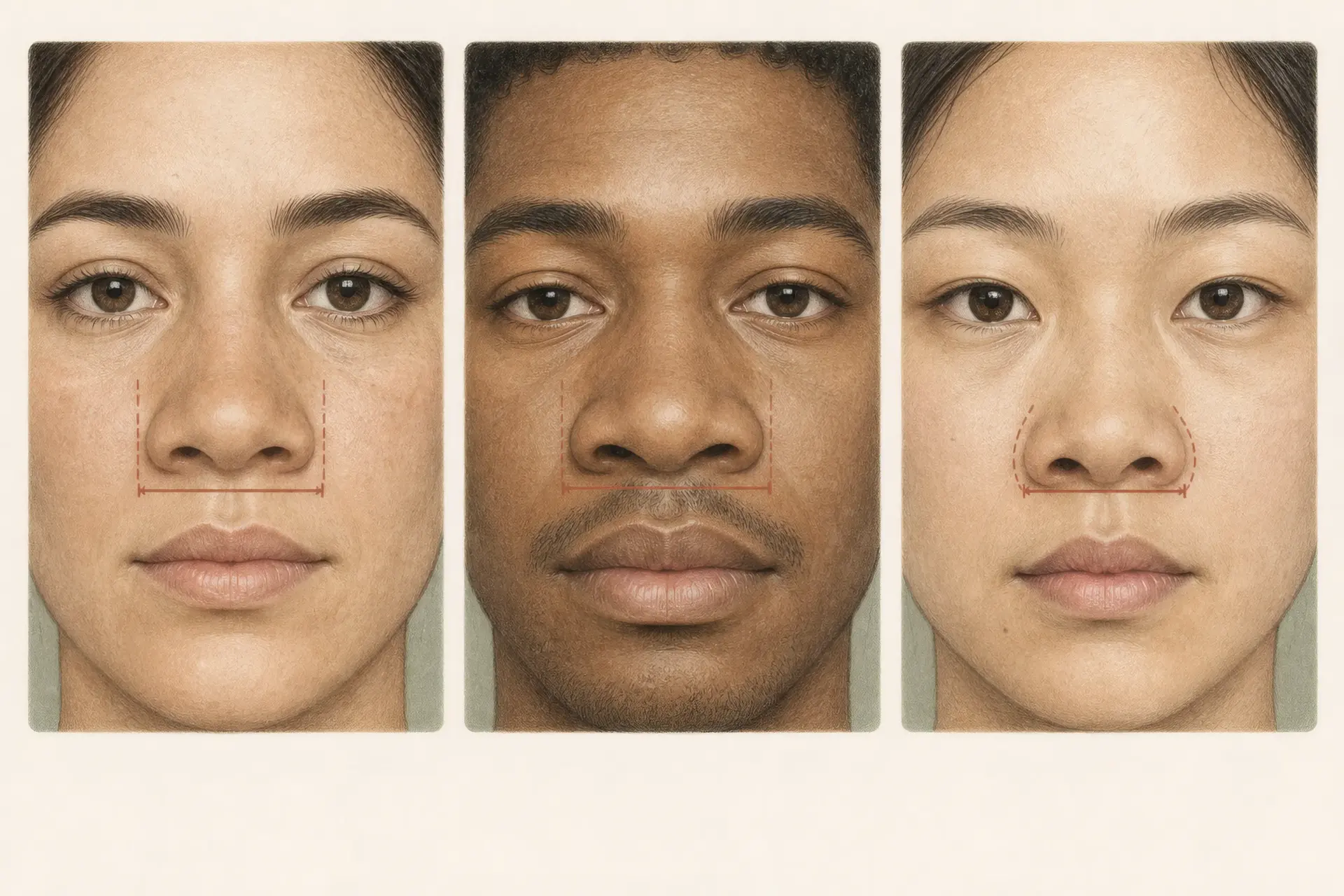
- Nostrils. From a relaxed straight-on view, more of the openings shows than you'd see on button or straight types.
The pattern reads differently at different face sizes. On a narrow face a short upturned nose can look delicate; on a broad face the same nose reads compact and sporty. Judge yours against your own features, and give more weight to the tip and nostrils than to raw length, since length is the trait camera distance distorts most. A low bridge also invites comparisons with the flat nose, but flat types run longer and level-tipped, with width doing more of the talking.
On the full nose shapes chart, snub sits in the short-and-upturned corner, one step from button on one side and celestial on the other. Which neighbor you're nearer to depends on which of the four traits dominates your face. At least for most people, the nostril question is the tiebreaker.
How to identify a snub nose in two photos
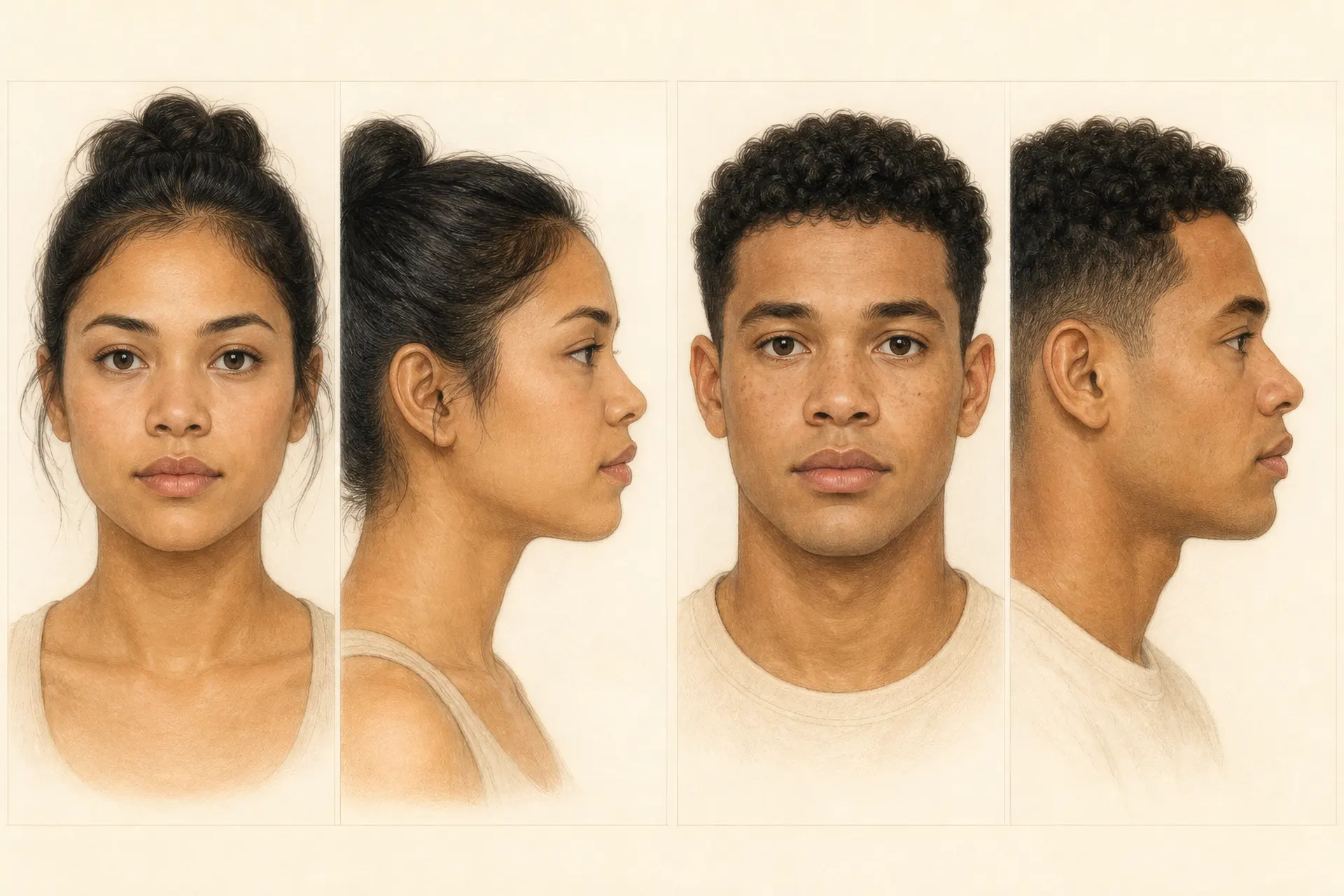
Two photos settle most of the debate. Take them in daylight, face relaxed, hair off the forehead.
Photo one, straight on. Look at the nostrils before anything else. On a snub nose you can see partway into the openings even with your face completely neutral. (Front cameras flatten bridges, so ignore bridge height here.) The nostril shape guide goes deeper on what the front view shows.
Photo two, pure profile. Measure with your eyes from between the brows to the the tip. Short? Then trace the line. Flat or gently scooped backs the snub reading; a strong outward curve kills it. The nose bridge types guide shows where that concave scoop sits among the other bridge lines.
One setup note. Smiling rotates the tip up and flares the nostrils, so a grinning selfie makes every nose look snubbier than it is. Overhead bathroom lighting does the opposite, throwing the nostrils into shadow. Neutral face and an eye-level camera. Window light helps.
Still torn between labels after both photos? The five-minute mirror method adds a three-quarter angle and a tip checklist, and it handles the mixed-feature cases this page skips.
Styling and makeup tips
A short upturned nose changes two practical things, glasses fit and contour placement. Both are easier than they sound.
- Glasses first. A low bridge gives fixed pads little to grip, so look for adjustable silicone pads or acetate frames molded with a higher bridge.
- Contouring works against rotation. A soft shadow under the tip lowers it visually, and a thin highlight down the bridge adds the impression of length. Blend more than feels necessary.
- Brows and eye emphasis. Pulling attention upward balances a shorter nose; heavy contour on the nose itself tends to announce that you're hiding something, at least for most people.
- One makeup-artist trick (they call it de-rotation) is keeping the highlight matte. Shimmer on a low bridge photographs flat.
Frame shape matters less than fit here, with one exception. Deep, oversized lenses sit low on the face and can frame the nostrils like a picture. Slimmer rims and a slightly higher bridge line keep the attention on your eyes, which is the whole point of the brow and eye emphasis above.
Hair plays along too. Styles with height at the crown lengthen the face visually and make a short nose look more proportional, while a heavy forward fringe crowds the features and does the opposite. And keep terms like tip rotation and bridge height in your pocket if you ever talk to a professional; they communicate more in six words than a minute of pointing.
The Houston parking-garage lesson.
One August afternoon I watched a friend's new frames slide down her low bridge three times in ten minutes. Fixed pads, glossy acetate, swamp-level humidity. The optician swapped in adjustable silicone pads and the sliding stopped that same day. In my experience, pad hardware matters more on a low snub bridge than frame shape or price.
And if you're ever weighing a structural change, read a surgeon's overview before another contour tutorial. The American Society of Plastic Surgeons' rhinoplasty page lays out what surgery can adjust and what stays put, which reframes what makeup alone can do.
Frequently asked questions
Is a snub nose the same as a button nose?
No, and the difference shows from the front. Snub emphasizes shortness, an upturned tip, and visible nostrils. Button emphasizes a small, rounded dome tip on a compact nose, and its nostrils usually stay hidden. The two overlap often enough that plenty of noses borrow traits from both, which is where the confusion starts. If you see a neat round dome from the front and no nostril, call it button and move on.
Can a snub nose be long?
By definition, no. Shortness is half the label. If your nose lifts and shows nostril but runs average or longer, celestial or upturned is the better fit. Labels get fuzzy at the edges, so treat any answer here as a closest match rather than a verdict.
Does a snub nose affect breathing?
External shape says little about airflow. Breathing depends on internal structures, the septum and the nasal valve mainly, and a short upturned outside can sit over a clear airway. If breathing bothers you, that's a question for an ENT, where the answer has nothing to do with how the nose photographs. Shape labels are for styling and shopping; symptoms are for doctors.
Can age or weight change how snub my nose looks?
Yes, at the margins. Cartilage support softens with age and the tip can drop slightly, which reduces rotation and nostril show over the years. Weight changes alter cheek volume around the nose and shift how short it reads by comparison. The underlying structure stays put.
Conclusion and next steps
So, snub comes down to four traits landing together: short length, a low or slightly concave bridge, an upturned tip, and nostrils that show from the front. If that reads like your face, compare notes with the button nose shape and upturned nose pages, check the low-bridge side of the family on the flat nose page, or back up and run the full mirror method. One photo in the detector works too.