One trait, many labels
Upturned Nose
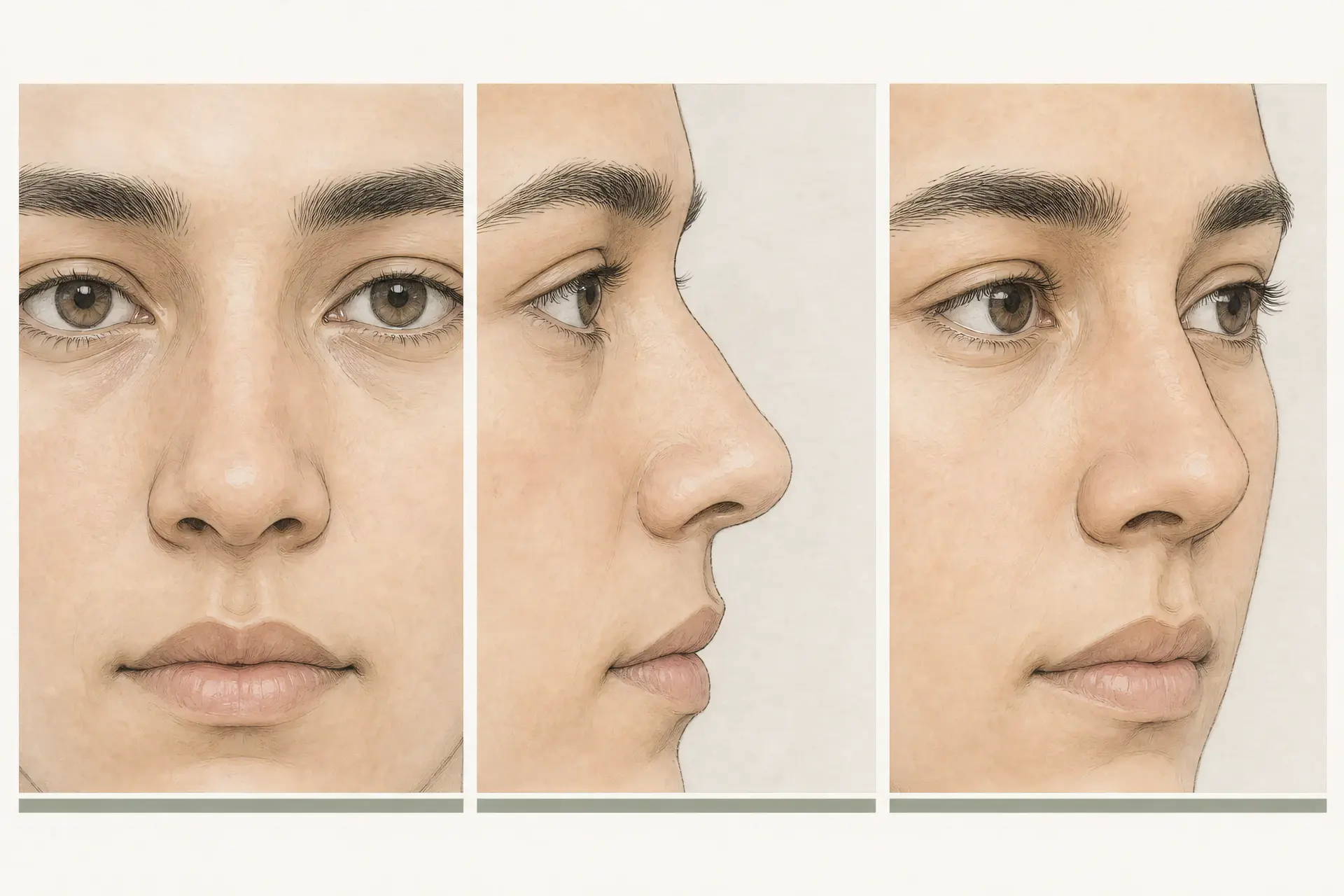
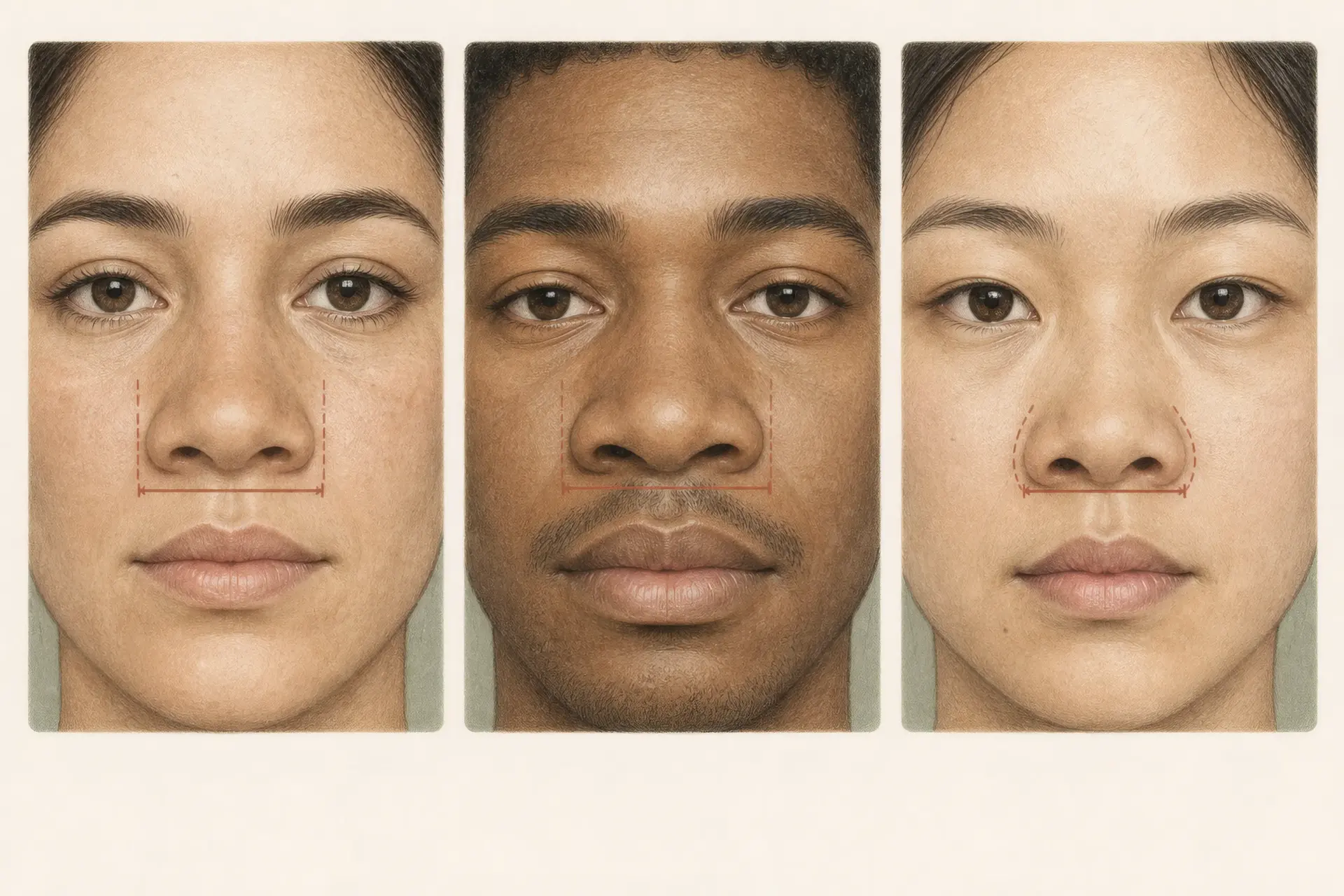
People usually go looking for the term upturned nose after a front-facing photo catches the nostrils and they can't unsee it. The definition itself is simple. An upturned nose has increased nasal tip rotation, which means the tip angles upward instead of pointing straight ahead, so the nostrils show more from the front and in profile. That's the whole trait. Everything else, the size, the width, the bridge, the length, can be anything.
This page covers the tip-rotation dimension and every label attached to it. Celestial, retrousse, turned-up, turned up, upturned. All synonyms, all the same anatomy. Two neighbors stay on their own pages, though. Button and snub are combination types, since each folds size or length in with the tip, and they link from here where the comparison matters.
The quick answer
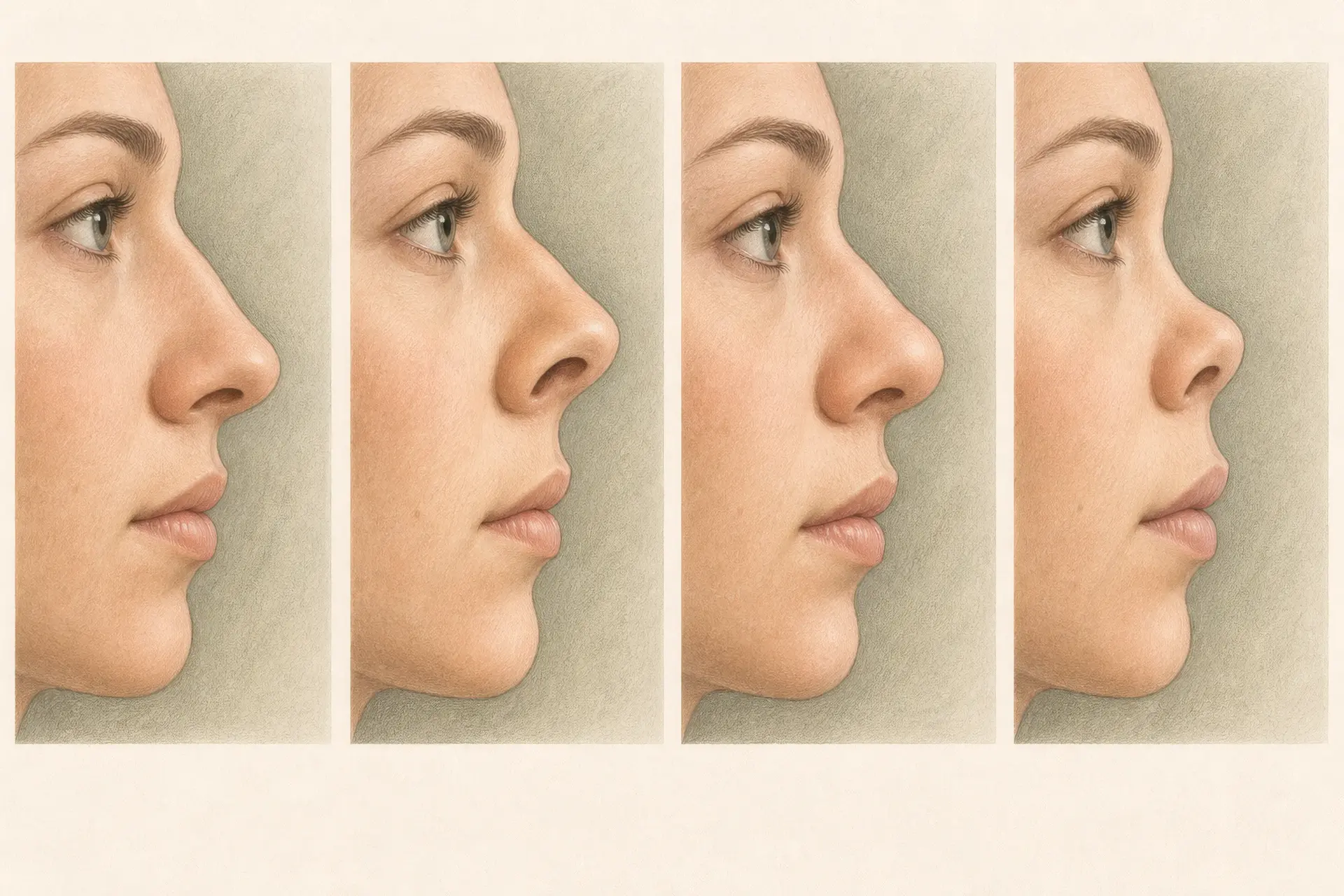
An upturned nose is defined by one measurement, tip rotation. From the side, the tip points visibly upward while the average tip aims level or down. From the front, the nostrils show at rest because the tip sits high. If both are true, you're in upturned territory, whatever the size.
To confirm it in seconds, the free nose shape detector reads rotation and nostril show from a single photo.
Anatomy of tip rotation
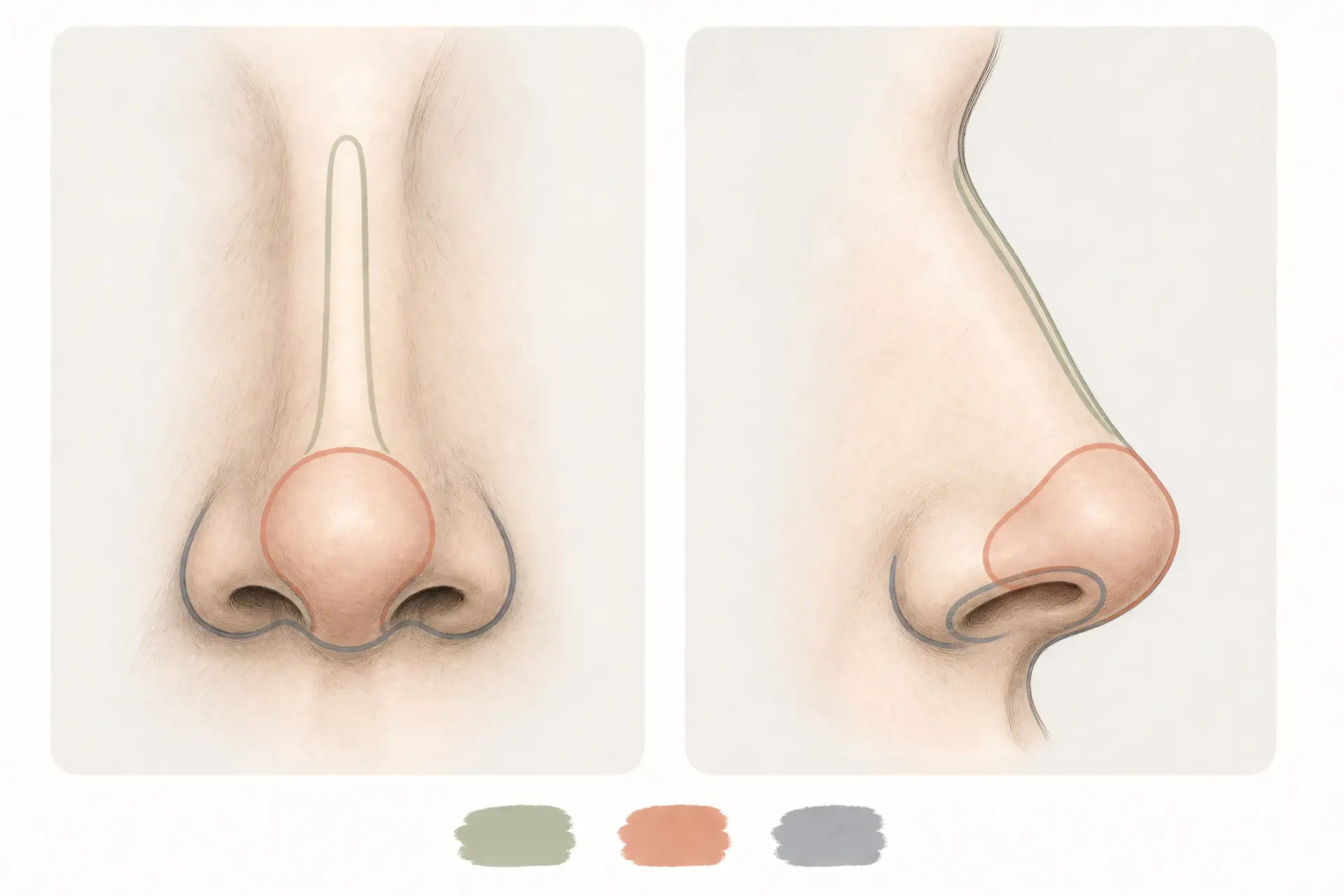
Clinicians read rotation through one number, the nasolabial angle. Picture the columella, the strip of tissue between your nostrils, and the line of your upper lip. The angle where those two meet is the nasolabial angle, and it is the standard clinical readout of tip rotation. A larger angle means more rotation. Most faces land somewhere around 90 to 110 degrees, and upturned noses run higher than that.
Two visible effects follow. Higher rotation shortens the apparent length of the nose, because the tip swings up toward the brow instead of out toward the lip. And it increases nostril show, which is the trait most people spot first in photos. The nostril shape page separates how much of that show comes from the tip versus the nostrils themselves. A smile rotates the tip a few degrees on its own, so judge at rest. Photos caught mid-laugh will overstate the the rotation.
The rotation mostly comes from natural anatomy. The shape and orientation of the lower lateral cartilages, the paired structures that form the tip, set the angle early, and skin thickness decides how obvious it looks. Occasionally the cause is prior trauma or surgery, since healing and scar tissue can pull the tip upward over time. No alarm needed either way. It is a shape trait, like a high bridge or a wide base.
The piggy nose era.
A reader once mailed me (yes, mailed) a stack of childhood photos because she'd hated what she called her piggy nose since third grade. Class pictures, birthdays, one with "piggy nose era" written on the back in teenage handwriting. I measured the nasolabial angle on each print with a protractor app. Around 118 degrees at age nine, closer to 108 by seventeen as the rest of her face grew around the tip. She stopped hating it somewhere near photo four. Faces grow into their noses more often than people expect, which is worth remembering before anyone panics over a school picture.
Celestial, retrousse, turned-up: the label guide
Three labels circulate for the exact same anatomy, and the overlap confuses people constantly. Here is the translation.
Celestial Nose
Beauty-language for a softly upturned profile.
The beauty-industry term. Celestial describes a gently upturned, delicate profile, the kind that fills fragrance ads and contour tutorials. Same rotation, softer packaging. You'll mostly meet it in styling and makeup content, rarely in a clinical setting.
Retrousse Nose
The traditional term, still used interchangeably.
Borrowed from French, retrousse shows up in older anatomy texts and plenty of aesthetics writing. If a book from the nineties says retrousse and a modern blog says upturned, they mean the same tip angle. I could be wrong here, but I suspect the word fades out of common use within a decade.
Turned-Up Nose / Upturned Nose
The plain-English descriptor.
The everyday label, and the one search engines see most. It covers every spelling variant people type. Turned up, turned-up, upturned. All of them point at increased tip rotation.
So the label chase ends quickly. Pick whichever word you like and judge the anatomy instead.
Upturned Nose vs Button Nose vs Snub Nose
All three types can carry a lifted tip, which is exactly why they get mixed up. The difference is what defines them.
Upturned Nose (this page)
Defined by tip rotation alone.
Size and length can vary freely. The nose can be long or short, narrow or wide, delicate or strong. If the tip clearly rotates upward and the nostrils show, it qualifies. Rotation is the whole definition.
Button Nose
Defined by size and roundness.
A button nose is compact, small, and rounded at the tip. It may carry a slight upturn, but the dome-like tip on a small frame is the identity. Rotation is incidental here.
Snub Nose
Short length plus upward tilt.
Snub means a short nose with a gentle slope and a noticable upward tilt, so length and rotation arrive as a package. Shorter than the average upturned nose, less round than a button.
Decision cues
- Small and round is the dominant impression. Lean button.
- If short length with a lifted tip is what you notice first, lean snub. The slope tends to be gentle, sometimes slightly concave.
- Tip clearly rotated, whatever the size. Upturned. Rotation outranks every other trait here.
Still torn between two. Run the mirror method in our guide to identifying your nose type and see where most of your notes land.
Styling, makeup, and consultation notes
Most styling decisions here come down to one dial, how visible the nostrils are. Glasses sit directly in that sightline. Frames with a low bridge or a heavy top bar can exaggerate nostril show, while a higher bridge line keeps the eye up near the brows. In my experience, the top bar matters more than lens shape. Our glasses frames guide covers fit by face shape, and the same logic applies. Pull emphasis toward the brows and eyes, and the tip settles into the face as a whole.
Makeup has two reliable moves. A touch of contour under the tip visually lowers it, which reduces the appearance of rotation. Highlighting down the bridge lengthens the nose, which offsets the shortened look rotation creates. The nose contouring guide maps both moves by type. For placement across every type, see how to contour different nose shapes. Skip bright concealer directly under the tip, since it highlights exactly what the contour is hiding. (Learned that one from a makeup artist mid-shoot.)
And if a consultation ever happens, vocabulary does half the work. The two phrases that change the conversation are tip rotation and nasolabial angle. If nostril visibility is the concern, the term is nostril show. Surgeons hear vague complaints all day. Precise terms get precise answers.
Frequently asked questions
Is celestial just another word for upturned?
Yes. Celestial is a stylistic synonym that emphasizes delicacy, and it lives mostly in beauty and styling content. The anatomy underneath is identical, increased tip rotation with more visible nostrils. If a guide separates celestial from upturned, it is splitting marketing hairs. The anatomy doesn't change.
Can filler change an upturned nose?
Slightly. Filler can add support near the base of the columella or shift the angle by a few degrees, which works well for small refinements. Significant change in rotation needs a surgical evaluation, since cartilage sets the angle and volume alone can't move it far. A short consultation will tell you which camp your goal falls into.
Do upturned noses breathe differently?
External rotation doesn't determine function. Breathing depends on internal structures like the septum and the nasal valve, and the outside angle predicts neither. Plenty of upturned noses breathe perfectly, and plenty of straight ones whistle. If airflow worries you, that's an ENT conversation, separate from shape.
Next steps
Upturned means increased tip rotation, full stop. Celestial, retrousse, turned-up, and every spelling variant are synonyms for the same anatomy, while button and snub are combination types that borrow the trait. For the neighbors, read the button nose shape page, the bridge-first profiles on the Roman nose and Greek nose pages, or the width side in flat nose and wide nose. Still sorting types. The guide to what type of nose you have walks through a full mirror check.