Size and proportion deep dive
Small Nose
A small nose rarely fails a single measurement, because no single measurement defines it. The label describes an overall impression of relative size, a nose that reads petite against the width of the face, the length of the midface, and the space between the eyes. Every dimension sits a step below average, and the combined effect outweighs any one number. Nobody reaches for a ruler; the eye decides in about half a second.
This page unpacks that impression. You'll get the proportional baselines used for "average," the ways camera distance and angle distort size (phone selfies are the worst offenders), and clean lines between small, short, narrow, and button, four labels that overlap in casual speech while meaning different things. Styling notes and quick FAQs close it out.

The quick answer
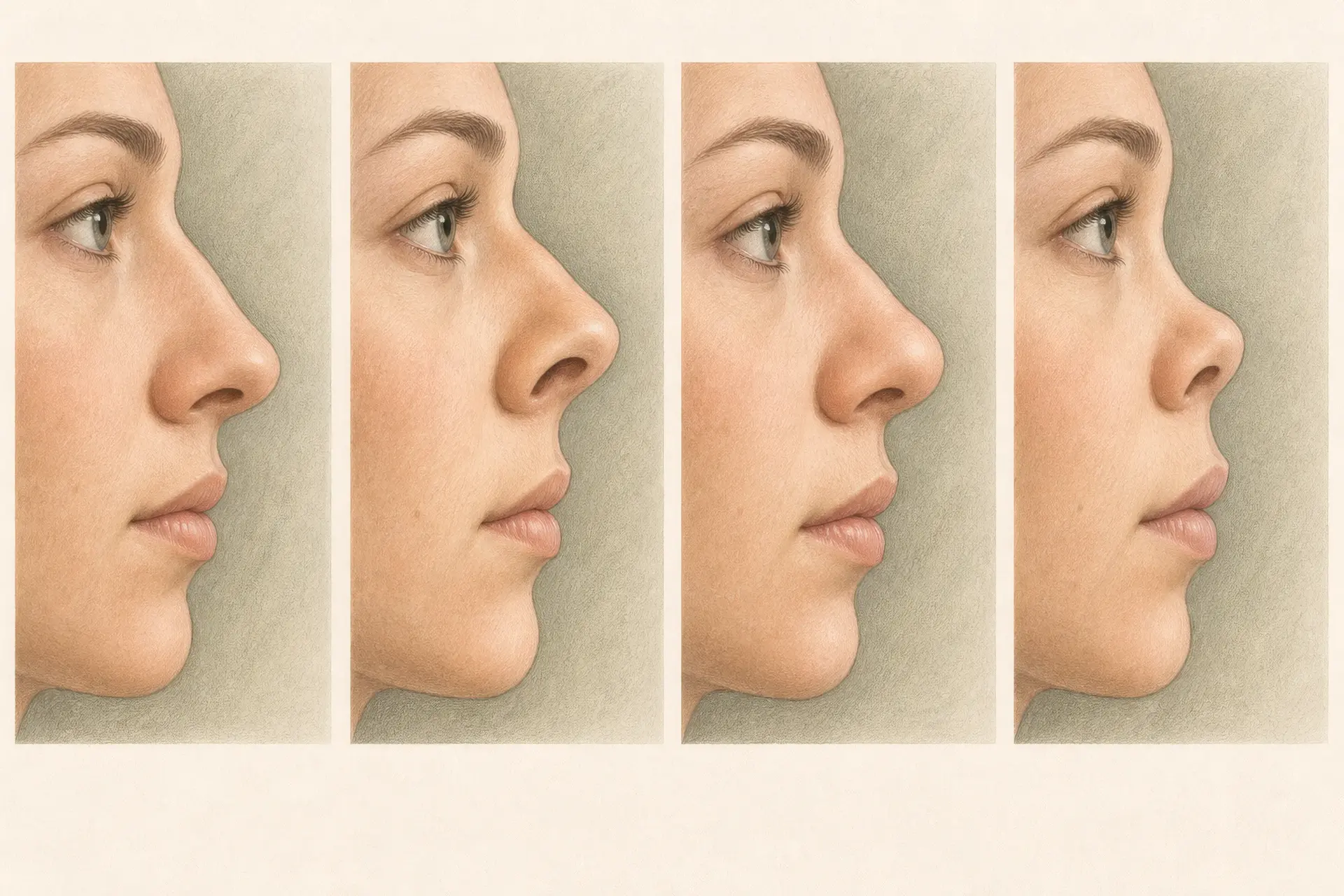
A small nose sits below average on overall size relative to the face. Both its width and its length lean petite, and its projection follows. Short describes length alone, narrow describes width alone, and button adds a rounded dome tip on top of small proportions. Judge yours from a standard-distance photo at more than one angle before trusting any label.
Want a faster read? The free nose shape detector compares your nose proportions against common types from one photo.
How a small nose is judged in proportion
Start with the baseline. Classic proportion guides hold that the width of the nose at its base roughly matches the distance between the inner corners of the eyes, the intercanthal distance, and that the face divides into vertical thirds with the nose filling the middle one. A nose landing on those marks reads average. One falling short across the board starts reading small.
Small is a verdict about the whole. A nose can miss the intercanthal baseline by a millimeter and still look average because its projection is generous, and a nose can hit every baseline and still read petite on a broad face. Context decides. At least for most people, the impression forms in the first second of looking, long before any ruler comes out. Stylists and surgeons both start from that glance and reach for measurements only when precision matters. The perfect nose page breaks down the idealized version of those ratios.
One caution, and it outweighs the baselines. These rules of thumb come from aesthetic writing and clinical habit, and sources like the Cleveland Clinic's rhinoplasty overview show surgeons reasoning from facial harmony, proportion weighed against the rest of the face rather than absolute centimeters. I could be wrong here, but I suspect most people who search "small nose" are reacting to one photo taken too close. The next section deals with that.
How camera distance changes a small nose
Phone selfies lie about size, and they lie in a predictable direction. A front camera held at arm's length uses a wide lens, and wide lenses stretch whatever sits closest, which is the nose. (This is why group photos shot from the back of the crowd flatter everyone.) Step back to a meter and a half, or hand the phone to someone else, and proportions settle into something closer to what people see in person.
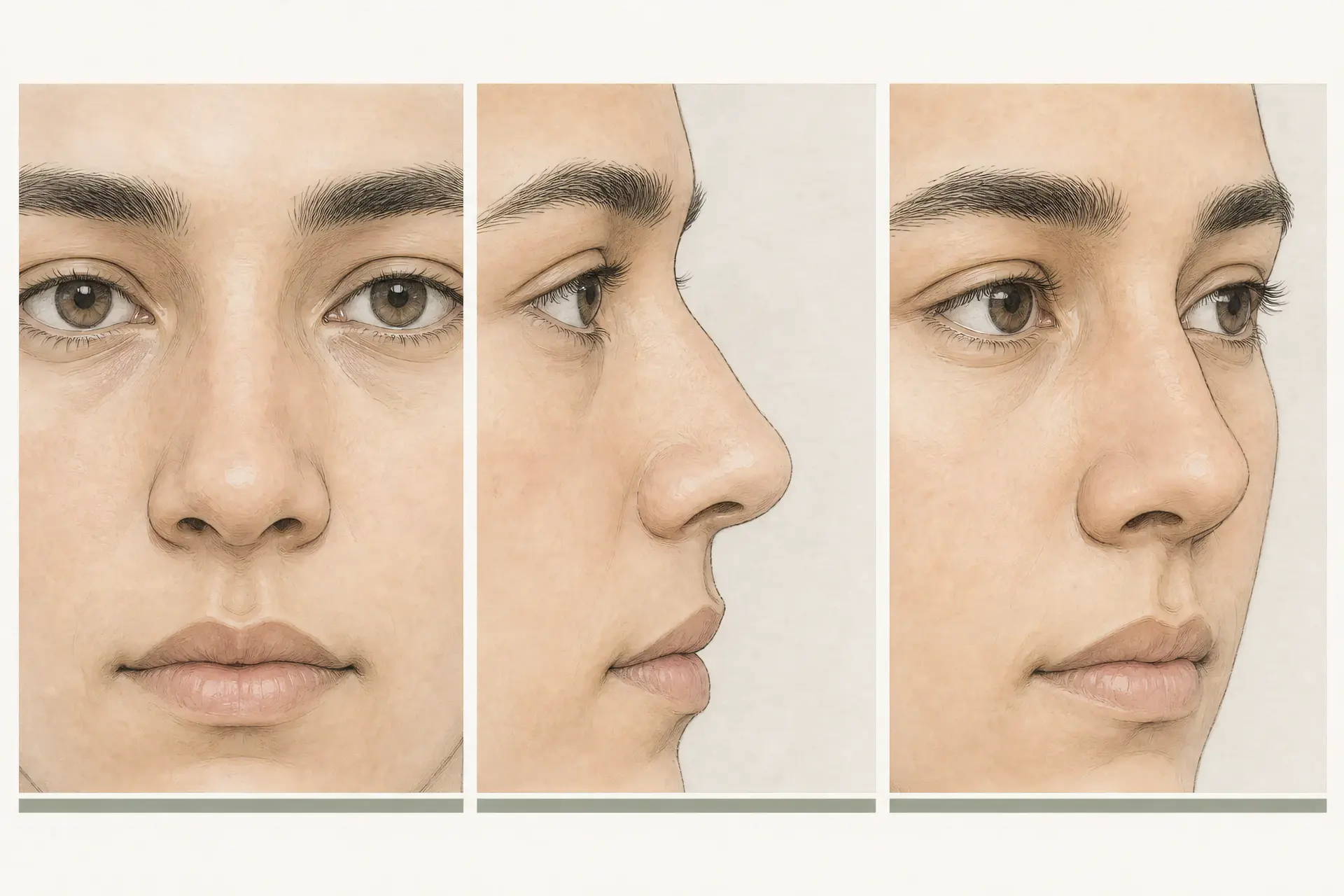
One angle never suffices. A front view alone misses projection, so add a side view and a three-quarter angle to see what the flat shot hides. Lighting shifts the reading too. Harsh overhead light throws shadows that exaggerate projection. Flat, soft window light can shave it away. Even head tilt plays along, since looking down into the lens shortens the nose on camera. In my experience, three photos in daylight at standard distance beat thirty mirror checks for an honest answer.
Small nose vs short nose, narrow nose, and button nose
Four labels crowd this territory, and each one isolates a different variable.
Small
Everything reads petite at once.
Every dimension runs below average relative to the face, width included, projection included. No single measurement carries the label, because the combined impression does the work. A nose earns 'small' when nothing about it reaches average scale.
Short
Reduced root-to-tip length.
A short nose measures less from between the eyes down to the tip, yet it can stay wide at the base or project strongly from the profile. Length is the only variable that shrinks. Snub noses live in this family, with an upturned tip added on top.
Narrow
Slim width at any length.
A narrow nose stays slim at the bridge and the nostrils while its length runs average or even long. Some of the longest profiles I have measured belonged to narrow noses, which surprises people every time.
Button
Small proportions plus a rounded dome tip.
The button nose is a specific shape, compact proportions finished with a neat rounded tip. Every button nose is small, though plenty of small noses never earn the label because their tips run pointed or flat.
Fast sorting. If everything about the nose reads petite, call it small. If only the length is reduced, you're in snub nose territory. Slim width with ordinary length points to narrow. And petite proportions finished with a round dome tip land on the button nose shape. The nose shapes chart places all four against the the other common types.
Styling and makeup tips
A petite nose changes how frames sit and how contour reads. A few things worth knowing before you shop or blend.
- Delicate frames first. Thin metal or light acetate stays in proportion with a petite nose, while chunky frames can swallow it. Round wire frames flatter small noses more than any other shape, though I have never seen a study back that up.
- Adjustable nose pads, always.
- Keep contour light. A soft highlight along the bridge preserves proportion, and heavy shading down the sides can shrink an already small nose. Subtle wins here.
- Test the pads at the optician. Petite bridges let frames slide, so ask for pads that can be pinched closer before you commit.
The humidity lesson.
My sister spent a July wedding in Charleston pushing her wire frames back up a petite bridge every twenty minutes. Ninety percent humidity, sunscreen on her nose, and the frames surfed downward all afternoon. Silicone pad sleeves, a three-dollar fix, ended it in one day. In my experience, fit hardware matters more on small bridges than frame style ever will.
The glasses frames guide covers bridge fit in detail, and the nose contouring guide maps highlight placement by type.
Frequently asked questions
Is a small nose the same as a button nose?
Button is the smaller category sitting inside it. A button nose combines petite proportions with a rounded dome tip, while small describes overall size alone. A small nose with a pointed or narrow tip belongs in different territory, so the two labels overlap without matching.
Can a small nose be long?
Yes. Small describes the total impression, and a nose with slim width and modest projection can still carry average or generous length. The label survives as long as the overall read stays petite against the rest of the face. Length on its own never settles the question.
Do camera angles make my nose look smaller?
Yes, and distance does most of the work. A close wide-angle phone lens enlarges whatever sits nearest the camera, while a shot from farther back pulls the nose toward its true proportions. Angle matters too, since a raised camera shortens apparent length. Distorted size in selfies is a common occurence, so judge from standard-distance photos taken by someone else.
Does a small nose change with age?
It keeps shifting across a lifetime. Cartilage grows and softens as the years pass, skin thins, and tips drift downward, so a nose that read petite at twenty can read closer to average by fifty. Weight changes move the impression as well, because the cheeks and jaw set the frame your nose gets judged against.
Conclusion and next steps
A small nose is a verdict about overall relative size, and it sits apart from short, narrow, and button once you know which variable each label isolates. Compare it against the button nose shape, the straight nose, the wide nose, and big noses to see the neighboring territory, or run the mirror method to pin down your own proportions.