A descriptive label, explained
Nubian Nose
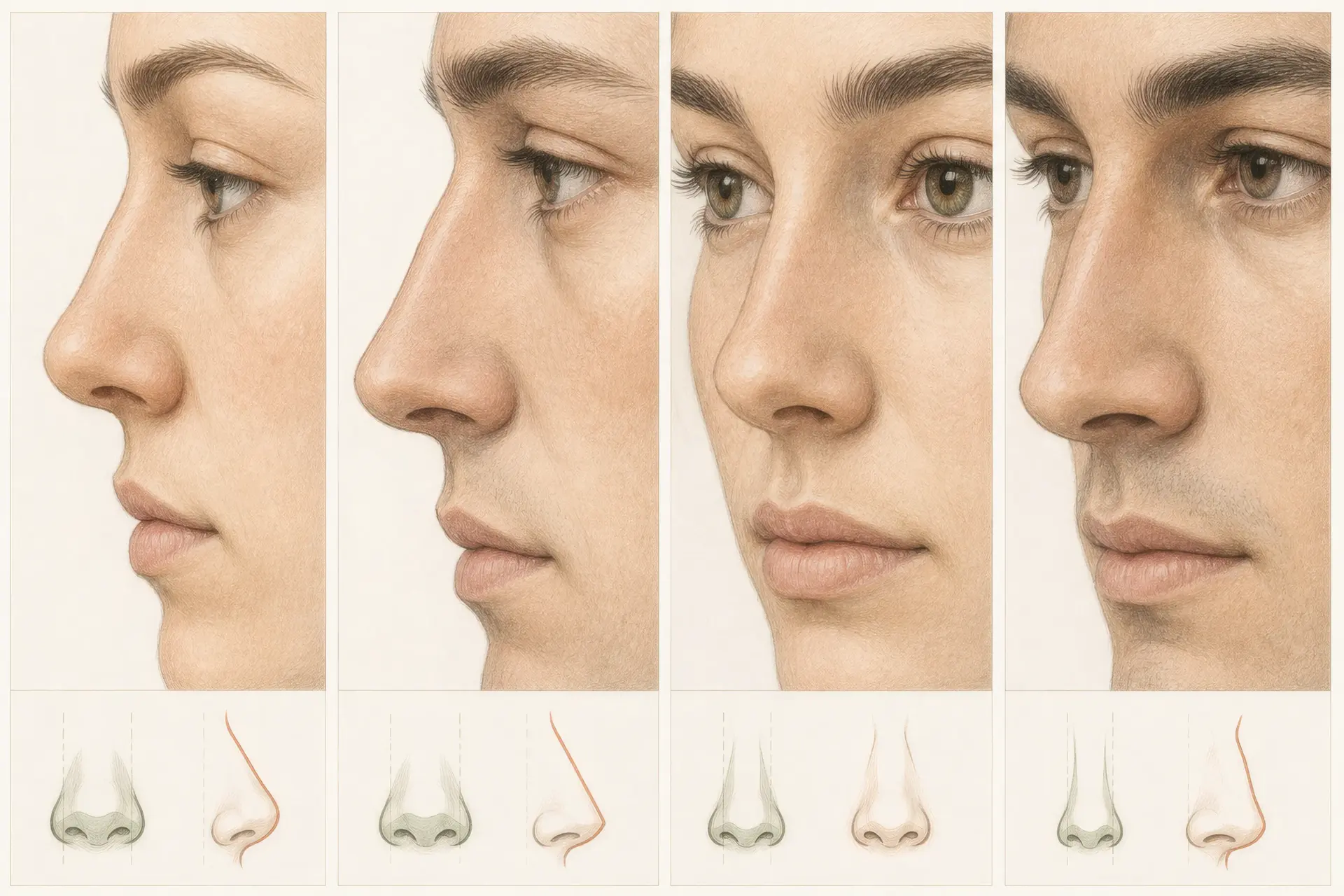
The Nubian nose label usually arrives secondhand, from a family member, a comment thread, an old beauty book, or a forum deep-dive at 1 a.m., long before anyone explains what it means. Used carefully, it points to a recognizable combination. A bridge that runs longer than average at moderate height. An alar base that reads broad from the front. A tip with more forward or slightly downward projection than a flat nose shows. Put together, the effect is elegant and proportional, and it deserves a proper definition.
One caution before anything else. The label carries historical and ethnic origins, and this guide treats it as descriptive, not prescriptive. Traits you can see in a mirror matter; assumptions about heritage do not belong in a mirror session. Below we'll define the traits, trace where the name came from, compare it against flat and wide noses, and cover styling plus the language worth using if a consultation ever comes up.
The quick answer
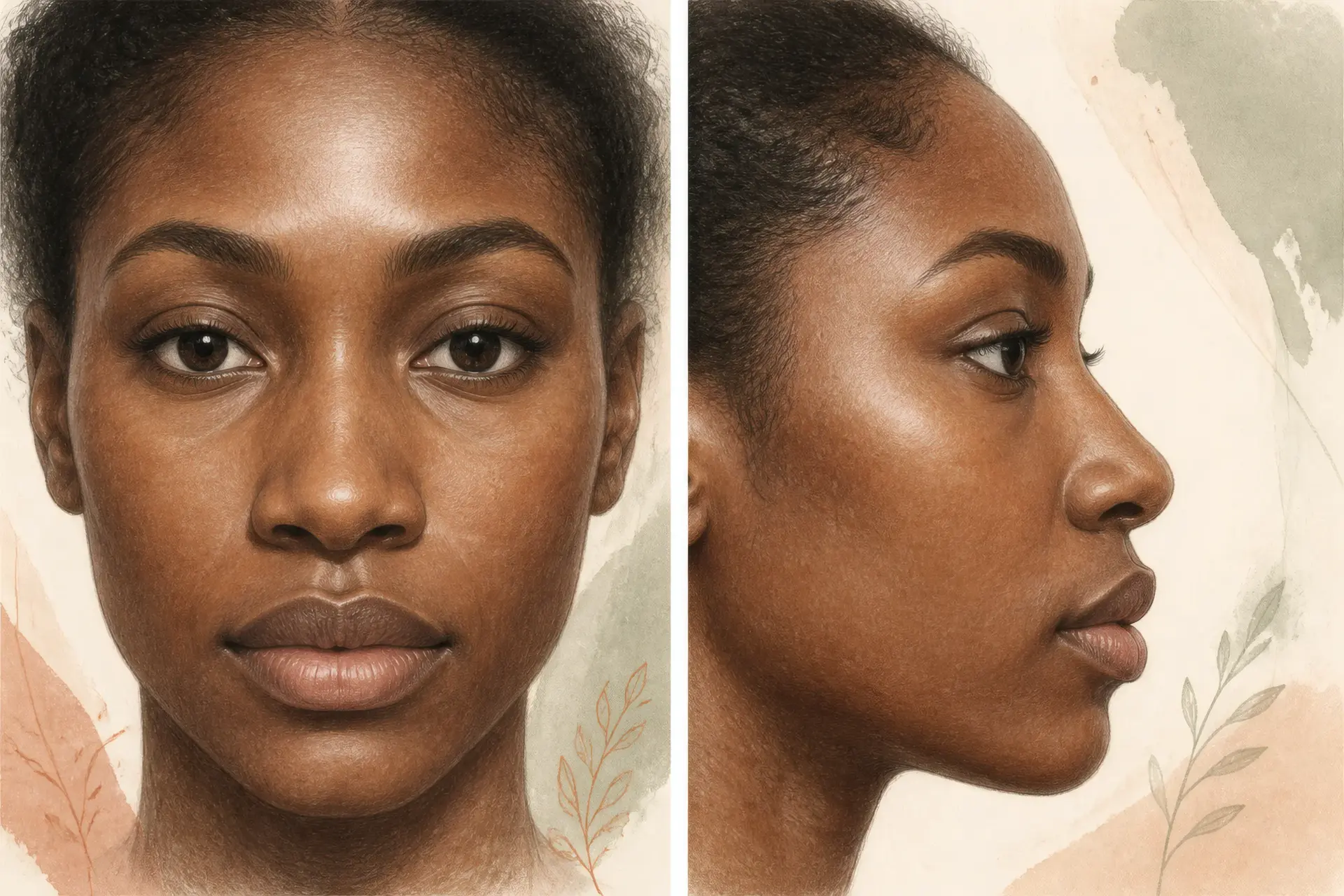
A Nubian nose combines a longer bridge at moderate height with a broader alar base and a tip that projects forward or angles slightly down. From the front, the width at the nostrils is noticable right away. From the side, the dorsum runs long without sitting low. If your nose is long and broad-based but the bridge still carries height and projection, this label likely fits. If the bridge sits low with minimal projection, look at flat noses instead.
Want a second opinion on your proportions? The free nose shape detector measures bridge and base proportions from one photo.
Defining traits: length, base, and projection
The combination does the defining here. No single trait earns the label on its own, so check each one before you claim it.
Bridge
Longer than average, moderate height.
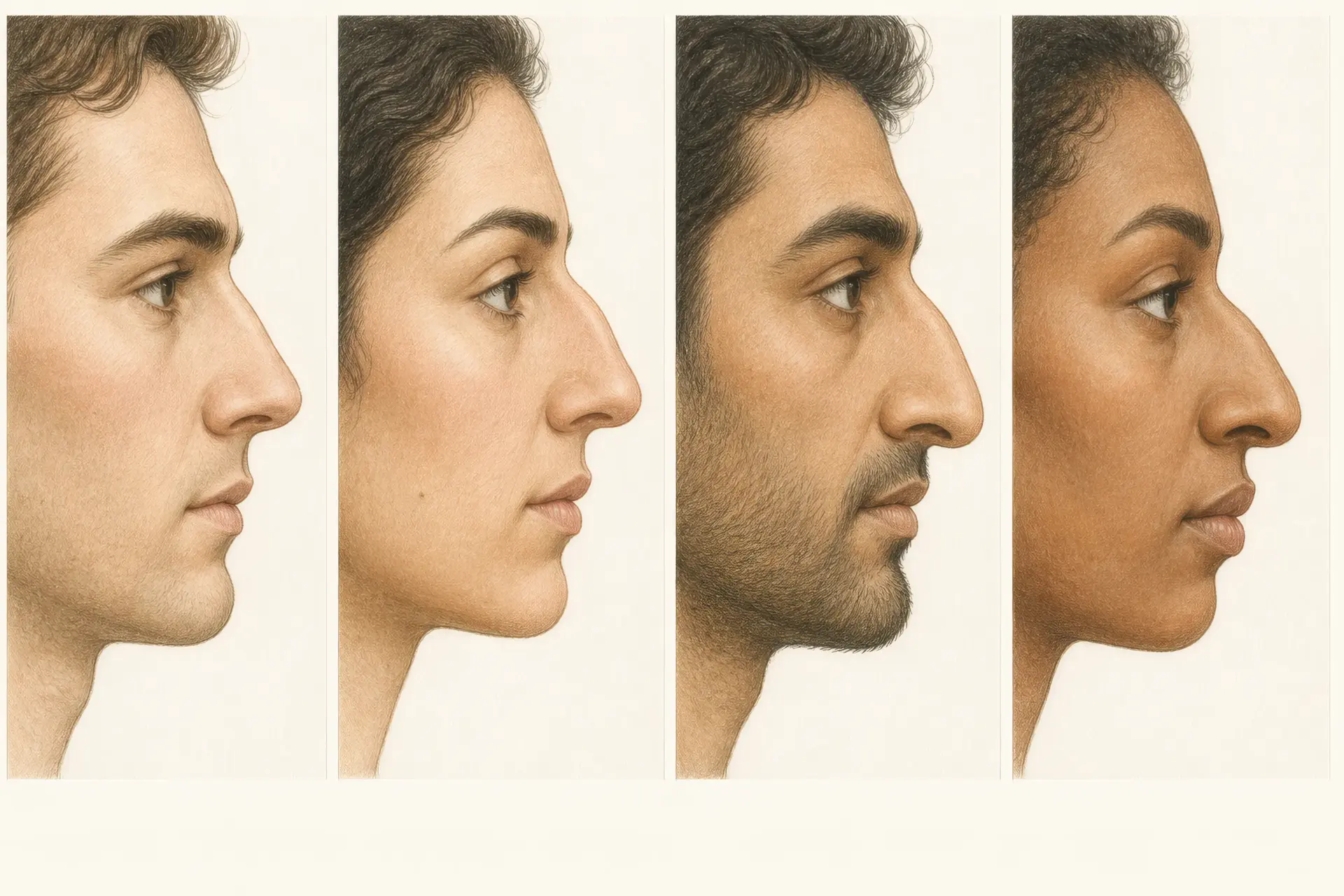
The dorsum runs long from the radix down to the tip and holds a moderate height the whole way. It doesn't sit low and smooth the way a flat nose does, and it doesn't carry the pronounced hump of a Roman profile. Length is the trait most people miss, because front selfies hide it.
Base
A broad alar base, visible from the front.
The alar base runs wide, and the nostrils read broader in straight-on photos. Width is part of the definition here, and shows most under flat, even lighting. If the base is narrow, the Nubian label stops applying no matter how long the bridge is.
Tip
Forward or slightly downward projection.
The tip projects more than a flat nose's tip, often straight forward, sometimes angled slightly down with lower tip rotation. The nasolabial angle tends to sit at or below the neutral range, which gives the profile its length.
Together these read as a long, confident nose with presence from every angle. Editorial casting has prized this length-plus-width combination for decades (it photographs with structure under hard light), and in my experience it's one of the profiles people mislabel most often. Usually as "wide," when the length is doing half the work.
Where the label comes from, and how to use it today
The term links the shape to Nubian and wider East African heritage, where longer bridges paired with broader bases show up more often than population averages elsewhere. Anthropology texts from the early twentieth century leaned on labels like this heavily, and the beauty industry picked them up later. Portrait painters and casting directors treated the profile as shorthand for a regal look, which is part of why the name survived. The label stuck around because it describes a real, recognizable set of traits.
But ethnicity labels have hard limits. Variation inside any population dwarfs the variation between population averages, so a label anchored to heritage will always mistype somebody. A reader wrote to me last year after a coworker called her nose "too ethnic" for a headshot session. We went through her photos trait by trait instead: bridge length, alar base width, tip projection, and how they sat against her face. Reframed that way, she stopped hearing a verdict and started hearing a description. Which is all any nose label should be. The nose types by ethnicity guide covers how traits cluster across populations without turning averages into verdicts.
So the useful habit is describing what you can observe. Say "long bridge" or "broad alar base" and any makeup artist, optician, frame fitter, or surgeon knows what you mean. Say an ethnicity label and you're guessing about a person instead of describing a nose.
Nubian Nose vs Flat Nose vs Wide Nose: three labels people mix up
All three can involve width. That shared trait is exactly why they get confused, and the bridge is what separates them.
| Label | Bridge | Base | Projection |
|---|---|---|---|
| Nubian Nose | Longer than average, moderate height | Broad alar base | Forward or slightly downward |
| Flat Nose | Low and smooth | Varies, sometimes broad | Low, minimal |
| Wide Nose | Height and length can be normal | Broad, width leads | Normal range |
- Length plus width plus projection, all present together, points to Nubian.
- A low, smooth bridge with minimal projection points to flat, whatever the width does.
- A broad base under an ordinary-length, ordinary-height bridge points to wide.
- When two labels seem to fit, settle it from the profile view. Bridge length and height only read honestly from the side.
I could be wrong here, but most people asking about this label already know their base runs broad. The length is what surprises them. If the overlap still feels slippery, the what type of nose do I have guide walks through a three-step mirror method that settles most cases in five minutes.
Styling and consultation notes
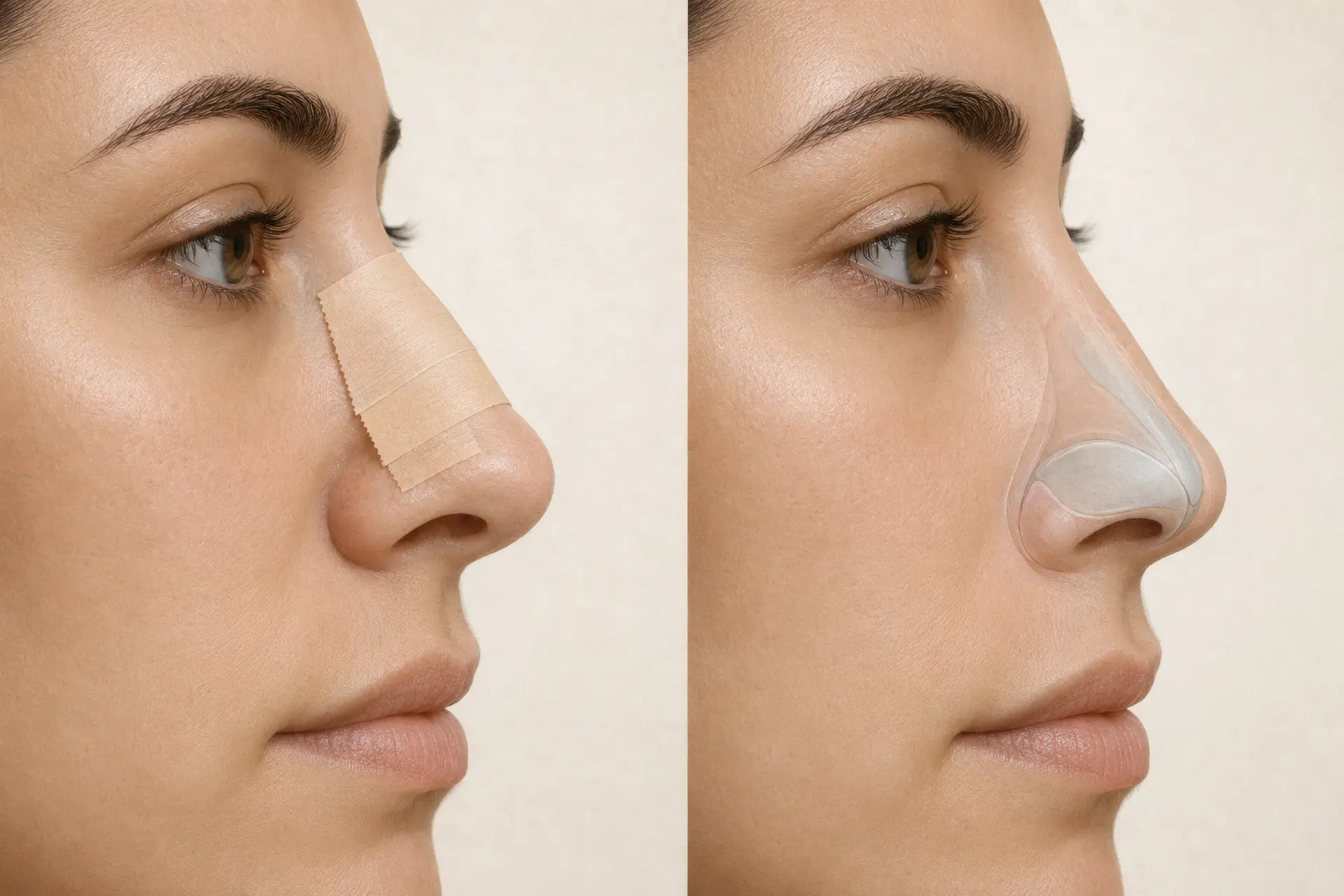
Glasses first. A broader base needs frames with a wider bridge measurement or adjustable nose pads, because a narrow saddle bridge will pinch and slide all day. Check the bridge number printed on the frame, usually somewhere between 16 and 22 millimeters, and err wider. Wire frames with pads are the forgiving option here; thick acetate saddles are the unforgiving one (they rest on exactly the wrong spot). Our glasses frames guide covers the fit side in more detail.
For makeup, balance the length with horizontal emphasis at the brows and eyes. A stronger brow or a winged liner pulls attention sideways. Contour along the sides of the alar base can refine width if you want that, and the nose contouring guide maps placements by type.
And if you ever sit down with a professional, trait language gets you further than labels. "Bridge length," "alar base width," "tip projection," and "nasolabial angle" are the descriptors that land. Clear terms keep the conversation about your nose and your goals.
Nubian nose FAQs
Is Nubian an ethnic diagnosis?
No. It's a descriptive label with historical roots that got attached to a trait combination. Populations overlap enormously, so treat it as shorthand for visible features, like a longer bridge paired with a broader base and real projection. Plenty of people with no East African heritage share the same combination, and plenty with that heritage don't. Trait-based language is more accurate, and more respectful of the variation inside any population.
Can a Nubian nose be narrow?
Not by definition, at least in how the label gets used today. A broader alar base is part of what makes the label apply at all. If your nose is long but narrow through the base and nostrils, the straight or Roman-leaning categories will describe it better.
How is it different from a flat nose?
Length and projection. A flat nose sits low along the bridge with minimal forward projection, while a Nubian nose runs longer and projects more, with a tip that carries forward or angles slightly down. Width can show up in both, which is where the confusion starts.
Next steps
Nubian comes down to length plus width plus projection, working as a set. That's what separates it from a flat nose, which sits low, and a wide nose, where width leads on its own. For bridge profiles at the other extreme, see the Roman nose, or go back to the mirror method and check your own traits step by step.