Tip sharpness and projection
Pointy Nose
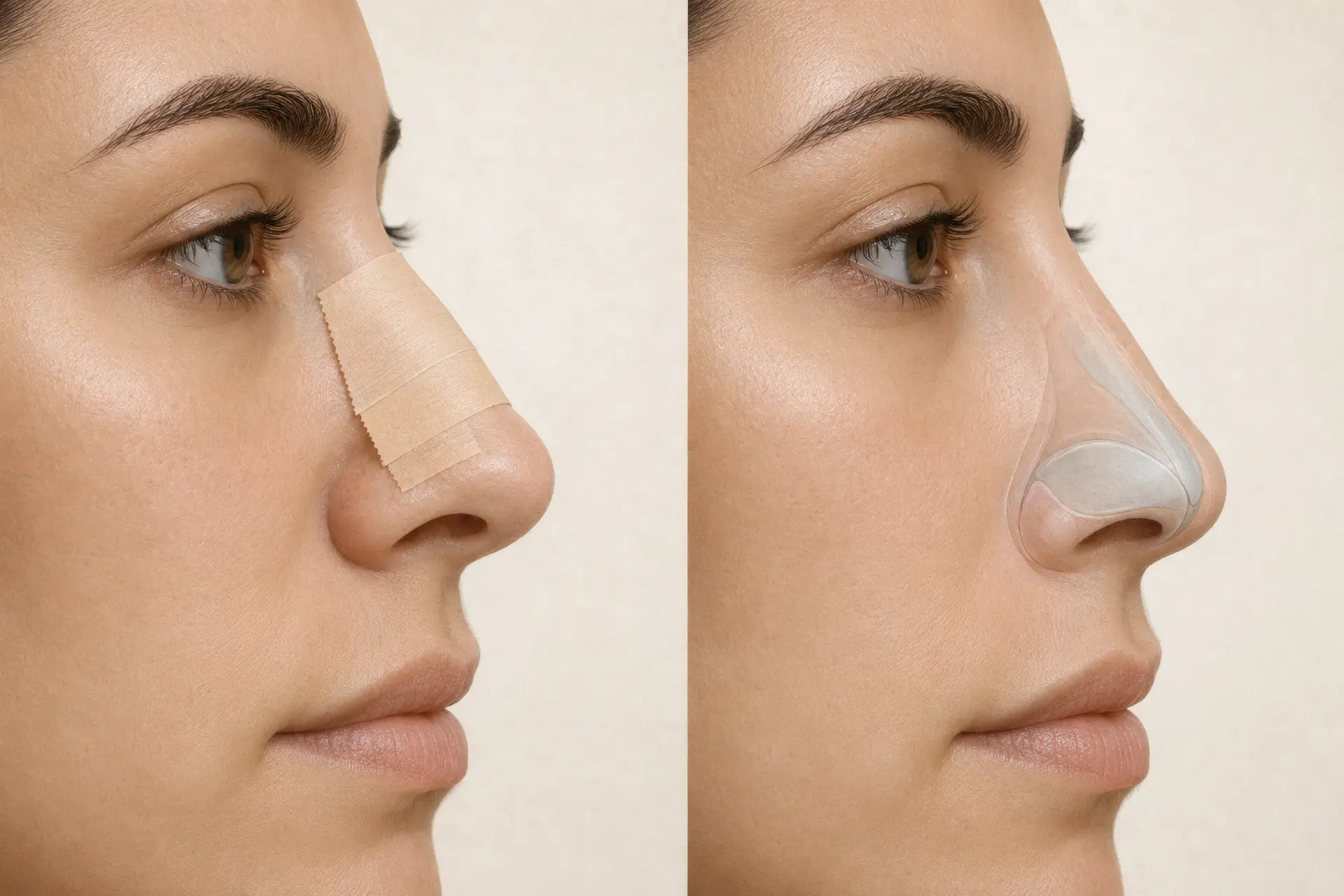
The phrase "pointy nose" gets thrown around loosely, and it almost always points at one specific feature. The tip. A pointy nose is defined by a sharp, well-projected tip that reads as pointed from the side and from the front, whatever the bridge happens to be doing behind it. Maybe you spotted yours in a profile photo. Maybe a glasses fitter mentioned it and the word stuck.
This page covers the "pointed nose" and "sharp nose" labels too, since most people use all three for the same feature. The focus stays on tip sharpness and projection. Overall narrowness is a separate measurement entirely. Below you will find the defining traits, a careful comparison with narrow and thin noses, styling and makeup notes, and answers to the questions readers send in most.
The quick answer
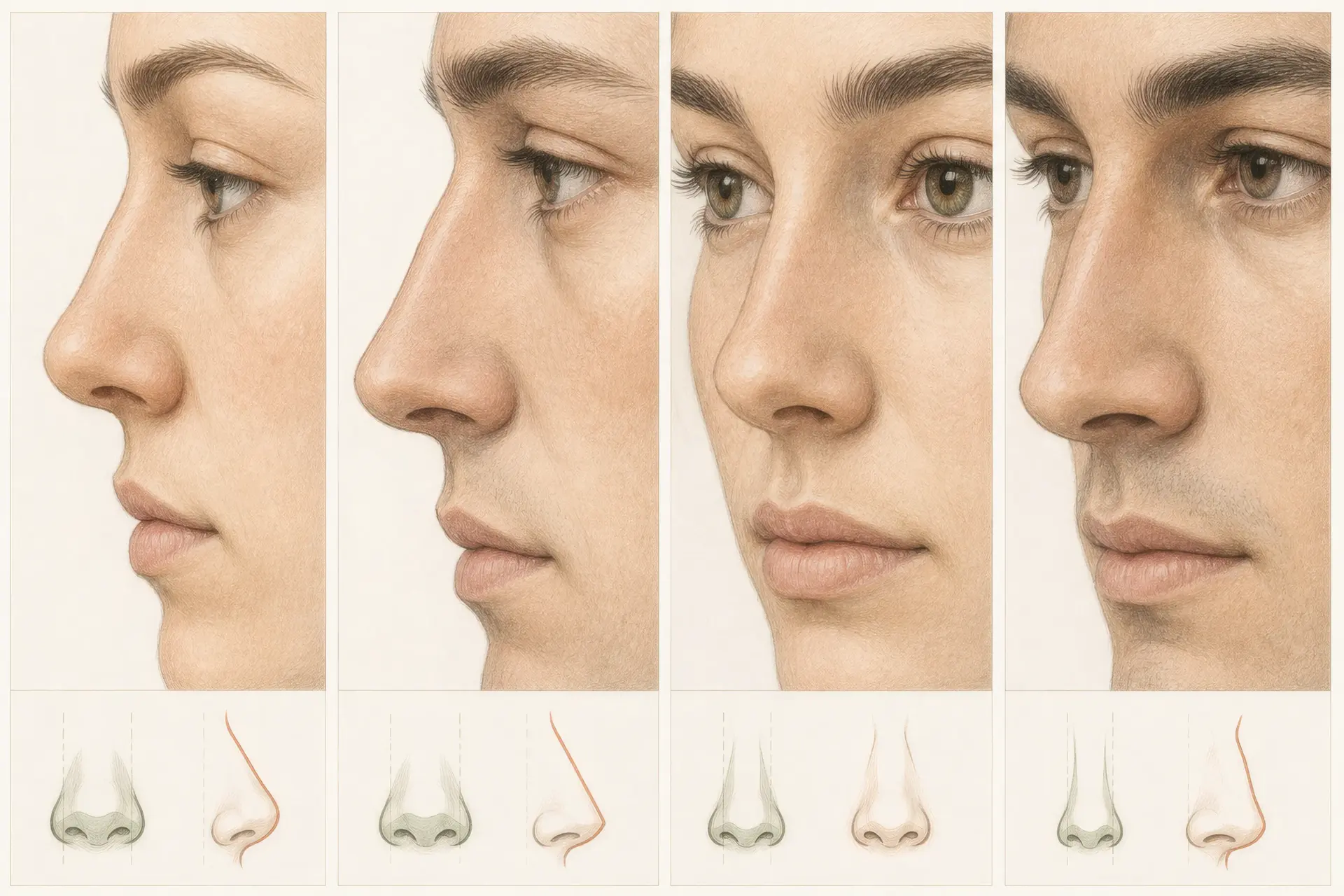
A pointy nose has a sharp, angular, well-defined tip that projects forward from the face. From the side, the tip comes to a defined point and extends noticeably outward. From the front, it looks crisp instead of soft or rounded. Width has nothing to do with it. Pull up a profile photo in good light and trace the outline from brow to tip. If the tip ends in a clean point that juts forward, you are in pointy territory.
Prefer a faster check? The free nose shape detector reads tip definition and projection from a single photo and tells you where you land.
In this article(5 sections)
Defining traits: tip sharpness and projection
Two measurements make a pointy nose, and both live at the tip. The first is sharpness, meaning how angular and defined the tip looks. The second is projection, the distance the tip extends forward from the plane of the face. Everything else, bridge line, base width, nostril shape, even length, is supporting cast.
- Sharpness. The tip defining points, the two brightest spots on the lower lateral cartilages, sit close together. Close points make a crisp, angular tip. Wide-set points make a soft, rounded one.
- Projection. The tip reaches forward enough to draw a distinct silhouette line in profile. Overhead sunlight is where this shows up first.
- The bridge is free to do whatever it wants. Straight bridges pair with pointy tips. So do convex and concave ones. Bridge shape stays secondary to tip character.
- Width varies more than you'd expect. A sharp tip can sit on a slim alar base or a broad one, and the label still holds either way.
Anatomically, sharpness comes from the shape and spacing of the lower lateral cartilages and from how thick the skin over them is. Thin skin over narrow, well-defined cartilages gives you a crisp tip. Thick skin blurs even strong cartilage into softness. Projection is simpler to see. It's how far the tip travels out from the the face, and it creates the defined silhouette people describe as pointed.
Rotation plays a smaller role than people assume. Pointy tips usually sit level or slightly upturned at the nasolabial angle. A strongly downturned tip paired with a convex bridge drifts out of pointy territory and toward the hooked family instead.
A two-minute self-check
- Stand sideways to a window and have someone take a profile photo. If the tip comes to a point and juts forward, mark pointy.
- Check a straight-on photo next. A crisp, angular tip from the front confirms it. A soft dome from the front argues against it.
- Compare against a rounded-tip reference photo online. Once you've seen the two side by side, the difference in the tip defining points is obvious.
- Ignore width while you judge. A broad nose with a sharp tip is still pointy.
Why I trust shadows more than mirrors.
A reader once emailed me about a thin dark line her tip cast across her upper lip in every outdoor photo taken around noon. She was convinced something was off with her face. Nothing was. A projected tip catches overhead light before the rest of the nose does, and the shadow it throws is usually the first place projection becomes noticable. If your tip draws its own shadow at midday, that's projection doing its job.
Pointy Nose vs Narrow Nose vs Thin Nose
These three labels get mixed up constantly, and the confusion costs people money at glasses counters and makeup counters alike. Pointy describes the tip only. Sharpness and projection, nothing more. A pointy nose can be wide or slim. Width never decides the label.
Narrow and thin describe overall slimness. A narrow nose has a slim bridge, a slim tip, refined nostrils, and a narrow base from top to bottom. Thin means nearly the same thing in everyday use, with an extra hint of fine, delicate structure. Here is the part that trips people up. A narrow nose can carry a soft, rounded tip without a trace of a point.
| Label | What it measures | What the tip does |
|---|---|---|
| Pointy Nose | Tip sharpness and projection | Angular, defined, projects forward |
| Narrow Nose | Overall slimness, bridge to base | Often refined, with or without a point |
| Thin Nose | Slim bridge and fine structure | Delicate, usually softly shaped |
So a nose can be narrow without being pointy, and pointy without being especially narrow. In my experience, most people who call their nose pointy land near medium width with a strong tip. I could be wrong here, but I think the tip dominates first impressions so heavily that width barely registers. If you want to measure your own features step by step, the mirror method guide walks through bridge, tip, base, and proportions in order.
Styling and makeup for a pointy nose
Frames sit in conversation with your tip whether you want them to or not. Strongly angular styles, sharp rectangles and hard cat-eyes, pile more sharpness onto a face that already has plenty. Slightly rounded or oval frames soften the whole read. And fit matters as much as shape. Nose pads should rest on the sides of the bridge without digging in, which takes real adjustment when the bridge runs slim. Our glasses frames guide covers fit by face shape.
Makeup works on light, and light is what makes a tip read as sharp. A diffused highlight, blended well past the tip defining points, softens the point without erasing it. Keep the highlight narrow if you want to hold onto some sharpness. Spread it wide and sheer if you don't. Contour along the sides of the dorsum reduces perceived projection if you want that, and plenty of people don't. The nose contouring guide maps both moves by nose type.
One small note on photography. A defined tip photographs beautifully at a three-quarter angle and turns severe in full profile, so turn your face a few degrees when the shot matters.
Pointy nose FAQs
What makes a nose pointy?
A sharp, projected tip. The tip defining points sit close together and the tip extends forward from the plane of the face, so it looks angular rather than rounded from the front and pointed in profile. Skin thickness plays a part too, since thick skin can blur sharp cartilage into something softer. Bridge shape and base width do not decide this label.
Is pointy the same as narrow?
No. Pointy describes tip sharpness and projection only. Narrow describes the overall slimness of the bridge, tip, and base. Plenty of narrow noses carry soft, rounded tips, and a pointy tip can sit on a wider nose without contradicting itself. The two labels overlap often enough that people merge them, but they measure different things.
Can rhinoplasty soften a pointy tip?
Yes. Tip refinement surgery can reduce sharpness and projection by reshaping the lower lateral cartilages, sometimes with sutures, sometimes with small grafts. It is specialized work, so consult a board-certified surgeon with deep tip experience and bring profile photos to the consultation.
Where to go next
Pointy means a sharp, projected tip, and it stands apart from narrow or thin, which describe overall slimness. If your tip is refined but your bridge runs arrow-straight, read about the Greek nose. Curious about bridge profiles instead? The Roman nose guide covers humps and convex lines. And if width is the dimension you keep circling back to, the wide nose and flat nose guides cover base and bridge dimensions. Still sorting out your type overall? Start with the mirror method.